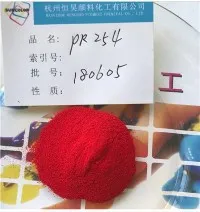


Barite Powder is an industrial mineral with a high density that is made mostly of barium sulfate (BaSO4). It comes from naturally occurring Barite Powder. We've seen how this flexible material solves important problems in oil and gas drilling, making cars, and specialty coatings for more than 20 years. Because it has a very high specific gravity (between 4.0 and 4.5 g/cm³), doesn't react with chemicals, and isn't rough, procurement managers who need stable, cost-effective solutions in tough industrial settings choose it over other materials.

Understanding Barite Powder – Properties, Uses, and Benefits
What Makes Barite Powder Chemically Unique?
Barium sulfate is the main ingredient in this industrial tool. Its purity levels usually stay above 90% when used for drilling and above 98% when used in special industrial formulations. The structure of the molecules is very stable at all temperatures and doesn't react chemically with acids, alkalis, or organic solvents that are common in manufacturing processes. This inertness immediately means that technical experts can count on consistent performance across production batches.
The solid structure of the material gives it a high density while keeping its Mohs hardness grade between 3.0 and 3.5. This controlled hardness profile keeps handling equipment from wearing out too quickly while still doing its job. There is almost no water absorption left, which is a big plus in drilling mud formulations where hydration stability is key to success.
Primary Industrial Applications Transforming Operations
About 80% of the world's Barite Powder is used in oil and gas development, where it is used as a weighting agent in both water- and oil-based drilling fluids. Maintaining the right hydrostatic pressure is very important for safety when digging into high-pressure rocks at depths greater than 15,000 feet. The mineral's bulk lets fluid engineers make mud with goal weights of 12 to 19 pounds per gallon without adding too much solid matter, which could slow down circulation or cause uneven sticking.
Barium sulfate's high refractive index and tolerance to chemicals are used in marine coatings and protection paint systems. In difficult offshore settings where saltwater rust could damage infrastructure, this mineral makes coatings last longer by forming thick barrier layers. Paint formulators like that it doesn't absorb much oil (10 to 15 g per 100 g), which lets them use high loading percentages without losing film development or application viscosity.
The material is used in the car industry to make noise-dampening plastics and parts that reduce friction. Manufacturers of brake pads mix it with ceramic and semi-metallic materials so that they don't break down when heated over and over again to 600°C. Extra weight on parts under the hood reduces the amount of engine shaking that gets through plastic housings, which can be measured in terms of noise levels in passenger areas.
Environmental and Safety Considerations Worth Your Attention
Modern mines get Barite Powder from both deep and open-pit sources, and environmental responsibility is becoming a bigger part of responsible sourcing. Reputable providers have rehabilitation programs that put mined land back to use, and water management systems keep silt from running off into nearby waterways. Leading makers keep environmental certificates that show they follow the rules in their area about protecting habitats and air quality.
Storage rules stress keeping things dry in places with good air flow to avoid caking and keep their ability to flow. Barium sulfate is not very dangerous because it doesn't dissolve easily, but people who work with Barite Powder should use the right dust control methods, such as local air ventilation and respiratory protection, when amounts are higher than the acceptable levels for their job. Material Safety Data Sheets give specific instructions based on the particle sizes and handling amounts that are common in your business.
Comparing Barite Powder with Other Industrial Fillers and Minerals
Performance Differences Against Common Alternatives
Calcium carbonate is one of the most common mineral fillers, and it can save money in situations where bulk is not as important. Its specific gravity is only about 2.7 g/cm³, so it can't weigh down drilling muds or sound-dampening plastics as well as barium sulfate can. Chemical reaction adds to the problems. Calcium carbonate dissolves in acidic environments, so it can't be used to drill into acidic rocks or make coatings that don't react with acid.
When it comes to drilling fluid rheology, bentonite clay is useful, but it has to meet very different performance needs. Its ability to grow controls filtration and increases gel strength, while barium sulfate's main job is to manage density. Experienced drilling engineers know that these materials don't compete with each other, but instead work together to make the mixtures work better. Bentonite sets the viscosity profiles, and Barite Powder adds the weight that is needed.
Grade Variations and Quality Specifications
API Specification 13A sets strict rules for drilling-grade material, requiring a specific gravity of at least 4.20 g/cm³ and limiting the amount of water-soluble alkaline earth metals to 250 mg/kg. These specs have a direct effect on how well the drilling works. If the density isn't up to par, workers have to add too many volumes, which raises the risk of equal moving density and pressure-related formation damage.
For paint and coatings, particle size distribution and brightness values need to be controlled more closely. Fine-ground grades with D50 particle sizes below 10 microns improve the stability of dispersion and the development of gloss in final films. When making white and pastel colors, where color differences would ruin the look, brightness measures above 90% on normal scales become necessary.
Chemical-grade materials used in specific situations may have very low levels of heavy metals like lead, mercury, and cadmium (less than 10 parts per million). Manufacturers that sell their products in Europe pay close attention to REACH rules and make sure that all of their chemicals follow the rules for registration and allowed uses.
Market Pricing Dynamics and Cost Considerations
Prices for natural Barite Powder change depending on the quality of the ore, how much it costs to remove, and how far it has to be shipped. In 2024, standard prices for API-grade material were between $150 and $280 per metric ton FOB major ports. There are quality premiums for high-purity grades. Pharmaceutical specifications have much higher costs because they need to go through more processing and testing to get certified, but industry buyers usually use standard commercial grades.
When chemical precipitation is used to make synthetic barium sulfate, the particles are very small and very pure, but the price is very high, sometimes more than $1,000 per metric ton. These higher prices are worth it for technical uses that need sub-micron particles with narrow size distributions. This is especially true in specialty paints and high-performance plastics where regular ground natural material can't reach the necessary levels of dispersion.
Transportation costs are high because of the mass of the goods. Freight economy is important when buying things because normal 20-foot containers can hold 20 to 25 metric tons of goods. When buying from faraway places, buyers should compare the total landed costs, which include ship insurance, customs taxes, and inland operations, to the costs of buying material that is nearby but might cost more.
Practical Procurement Guide for Industrial Buyers
Sourcing Strategies and Supplier Evaluation
To find dependable suppliers, you need to look at their production ability, quality control methods, and delivery history. Manufacturers with combined mine and processing facilities usually have more stable supplies than sellers who don't have direct access to ore. Before making big purchases, it's a good idea to get site checks or inspection reports from a third party to make sure that the processing and quality control systems are up to par.
Certifications are an objective way to show that you are committed to quality. Being registered with ISO 9001 means that you have a quality management system that works and that you have written down steps for controlling the process and making it better all the time. Industry-specific licenses, like API Q1 registration, show that you know what the oil and gas industry needs and are committed to always meeting the standards set by the industry.
Supply disruption risks are lower when you work with known providers who have been in business for a while. New trading companies may have good prices, but they haven't been tested to see how well they do when the market goes down or there are problems with logistics. Technical experts and buying managers benefit from partners who offer technical support services, such as application support and troubleshooting help, in addition to business relationships.
Minimum Orders, Packaging, and Logistics Planning
When handling Barite Powder, the minimum order size is usually set at 20 metric tons, which is the same as a full container load. This is done to get the best freight rates and keep inventory turnover rates high enough for medium-sized businesses. When bigger customers negotiate yearly contracts, they may get better prices for commitments of more than 500 to 1,000 metric tons. Scheduled orders also make cash flow easier and reduce the need for warehouse space.
Standard packing uses 25kg or 50kg multi-wall paper bags with polyethylene covers to keep the goods dry while they are being stored or shipped. FIBCs that can hold 1,000 to 1,500 kg can be used with pneumatic dumping systems, which cuts down on labor costs and dust exposure during material movement. Loose bulk shipments in special tankers or train cars serve large customers who have their own infrastructure for accepting them.
When you buy something from another country, you have to figure out how to get around customs classifications (usually HS Code 2511.10 for natural barium sulfate) and the different import taxes that go with them. Having a lot of paperwork, like business bills, packing lists, certificates of origin, and material safety data sheets, makes clearance easier and shows that you're following the rules. Importing chemicals is easier when you work with shipping partners who know how to do it. This keeps you from having to wait in line at ports of entry, which can be expensive.
Building Supplier Relationships and Contractual Frameworks
Long-term supply deals set prices in a way that keeps budgets stable even as market prices change. Fixed prices for set lengths of time guard against short-term changes, and price adjustment clauses based on public indices account for long-term trends in the costs of raw materials. When markets are tight and spot buyers can't find what they need, volume agreements make sure that capacity is allocated correctly.
Technical teamwork is more than just doing business. Suppliers who spend money on application development know how their material works in your specific formulas and may be able to find ways to improve grades without lowering performance or cost. Partnerships that help both parties over a long period of time are stronger when they talk about output schedules and quality feedback on a regular basis.
Payment terms show how creditworthy you are and how old the relationship is. For first sales, foreign suppliers working with buyers they don't know usually need letters of credit as security. Once a business has a relationship with a buyer, they can discuss net payment terms of 30 to 90 days. Early payment savings can sometimes cover the cost of borrowing for buyers who already have cash on hand.

Making the Right Choice: A Decision Support Framework for Barite Powder Buyers
Matching Specifications to Application Requirements
For drilling activities to go smoothly, API standards must be strictly followed to make sure there is enough density and little contamination. When engineers are making mud systems for high-pressure, high-temperature wells, they make sure that the material meets all the requirements set out in API 13A Section 7. They do this because they know that using Barite Powder that doesn't meet these standards can hurt the well's costs and safety. This can happen when the pipe gets stuck or the formation gets damaged.
Coating formulators have to find a balance between cost, particle size, cleanliness, and oil absorption. Architectural paints can handle cheaper grades with a D50 of about 15 to 20 microns, but car refinish systems need ultra-fine dispersion to keep high-gloss finishes from getting surface flaws. By understanding these subtleties, you can avoid selecting too many expensive grades when basic materials will do the job just fine.
When using friction materials, temperature stability and managed hardness are very important. Manufacturers of brake pads for big industrial cars that drive in mountainous areas choose grades that have been tested and proven to be stable above 600°C. This keeps the pads from breaking down at high temperatures, which can cause glazing and fading. Maintaining formulation balance is important for meeting requirements for friction coefficient and wear rate. Density consistency between runs is one way to do this.
Evaluating Suppliers Through Data-Driven Criteria
Each package comes with an analytical certificate that lets you track it and make sure the quality. Complete testing should show the specific gravity using methods recommended by the API, the particle size distribution using laser diffraction or sieve analysis, and the chemical makeup, including the amount of barium sulfate and certain additives. By comparing certificate values to standard ranges before taking deliveries, you can avoid costly production delays caused by material that doesn't meet the specifications.
Assessments of production ability show potential sellers if they can grow with your business. Visiting the site and seeing many production lines, large amounts of raw materials, and modern cutting equipment shows that the company is ready to meet growing needs without lowering quality during times of high demand.
Customer examples give you more information about how well something works in real life than marketing claims. Talking to technical contacts at current client sites shows how responsive the seller is during quality issues, how flexible they are with rush orders, and how ready they are to put money into building relationships. Multiple examples of negative feedback patterns show partnership risks that can be avoided.
Decision Frameworks for Different Buyer Profiles
Before going full-scale, technical experts who are in charge of developing specifications should make sure that the performance is confirmed through lab tests and field trials. By asking for representative samples, you can do a controlled test in real processing settings, which shows if the new ingredients and tools will work with the old ones. Test results that are written down show that changing the specifications is okay with people in charge of buying and managing.
Dual-sourcing methods help purchasing managers find the best balance between cost goals and supply security by comparing different suppliers based on the same specs. Keeping in touch with secondary sellers gives you negotiating power over prices and gives you instant backup choices in case your main source goes down. When allocating annual business, it might favor major sellers with 70% of the volume and keep secondary relationships going with the other 30%.
As a distributor or reseller, you need to find providers that offer low prices, flexible order amounts, and quick turnaround times that work with just-in-time inventory models. When suppliers are ready to hold contract stock or set up drop-shipping arrangements, it lowers the amount of working capital that is needed and lets end users get quick customer service.
Building Trust and Ensuring Quality – Why Choose Our Barite Powder Solutions
Proven Performance Backed by Certification and Testing
Henghao Technology Development (Hangzhou) Co., Ltd. has been in business since 2003 and has strict quality standards. They sell industrial Barite Powder to over 33 countries for use in drilling, paints, plastics, and friction materials. Before letting material go out for shipping, our testing lab does a full study on every production batch. They check the specific gravity, particle size distribution, moisture content, and chemical makeup. These analytical methods go beyond what is required by API specifications. This gives users predictable performance that keeps formulation surprises to a minimum.
Real-world proof comes from having long-term partnerships with big drilling fluid service companies that work in offshore areas in Southeast Asia and shale plays in North America. The technical feedback we get from these tough uses helps us keep improving our processing settings. This way, we can make sure that the material properties stay perfect for the harsh conditions downhole. Paint companies in Europe have approved our fine-ground grades for use in car OEM paints, where inconsistent quality leads to expensive production rejects.
Customer Support and Flexible Procurement Solutions
Throughout the lifetime of a product, technical assistance teams help with developing applications and fixing problems. When coating formulators have trouble with dispersion or friction engineers see wear patterns that don't make sense, our experts work together to figure out what went wrong and how to fix it. With this consultative method, relationships with suppliers become agreements that benefit both parties.
Packaging that is flexible can be used by places with a range of handling skills. Standard 25 kg bags are good for tasks that need to be handled by hand, while 1,000 kg bulk bags are better for automatic pneumatic systems. Custom package options, like moisture barrier treatments for humid areas or UN-certified packing for shipping dangerous goods, meet unique shipping needs.
Procurement models adapt to customer preferences and operational scales. Small manufacturers who are trying new formulations can get sample quantities without having to place a minimum order, and large customers can take advantage of yearly framework deals that lock in good prices for all planned deliveries. Our skilled export team handles paperwork, shipping, and clearing customs, making it easier for buyers to buy things from other countries, even if they haven't done it before.
Global Supply Chain Reliability You Can Depend On
When you have direct ties with several Barite Powder mines across China, you have more buying options than brokers who only buy on the spot market. When changes in the geology of a mine affect the quality of the output, we switch production to other ore sources that meet the requirements. Because of this vertical merger, shipping have gone on without a hitch, even when competitors were having trouble getting supplies in some areas.
Strategically placing goods in coastal stores close to major shipping ports makes it possible to quickly fill orders. Keeping enough stock on hand to cover a few weeks' worth of normal demand protects production plans against sudden increases in demand and lets customers make partial shipments when they need urgent deliveries.
Testimonials from happy customers show that they are happy with all kinds of applications. A European company that makes brake parts said that our uniform particle size distribution let them make fewer changes to the recipe between batches of production, which cut down on quality control costs and waste. A drilling contractor from the United States praised our technical team's quick response when they had to fix problems with mud weight instability caused by poor distribution. By working together to solve the problem, they were able to get operations back to normal in days instead of weeks.
Conclusion
In conclusion, to find the best Barite Powder provider, you need to look at more than just price. You also need to look at technical specifications, the reliability of the supply chain, and the quality of the relationship. When industrial buyers know how the qualities of a material affect how well it works in a certain application, they can make smart choices that lower the total cost of ownership instead of just focusing on the purchase price. Quality consistency prevents production disruptions and customer complaints, while supplier stability ensures continuous material availability supporting uninterrupted operations. There are a lot of choices for buying on the global market, but good procurement relationships combine competitive pricing with expert support and on-time delivery. These qualities are built when a seller cares about the success of the customer, not just the speed of the transaction.
FAQ
What purity levels should I specify for different applications?
API drilling grade needs at least 90% barium sulfate, but luxury grades often have more than 95% for better performance in hard rocks. Paint and coatings usually need 96% to 98% clarity to make sure that the color and spread are always the same. Chemical-grade materials used in specific industrial processes may need to be 98.5% pure and have tight heavy metal limits of less than 10 ppm total flaws.
How should we store and handle barite powder safely?
Keeping things in dry, well-ventilated storage stops them from absorbing water, which can cause problems with caking and flow. Barium sulfate is not very dangerous, but workers are protected when they handle bags or move materials because of dust control methods like local air ventilation. When airborne concentrations are higher than the limits for work exposure during long handling times, respirators are needed.
Can specifications be customized for unique requirements?
Custom grinding services make particle size ranges that work best for certain tasks, ranging from 325-mesh grades that are used in drilling to submicron particles that are used in custom coatings. Surface processes make it easier for polymer structures to work with plastics and rubbers. Increasing the purity through flotation or chemical processing meets strict requirements for sensitive uses where regular market Barite Powder grades don't work.
Partner with Henghao for Your Barite Powder Supply Needs
Finding a reliable Barite Powder provider makes buying easier and makes sure that the quality stays the same, which saves production efficiency and keeps customers happy. The Henghao Technology Development (Hangzhou) Co., Ltd. has been in business for more than 20 years and works with 33 countries' drilling, finishing, and friction material industries. Our factory-direct prices help you make the most money, and our full expert support and flexible operations can be changed to fit your needs. Our team provides quick service backed by a reliable supply chain, whether you need drilling-grade material for tough conditions downhole or fine-ground powders for specific finishes. Get in touch with us right away at info@henghaopigment.com to talk about your unique needs with skilled Barite Powder makers who are dedicated to your success.
References
1. Anderson, M.J. (2019). Industrial Minerals and Their Applications in Modern Manufacturing. Technical Publishing Group.
2. Chen, W., & Roberts, K.L. (2021). Drilling Fluids Engineering: Principles and Practice. Petroleum Industry Press.
3. International Barite Association. (2022). Global Barite Supply Chain Analysis and Market Trends. IBA Annual Report.
4. Martinez, R.F. (2020). Functional Fillers in Coatings Technology. Coatings Research Institute.
5. Thompson, H.G. (2023). Friction Materials: Formulation, Testing, and Performance Standards. Automotive Engineering Publications.
6. Zhang, L., Patterson, D.K., & Williams, S.T. (2021). Mineral Processing and Industrial Applications of Barium Sulfate. Mining Technology Journal, Volume 15.