


Inorganic Pigment
What is Organic Pigment
Organic pigments are colored materials made of organic compounds with pigment properties. They are artificially synthetic organic compounds in powder state. They also have a high tint strength and yield clean color shades. Organic pigments are widely used in various fields because of their high tinting strength, bright color and good fastness etc.
Benefits of Organic Pigment
Chemical Stability
Organic pigments are chemically stable, which means they do not react with other chemicals and remain unchanged over time. This stability makes them ideal for use in various applications as they retain their vibrant color for longer periods.
Lightfastness
Lightfastness refers to a pigment’s ability to resist fading when exposed to light. Organic pigments generally have a high degree of lightfastness, which makes them suitable for use in outdoor applications or products that are exposed to sunlight.
Heat Resistance
Organic pigments can withstand high temperatures without losing their color intensity. This property makes them suitable for use in applications such as plastics, where the material is often subjected to high temperatures during processing.
Solubility
About 80% of the world's barium sulfate production, mostly purified mineral, is consumed as a component of oil well drilling fluid. It increases the density of the fluid, increasing the hydrostatic pressure in the well and reducing the chance of a blowout.
-

-
 Lead Chromate PigmentAbove provided tech data is only for reference, the detailed application is subject to customers’Add to Inquiry
 -
 Lead Chrome Yellow 34Above provided tech data is only for reference, the detailed application is subject to customers’Add to Inquiry
 -
 Molybdate Chrome Red 104Above provided tech data is only for reference, the detailed application is subject to customers’Add to Inquiry
 -
 Pigment Carbon Black HB-14001) Product name: HB-1400. 2) Color index name: Pigment Black 7. 3) Chemical type: Carbon Black. 4)Add to Inquiry
 -
 Pigment Carbon Black HB-13001) Product name: HB-1300. 2) Color index name: Pigment Black 7. 3) Chemical type: Carbon Black. 4)Add to Inquiry
 -
 Pigment Carbon Black HB-23001) Product name: HB-2300. 2) Color index name: Pigment Black 7. 3) Chemical type: Carbon Black. 4)Add to Inquiry
 -
 Pigment Carbon Black HB-4#1) Product name: HB-4#. 2) Color index name: Pigment Black 7. 3) Chemical type: Carbon Black. 4)Add to Inquiry
 -
 Pigment Carbon Black HB-4A1) Product name: HB-4A. 2) Color index name: Pigment Black 7. 3) Chemical type: Carbon Black. 4)Add to Inquiry
 -
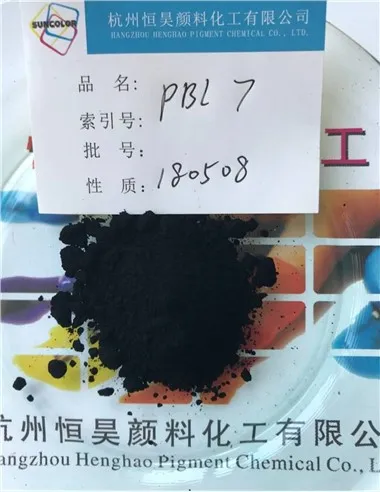 Pigment Carbon Black HB-1L1) Product name: HB-1L. 2) Color index name: Pigment Black 7. 3) Chemical type: Carbon Black. 4)Add to Inquiry
 -
 Pigment Carbon Black HB-9001) Product name: HB-900. 2) Color index name: Pigment Black 7. 3) Chemical type: Carbon Black. 4)Add to Inquiry
 -
 Pigment Carbon Black HB-8001) Product name: HB-800. 2) Color index name: Pigment Black 7. 3) Chemical type: Carbon Black. 4)Add to Inquiry


- Tel: +86-571-88760951 / 88760952
- Fax: +86-571-88760953
- Email: info@henghaopigment.com
- Add: Rm715-719, Building No.5, Qianjiang International Plaza, Qianjiang Economic Development Zone, Hangzhou City, Zhejiang Province, China
Why Choose Us
Our company
Henghao technology development (hangzhou) co., ltd. Was established in 2003, headquartered in pigment and powder division, with independent r&d laboratories and production bases, and joint research and development with universities, always mastering cutting-edge technology and maintaining market competitive advantage.
Product applications
The products are used in plastics, inks, coatings and other fields, covering organic pigments such as azo and lakes, inorganic pigments such as lead and chromium, fluorescent pigments, etc., as well as non-metallic material powders such as magnesium hydroxide.
Our certificates
The products pay attention to safety, implement cleaner production, energy conservation and emission reduction, strictly control heavy metals and toxic substances, and can provide sgs reports and msds.
Quality control
The quality control system is perfect, from raw materials to finished products are systematically tested according to the application method, raw material testing and production process control are carried out in the factory, and the test is applied again in an independent laboratory before delivery, and double inspection ensures product quality.

Inorganic pigments are made from minerals, such as iron oxide or titanium dioxide, and other non-living materials. These pigments are known for their bright and vibrant colours, they are highly resistant to fading and discolouration. Inorganic pigments are also non-toxic and safe to use, making them suitable for use in a variety of products, including cosmetics and food.
Organic pigments, on the other hand, are made from carbon-based compounds. These pigments are known for their bright and vibrant colours, and they are used in a wide range of products, including paints, inks, and plastics. One of the main advantages of organic pigments is their versatility. They can be easily modified to create a wide range of colours and shades, and they can be used in a variety of applications. Organic pigments are also more soluble than inorganic pigments, which makes them easier to disperse in other materials.
Organic pigments can fade over time under certain environmental conditions such as light, heat, moisture, and chemicals. The rate of fading depends on various factors, including the specific chemical composition of the pigment, the concentration used in the formulation, the intensity and duration of exposure to light, and the conditions under which the product is stored and used.


The typical particle sizes of organic pigments range from 0.01 to 1 micron. These fine particles ensure high color strength, transparency, and smooth texture in various applications, such as paints, inks, plastics, and cosmetics. The median particle size may be 10 or 20 microns, but the distribution of sizes may be from one micron to 50 microns. Modern pigments typically have a more compact distribution of particle sizes one to ten microns is typical. And the industry is demanding even tighter ranges.
Which Types of Organic Pigments Are Available
Azo pigments
Azo pigments are organic pigments that contain azo groups and are water-insoluble, with the most varieties and largest output (about 60% of the total output of organic pigments). Due to wide chromatography, bright color, high coloring power and high light fastness, azo pigments are widely used in inks, paints, rubber, plastics, printing pulp, paper, cultural and educational supplies, cosmetics, etc.
Mono azo pigments
Mono azo pigments are colorants containing one azo group only, mainly including insoluble azo pigments and azo lake pigments. They are mostly yellow, orange or red. They also feature low molecular weight, simple structure, bright color, high coloring power, high durability and medium fastness, so they are mainly applied in inks.
Bisazo pigments
Bisazo pigments are organic pigments containing two azo groups. Due to relatively complex production processes, they have high solvent fastness and migration fastness but low light fastness. They are mainly applied in general-purpose printing inks and plastics, but less in paints.
Phthalocyanine pigments
Phthalocyanine pigments (mainly blue and green) are water-insoluble organic compounds containing phthalocyanine molecules, mainly including copper-containing phthalocyanine blue pigments. They are coarse products made through reaction of phthalic anhydride, urea and cuprous chloride in the presence of ammonium molybdate (catalyst).
Naphthol pigments
In term of the chemical structure, naphthol pigments are mono azo pigments (mainly orange and red), which are made with naphthol as a coupling component but different from yellow and orange mono azo pigments. They feature high light fastness, solvent fastness and migration fastness but no alkali resistance, so they are often used in paints and coatings with high light fastness.
Quinacridone pigments
Quinacridone pigments (mostly red and purple) are organic pigments that are made through self-condensation, aniline condensation, closed loop reaction, refining and oxidation of diethyl succinate. Due to high color brightness, comprehensive color fastness, migration fastness, solvent fastness and heat fastness (up to 300°C), they are widely applied to color the stock solution for high-grade inks, paints, plastics and synthetic fibers.
Dioxazine pigments
Dioxazine pigments are bright purple, containing carbazole dioxazine. They are excellent plastic colorants because of high coloring power, heat fastness, light fastness and solvent fastness.
How to Choose The Right Organic Pigment
Understand the performance of the product
The performance of organic pigments depends on its chemical structure. Therefore, when choosing organic pigments, you should understand its chemical structure and other technical specifications to ensure that they can meet your production needs.
The stability of color
The stability of the color is an important factor that needs to be considered when choosing organic pigments. When selecting organic pigments, you should choose a color with long -term stability to ensure that the product can maintain long -term color consistency.
Adaptability
When selecting organic pigments, you should consider whether they are suitable for your products. For example, certain organic pigments may not be suitable for certain types of plastic or coatings. Therefore, when choosing organic pigments, you should choose organic pigments suitable for your products.
Price
The price of organic pigments varies from color, brand and quality. When selecting organic pigments, you should choose organic pigments with reasonable prices and meet your budget.
Application of Organic Pigment
Paints
Organic pigments are widely used in paints and can be used as an important raw material for making high-quality artistic pigments. Organic pigments can be used to make paints of various colors and are widely used in walls, doors and windows, metal surfaces, vehicles, etc.
Ink
Organic pigments are also widely used in inks and can produce highly saturated and bright colors. Since the intensity and stability of the color change less, inks are used in printing, publishing, packaging, signage industries, and various writing pens to keep the text and images in permanent color.
Plastic products
Organic pigments are also widely used in plastic products. Because organic pigments are high in strength, light-resistant, heat-resistant, not easy to discolor, and can be heated and resistant to plugging agents, this type of pigment is widely used in the manufacture of plastic toys, furniture, decorations, etc.
Cosmetics
Organic pigments can also be used to make cosmetics and are often used as dyes and powders. Whether for traditional cosmetics or advanced cosmetics, organic pigments play an important role.

The preparation of raw materials is the first step in the production of organic pigments, which mainly includes the use of suitable organic compounds as basic raw materials, such as aromatic amine, puppet nitrogen group, etc., as well as auxiliary raw materials such as additives and diluents.
The synthetic reaction is the core link of the production of organic pigments. The raw material is converted into organic pigments through chemical reactions. The commonly used synthetic methods include puppet nitrogen and burn method. Among them, the nitrogen coupling method is a commonly used synthetic method. First, the aroma and sodium nitrite react to generate puppet nitrogen compounds, and then react with the proper nitrogen -based coupling body to get the target pigment.
Curing treatment is an indispensable step in the production of organic pigments. The synthetic organic pigments obtained by high temperature burn or adding curing agent are fixed into powder or granular. The curing treatment is mainly to improve the stability and use of the pigment, and to enhance the color and luster of the pigment.
Processing is the last step in the production of organic pigments. It is processed to be processed to be solidified by grinding and screening. The selection of the processing process requires adjustment according to the specific requirements of the pigment to ensure that the pigment has good decentralization and dyeing.
The dispersion of organic pigments with large molecules can be a challenging task in the paint and coating industry. Large molecules in pigments can lead to poor dispersion, affecting the color strength, stability, and overall performance of the coating. To address this, dispersants play a crucial role in achieving proper dispersion.
Polymeric dispersants are commonly used for dispersing organic pigments with large molecules. These dispersants have long polymer chains that can effectively surround and stabilize pigment particles, preventing them from agglomerating. Additionally, wetting agents and surfactants may also be employed to enhance the wetting of pigment surfaces and improve dispersion.

How to Store Organic Pigment
Sealed storage: The organic pigment bag should be sealed immediately after use to prevent the pigment from being oxidized by air, so as to maintain the stability and quality of the pigment.
Avoid direct sunlight: Organic pigments should be stored in a cool and dry place, away from direct sunlight, to reduce the impact of temperature changes on the stability of the pigment.
Stir regularly: The pigment may have some sediment after long-term storage. When using, pay attention to stirring evenly to ensure the uniformity and consistency of the organic pigment.
Pay attention to environmental humidity: Keep the humidity of the storage environment moderate to avoid excessive humidity causing the organic pigment to mold or deteriorate.
Use appropriate containers: Choosing appropriate bags, packaging and labeling, as well as a suitable storage environment, can help better protect the organic pigment.
Observe the expiration date: Pay attention to the shelf life of the organic pigment. Expired pigments may change in quality. When using, you should judge whether it can still be used according to the situation.
Our Factory
Set in the year of 2003, Henghao Technology Development (Hangzhou) Co., Ltd.'s predecessor is Hangzhou Henghao Pigment Co. The company's headquarters has two divisions: Henghao Pigment & Henghao Powder which has independent R&D lab and production bases. We have been doing lots of researches & developments with major domestic universities together, and keeping the latest technology and market competitiveness advantages.

FAQ
Q: What is the requirement of organic pigments?
Q: Do organic pigments fade?
Q: What are the characteristics of organic pigments?
Q: What are two benefits of using organic pigments over inorganic pigments?
Q: Are organic pigments transparent?
Q: What are the applications of organic pigments?
Q: What are the raw materials of organic pigments?
Q: Why are organic pigments brighter?
Q: What are the sources of organic pigments?
Q: What are the types of organic pigments?
Q: What is the structure of organic pigments?
Q: How to make organic pigments?
Q: What is the difference between organic and inorganic pigments?
Q: What is an example of an organic pigment?
Q: How long do organic pigments last?
Q: Do organic pigments contain carbon?
Q: What Are the Typical Particle Sizes of Organic Pigments?
Q: How do organic pigments achieve their color?
Q: Are organic pigments safe?
Q: Can organic pigments be used in high-temperature applications?
We're professional inorganic pigment manufacturers and suppliers in China, specialized in providing high quality products with low price. We warmly welcome you to buy bulk customized inorganic pigment made in China here from our factory. For pricelist and free sample, contact us now.
coated chrome yellow 34, Carbon Black Cabot M1400, Pigment Carbon Black HB 1H