


Plastic Pigment
What Is Plastic Pigment?
Plastic pigments are raw materials that can change the color of plastics. Plastic colorants include pigments and dyes. Dyes mainly include oil-soluble dyes, alcohol-soluble dyes and disperse dyes. They are colored by dissolving, penetrating and adsorbing in resins. They are particularly suitable for coloring transparent resins such as polystyrene. They have bright colors, but poor heat resistance, light resistance and solvent resistance. Pigment colorants include inorganic pigments and organic pigments, which are dispersed in resins and plastics in the form of small particles to color them. Inorganic pigments have high thermal stability and good durability, but the color is not bright, the color spectrum is small, and a few are toxic, which limits their application range. Widely used varieties include titanium dioxide, zinc oxide, red iron oxide, carbon black, etc. Compared with inorganic pigments, organic pigments have the advantages of complete color spectrum, bright color, strong tinting power, high transparency, low toxicity, wide application range, and suitable for plastic coloring, but their heat resistance, light resistance and weather resistance are slightly poor.
Weather fastness / weatherability / aging of the pigment
Exposure to weather where end product is to be kept can have adverse effects on the useful life of plastic products. This includes sunlight and artificial light as well as other weather properties. Consequently, polymers which are used outdoors frequently require uv protection and weather resistant pigments. The light stabilizer system must be considered together with the pigment formulation and the specified fastness criteria for the final product.
Light fastness of the pigment
Lightfastness is a property of a colourant such as dye or pigment that describes its resistance to fading when exposed to light. Light fastness is a measure of the colour fastness of a plastic article when used in indoor applications (UV light exposure without direct water contact). If a pigment has good light fastness, it does not always mean that it has good weather fastness.
Optical properties of the pigment
The optical properties of the pigment are the results of combination of two effects arising from the way they interact with the visible light: Absorption and scattering. High transparency in a plastic material requires the absence of light scattering centres either within the structure of the polymer itself or as a result of additives present within. So, the optical property of the pigment is important for opacity and transparency of the product.
Warping of the pigment
Crystallization of the polymer pigmentation is crucial factor for the final properties of plastics. This includes mainly the degree of crystallinity and speed of crystallization. Organic pigments are known to influence these parameters during the cooling phase of plastic processing, particularly in HDPE injection moulding. Typical applications where this effect becomes important are containers, crates, and caps & closures. Pigments can be divided into three groups, depending on their influence on the shrinkage of HDPE injection moulding systems. If distortion occurs shows warping, warpage-reducing agents should be used during the pigmentation of the polymer of plastics.
Particle size and size distribution
For any type of pigment and pigmentation process, performance depends on chemical structures, surface properties of pigment particles and additives, crystallinity, and particle size & size distribution. For inorganic pigments, properties such as easy dispersion, heat stability, light fastness, weather fastness, opacity, solubility, and weak migration tendency are the positive factors for pigmentation of plastics.
-
 Pigment Yellow 13 for Plastics1) Product name: Suncolor Yellow 3113. 2) Color index name: Pigment Yellow 13. 3) ChemicalAdd to Inquiry
 -
 Pigment Yellow 17 GG for Plastics1) Product name: Suncolor Yellow 3117. 2) Color index name: Pigment Yellow 17. 3) ChemicalAdd to Inquiry
 -
 Pigment Yellow 62 WSR for Plastics1) Product name: Sunfast Yellow 3162. 2) Color index name: Pigment Yellow 62. 3) ChemicalAdd to Inquiry
 -
 Pigment Yellow 81 10G for Plastics1) Product name: Suncolor Yellow 3181. 2) Color index name: Pigment Yellow 81. 3) ChemicalAdd to Inquiry
 -
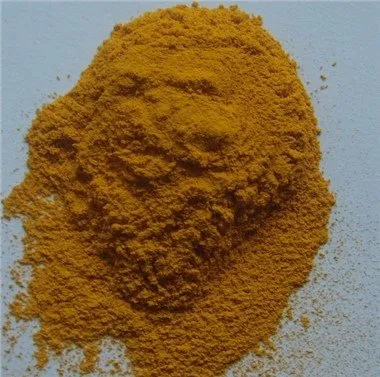 Pigment Yellow 83 HR-02 for Plastics1) Product name: Suncolor Yellow 3183. 2) Color index name: Pigment Yellow 83. 3) ChemicalAdd to Inquiry
 -
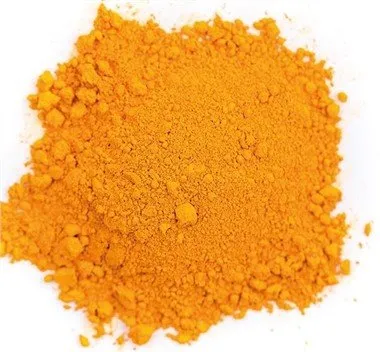 Pigment Yellow 110 2RLP for Plastics1) Product name: Sunfast Yellow 31110. 2) Color index name: Pigment Yellow 110. 3) ChemicalAdd to Inquiry
 -
 Pigment Yellow 139 2RF for Plastics1) Product name: Suncolor Yellow 31139. 2) Color index name: Pigment Yellow 139. 3) ChemicalAdd to Inquiry
 -
 Pigment Yellow 180 HG for Plastics1) Product name: Sunfast Yellow 31180. 2) Color index name: Pigment Yellow 180. 3) ChemicalAdd to Inquiry
 -
 Pigment Yellow 183 K2270 for Plastics1) Product name: Sunfast Yellow 31183. 2) Color index name: Pigment Yellow 183. 3) ChemicalAdd to Inquiry
 -
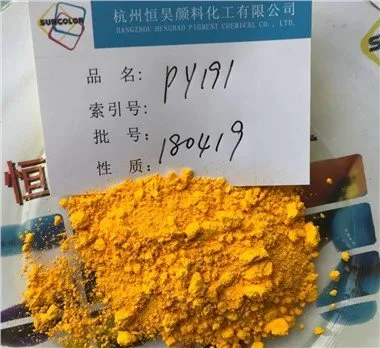 Pigment Yellow 191 HGR for Plastics1) Product name: Sunfast Yellow 31191. 2) Color index name: Pigment Yellow 191. 3) ChemicalAdd to Inquiry
 -
 Pigment Orange 16 R for Plastics1) Product name: Sunfast Orange 3216. 2) Color index name: Pigment Orange 16 . 3) ChemicalAdd to Inquiry
 -
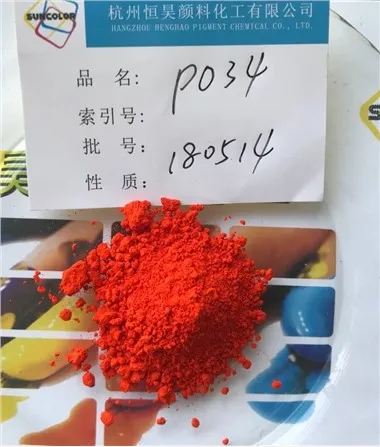 Pigment Orange 34 RL for Plastics1) Product name: Permanent Orange 3234. 2) Color index name: Pigment Orange 34. 3) ChemicalAdd to Inquiry


- Tel: +86-571-88760951 / 88760952
- Fax: +86-571-88760953
- Email: info@henghaopigment.com
- Add: Rm715-719, Building No.5, Qianjiang International Plaza, Qianjiang Economic Development Zone, Hangzhou City, Zhejiang Province, China
Why Choose Us
Our company
Henghao technology development (hangzhou) co., ltd. Was established in 2003, headquartered in pigment and powder division, with independent r&d laboratories and production bases, and joint research and development with universities, always mastering cutting-edge technology and maintaining market competitive advantage.
Product applications
The products are used in plastics, inks, coatings and other fields, covering organic pigments such as azo and lakes, inorganic pigments such as lead and chromium, fluorescent pigments, etc., as well as non-metallic material powders such as magnesium hydroxide.
Our certificates
The products pay attention to safety, implement cleaner production, energy conservation and emission reduction, strictly control heavy metals and toxic substances, and can provide sgs reports and msds.
Quality control
The quality control system is perfect, from raw materials to finished products are systematically tested according to the application method, raw material testing and production process control are carried out in the factory, and the test is applied again in an independent laboratory before delivery, and double inspection ensures product quality.

Coloration
The primary function of pigments in plastics is to provide color, enhancing the aesthetic appeal of the product.
UV protection
Some pigments offer UV protection, helping to prevent degradation of the plastic material due to exposure to sunlight.
Opacity and transparency control
Pigments can influence the opacity or transparency of the plastic, allowing manufacturers to achieve specific visual effects.
Heat stability
Certain pigments contribute to the heat stability of plastics, helping to maintain color integrity during processing and use.
Chemical resistance
In some cases, pigments can enhance the chemical resistance of plastics, making them more suitable for certain applications.
Black
All black pigments are carbon black, which absorbs UV rays and is stable when exposed outdoors. Carbon black pigments are available in a variety of particle sizes, with particle size generally determining the degree of blackness. Here, blackness refers to the intensity of the blackness.
The highest blackness is found in the smallest particle sizes, which are 5-15 nanometers, while various grades of carbon black have particle sizes of 50-200 nanometers, with larger particles of about 0.5 microns appearing gray.
Red
Red iron oxide is an inorganic red pigment that gives the common red barnyard color. Red iron oxide is heat stable and fairly low cost. The particle size of the oxide can be optimized for hiding power and clarity.
White
White pigments are usually based on the use of titanium dioxide (TiO2), which has excellent hiding power and ultraviolet (UV) resistance.
When using glass filled resins, barium sulfide (BaS) is always the best choice to achieve a white color, and the characteristic of BaS is that it will not damage the glass.

Application of Plastic Pigment
Coatings and paints
Plastic Pigments are extensively used in the coatings and paints industry to provide color and enhance aesthetic appeal. Organic dyes are essential for creating visually enticing surfaces, from decorative paints to industrial coatings. In addition, their weather resistance ensures that the painted surfaces will last for a long time.
Printing inks
Plastic Pigments are essential components of printing inks for commercial and domestic printing. Their ability to produce vibrant colors and resist fading makes them ideal for packaging, publishing, textiles, and signage applications.
In the plastics industry
Plastic Pigments are widely used to impart color and produce specific effects. The ability of organic dyes to make a wide range of hues and tones benefits various plastic products, from toys and domestic items to automotive components and electronic devices.
Textiles and fibers
Plastic Pigments have applications in the textile and fiber industries, where they are used to dye and print fabrics.Their superior colorfastness ensures that the colors remain vibrant even after multiple treatments or exposure to sunlight. Plastic Pigments, including lipsticks, eye shadows, blushes, and nail varnishes, are commonly used in cosmetics manufacturing. Their ability to provide vibrant, long-lasting color is highly desirable in the cosmetics industry.
Types of Plastic Pigment
Organic pigments
Have good chromaticity and transparency, and can be well dispersed in plastics. However, they are easily soluble in organic solvents and are not suitable for use in transparent or food contact products.
Inorganic pigments
Have good light and heat resistance, and are suitable for the production of products with strong weather resistance requirements. However, the color is darker, and usually a higher amount needs to be added to obtain the desired color.
Metallic pigments
Have high gloss and metallic feel, and are suitable for the production of plastic products with metallic luster, such as car interiors, mobile phone cases, etc.
Modern synthetic pigments
Have the advantages of bright colors, good dispersibility, and safe use, and are gradually becoming the preferred pigments for various plastic products.
Plastic Pigment:The Most Common Methods of Coloring Plastics
Compounding
This process involves premixing several colors with resin before introducing the mixture to the molding plastic.
Masterbatching
Colors are premixed with resin but are not introduced to the molding plastic as they are. It requires uncolored plastic or rubber to scale it down to at least 2% of the volume before it can be used.


Solvent coloring
It requires the spraying of uncolored pellets with a solvent with the required pigment. Keep the ratio of the pigment to the plastic at 2% to achieve the best results.
Dry pigment mixing
The use of dry pigment powder which is mixed directly with the pellets in the injection machine. Ensure the 2% ratio before commencing the injection molding process.
Process of Plastic Pigment
Extraction and preparation
The process of making plastic pigments begins with extracting minerals or rocks from the earth's crust. The specific type of pigment being produced determines the choice of raw materials.
Processing
Once the raw materials are obtained, they go through a series of processing steps to transform them into high-quality pigment powders. Typical processes include crushing, grinding, and washing the material to remove impurities and obtain pure pigment powders.
Ochre and ochre pigments
The extracted rock or clay is crushed into smaller pieces for ochre and ochre pigments. These pieces are ground using various techniques to achieve the desired particle size and increase the surface area. The fine powder is then mixed with water using a grinding method to eliminate impurities and further refine the pigment. The resulting pigment powder exhibits beautiful shades of ochre and ochre that can be used in a variety of artistic or industrial applications.
Burnt umber pigments
As mentioned above, the umber is refined to produce a raw umber that can be used as a pigment. The raw umber then goes through a special treatment called roasting or calcining. Roasting involves heating the raw umber to change its color and improve its properties. This process changes the chemical composition of the pigment, resulting in a rich brown color. When baked, umber emits an odor similar to overcooked cabbage. After baking, the material is ground into a fine powder to create pigments.
Plastic pigments
Plastic pigments are derived from the mineral glauconite and are produced through a slightly different process. The mineral is carefully extracted from sedimentary rock layers and ground into a fine powder. The powdered material is then washed and refined to ensure purity and enhance its color. The resulting plastic pigment has an attractive green hue that is perfect for a variety of artistic expressions.
Uses
Once plastic pigments are processed into a fine powder, they are used in countless applications. Artists and artisans love these pigments for their unique color and natural origin. Painters incorporate plastic pigments into their works, while artisans use them in pottery, ceramics, and other forms of crafts. Plastic pigments are also used in the production of cosmetics, inks, and a variety of industrial products, demonstrating their versatility and lasting appeal.
How to Choose a Plastic Pigment

Tinctorial strength
It is necessary to take into account the tinctorial strength of the chosen pigment because the ability to dye the plastic will directly influence the appearance and maintenance of the properties of the resin.

Thermal stability
It is necessary to know the thermal stability of the pigment since it can not change due to the temperatures to which the material will be subjected. Therefore, more than knowing if they are chemically compatible, make sure that the pigment will remain unaltered during the coloring process.

Compatibility
Negative reactions tend to occur more quickly at high temperatures, with large (mechanical) energy inputs, as in extrusion. Therefore, it is necessary to verify that there is no chemical incompatibility between the polymer and the colorant system.
Molecular weight
The size of the pigment particles influences the polymer behavior when some colors are added to it. For example, opaque colorants do not affect materials that have a higher molecular weight.
Safety Precautions When Using the Plastic Pigment
Wear protective gear
It's recommended that you wear a dust mask while handling your pigment powders or any other powdered form of materials, such as mica powder. Using other protective gear, like aprons and rubber gloves, is also the best way to avoid experiencing irritation from being in contact with these materials.
Cover work surfaces
Keep your work surface clean of pigment powder to avoid it from contaminating other surfaces. Laying down a plastic covering can preserve surfaces and keep them clean of pigment dust. Have wet disposal towels to clean up any pigment dust spillage or residue after use. Stay mindful of working near ventilated areas where pigment dust can easily transfer to other surfaces by a vent or running fan.
Store pigments correctly
It's just as crucial to store your pigment powders with safe handling as when you use them. You should transfer your pigment powders from their packaging into glass jars sealed with a lid to prevent spilling. Ensure the tools you use when handling your pigment powders are reserved for using your pigments only, to avoid cross-contaminating other tools.
Responsible waste disposal
After use, disposal of your pigment powders is a very important step. Typically, dyes and pigments are nonbiodegradable, meaning that the materials will not break down naturally. It's important to dispose of your pigment powders responsibly through a household hazardous waste program or drop-off center near you.
Our Factory
Set in the year of 2003, Henghao Technology Development (Hangzhou) Co., Ltd.'s predecessor is Hangzhou Henghao Pigment Co. The company's headquarters has two divisions: Henghao Pigment & Henghao Powder which has independent R&D lab and production bases. We have been doing lots of researches & developments with major domestic universities together, and keeping the latest technology and market competitiveness advantages.

FAQ
Q: What is pigment in plastic?
Q: What is the difference between pigment and dye plastics?
Q: What is a plastic without any pigment?
Q: What gives plastic its color?
Q: How do you extract pigment from plastic?
Q: What is pigment used for?
Q: Which is better dye or pigment?
Q: Is a pigment a dye?
Q: What is PVC pigment?
Q: Which pigment is not found in plastics?
Q: What is the white pigment in plastic?
Q: What causes plastic to change color?
Q: What are the pigments for plastic?
Q: What color is plastic natural?
Q: How do you make plastic color?
Q: Can you remove color from plastic?
Q: What is the difference between pigment and color?
Q: What is an example of a pigment?
Q: Why do we need pigments?
Q: Is pigment ink permanent?
Q: Is ink and pigment the same?
We're professional plastic pigment manufacturers and suppliers in China, specialized in providing high quality products with low price. We warmly welcome you to buy bulk customized plastic pigment made in China here from our factory. For pricelist and free sample, contact us now.
Pigment Blue 15 1 Molecular formula C32H16CuN8, good dispersion Pigment Violet 23, Pigment Yellow 83 Permanent Yellow HR