


It is very important to know how chemical compounds act in electrolytes if you want to use them in business goods. Would you say that barium sulfate is a strong fluid? The answer is clear: no. Barium sulfate (BaSO4) is not a strong solution because it dissolves very slowly in water, especially Natural Barium Sulfate made from barite rock. Both sodium chloride and sulfuric acid fully break down into ions when they are watered down. When barium sulfate is added to water, it doesn't make a lot of ions because it doesn't break down very easily. Chemicals don't change it, so it's great for industrial uses where electrical conductivity needs to be kept low while still being very useful.

Understanding Barium Sulfate and Its Electrolyte Properties
What Defines an Electrolyte?
When you mix electrolytes with water, they make ions, which are what make energy move. Strong ions break apart completely, like how table salt dissolves quickly and lets electricity flow through it well. Ions don't really form with weak electrolytes, and non-electrolytes don't really split either.
Why Barium Sulfate Is Not a Strong Electrolyte
Barium sulfate is made up of molecules that hold the ions of barium (Ba²⁺) and sulfate (SO₄²⁻) together in a very stable grid. Almost no ions are lost because it only takes up 0.00024 g per 100 mL of water at room temperature. Even when it comes in contact with water, BaSO4 doesn't change into something else. It also doesn't help carry energy. The chemical doesn't change much when the pH level changes from acidic to basic. This is more proof that it's not electrolytic. It is very helpful for producers to find fillers that are chemically neutral. It doesn't react, break down, or add unnecessary ions that could hurt the structure of the product when it's in high-salinity or acidic coating systems.
Natural vs. Synthetic Barium Sulfate: Electrolyte Activity Comparison
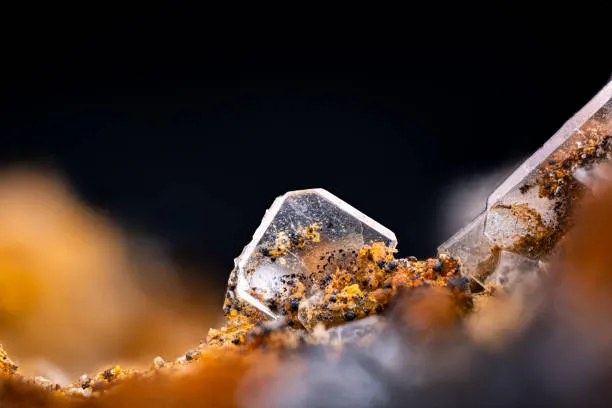
Natural Barium Sulfate is made by manually milling barite rock. The crystalline structure and any natural flaws that might slightly change the shape of the particles are kept. Chemically made precipitated barium sulfate (Blanc Fixe) is more pure and has a more even spread of particle sizes, but it still doesn't respond with electricity.
People choose between natural and man-made types of something based on how much it costs and how well it works, not on how it conducts electricity. When size and chemical protection are more important than electrolyte activity, natural grades are better for high-volume uses like drilling fluids, coatings, and plastic mixing. This is because natural grades usually cost 30–50% less.
Comprehensive Overview of Natural Barium Sulfate
Geological Formation and Extraction Sources
Natural Barium Sulfate comes from layers of hot water and soils that are high in barite (BaSO4). There are a lot of mines in China, India, Morocco, and the US. The rock is first processed to get rid of silica, iron oxides, and carbonates. Now, the particles are ground very, very small until they are between 325 mesh and 2500 mesh (D50 < 2µm).
The quality of the raw barite rock will determine how clear, white, and heavy the finished product is. It's still a big risk to buy things that you might run out of ore. People who need supplies often can't get them when sellers run out of goods in their area. This is proof of how important it is to have many places to find buyers.
Chemical Properties and Safety Considerations
The Natural Barium Sulfate has a high density of 4.2 to 4.5 g/cm³. At 3.0 to 3.5 on the Mohs scale, it is not very hard, and its refractive index is close to 1.64. Because it doesn't break down in acids or bases (like hydrochloric acid and sulfuric acid), it will stay solid for a long time in harsh industrial settings.
Safety Data Sheets (SDS) say that BaSO4 is not dangerous or deadly when treated properly. Since barium sulfate doesn't dissolve in water, the body can't take it in like liquid barium compounds can. When dealing, basic PPE like safety glasses, gloves, and dust masks are enough to keep small particles out of your lungs.
Environmental and Regulatory Compliance
In the EU and the USA, REACH and TSCA are strict rules about the environment that Natural Barium Sulfate follows. Heavy metals don't leak out or harm water because it is chemically neutral. Less damage is done to the environment when people buy things in a responsible way, like repairing land after digging and keeping dust down during processes.
If the buying team cares about the environment, they should make sure that the seller has environmental management certifications like ISO 14001 to make sure that their ESG goals are in line with those of the company.
Industrial Applications and Advantages of Natural Barium Sulfate
Key Industrial Uses
Natural Barium Sulfate is used in a variety of applications where bulk, chemical safety, and cost control are all important. Its freedom comes from how well it works, not how reactive it is. This makes it an important filler in industry. When workers who buy things know where and how this mineral works best, they can match the materials they choose to the needs of the business.
• Heavy-Duty Coatings and Paints: Industrial and Marine Primer: Natural Barium Sulfate is a good color enhancer that can be used in industrial and marine primers. It has a high density (4.2 g/cm³), so it doesn't settle as much when it's stored. The laminar structure of its particles also makes it better at stopping water and acidic salts. Titanium dioxide (TiO2) is often added to paint to make it cheaper without affecting how long it lasts or how well it blocks light. High levels-up to 40% by weight-can be used because it is clear and doesn't soak up much oil (10–15 g/100 g). This doesn't make the paint thicker or affect its ability to level.
• High-Density Drilling Fluids: Drilling muds with barite in them keep the hydraulic pressure high and stop blowouts while oil and gas are being extracted. The American Petroleum Institute (API) says that the barite needs to have a specific gravity of at least 4.2 for this very important use. Natural Barium Sulfate works well for long drilling operations even in acidic or salty settings because it doesn't dissolve.
• Engineering Plastics and Rubber Compounding: Technical Compounding: Adding 20–50% Natural Barium Sulfate to ABS, TPO, and PP thermoplastics for cars makes the parts heavier and stronger while still being easy to work with. Because it doesn't break down above 1580°C, it can be used for high-temperature injection molding and extrusion. People who work with rubber use it to make friction products like clutch linings and brake pads. This thing controls the friction ratios and slows down wear when it's hot.
• Architectural and Acoustic Insulation Materials: Barite is useful for building materials because it absorbs X-rays. Unique plywood and concrete walls are used to protect nuclear power plants and places for imaging medical tests. Its size also keeps sound from moving, which is helpful in places where noise is an issue.
Advantages Over Alternative Fillers
Natural Barium Sulfate is denser than talc or calcium carbonate, and it doesn't change the fact that it is chemically neutral. Aluminum hydroxide flame retardants break down when heated, but this doesn't. It just gives off water vapor, so plastic parts don't get holes in them. A cost study found that natural grades are 25–40% less expensive than cemented ones. This is very important for price-conscious industries like plastics and paints. Because it isn't very rough, it doesn't wear out processing tools like spray nozzles and extruder screws too quickly, which lowers the cost of maintenance. As fillers, whiteness values between 85% and 94% are good for consumer goods because they look good and don't cost too much.
Procurement Considerations for Natural Barium Sulfate
Sourcing Strategies and Supplier Diversity
The world supply lines for Natural Barium Sulfate are focused on places that do a lot of processing. Most of the large-scale production is done by Chinese sources. They have low prices, but the quality isn't always good. The scores from Indian and Moroccan sources are in the middle, and they are cleaner. Exporters with a long history, like Henghao Technology Development (Hangzhou) Co., Ltd., which has been in business for more than 20 years and does business with 33 countries, make sure that there is stability from batch to batch.
When you have a lot of different sources, you're less likely to run out of ore, have trade restrictions because of politics, or have shipping problems. If you work with at least two good sources, things will keep going smoothly even if there are shocks in the supply chain.
Pricing Factors and Market Trends
Price changes based on how white, pure, and big the particles are. The 325 mesh grades are 90% white and cost $150 to $220 per metric ton (FOB China). The 2500 mesh ultra-fine types are 94% white and cost between $280 and $350 per metric ton. Long-term contracts are better for budget security because they lock in prices over time. This is because taxes, freight costs, and changes in the value of the dollar all cause change.
Slow but steady growth is happening in the market, thanks to better infrastructure in Asia-Pacific and stricter rules on environmental treatments in North America and Europe. Barite rock prices can help you guess how prices will change because the cost of the raw material makes up 40 to 60% of the cost of the end product.
Ordering Process and Logistics
Most of the time, the minimum order number for containerized shipping is 20 tons. However, some suppliers may accept smaller sample orders (5–10 tons) at a higher price. It is important for sample requests to include details like particle size distribution, specific gravity, and clarity to make sure they match the needs of the recipe.
For standard grades, lead times are two to four weeks. For special specs that need more work, they are six to eight weeks. When sending minerals internationally by bulk carriers (for orders of 500 tons or more) or 20-foot containers (for amounts of 20 to 25 tons), you need to work with freight forwarders who know how to handle minerals that aren't dangerous.
How to Choose the Right Barium Sulfate Supplier and Product?
Defining Procurement Requirements
Things that don't follow the rules end up costing a lot of money. Set the following goals: specific gravity (4.2 to 4.5 g/cm³), clarity (85 to 94%), particle size distribution (D50: 1 to 15 µm), oil absorption (less than 20 g/100 g), and loss on fire (less than 1%). Find the right ones for the job by checking things like how long the finish stays shiny, how strong the plastic is when hit, or how thick the drilling fluid is.
There are teams in different departments that work together to make sure that Natural Barium Sulfate requirements are based on real output needs and not just industry norms.
Evaluating Supplier Credentials
Quality standards, such as ISO 9001 (Quality Management) and ISO 14001 (Environmental), show that processes are being managed in a planned way. If you want to know if the product meets ASTM D4103 (for drilling-grade barite) or ISO 3262-2 (for extender colors), ask for test data from a third party. You can either physically or online check out a supplier's facility to see how they grind, how they handle contamination, and how they keep track of their goods.
It's also important that output is stable. They are less likely to run out of coal if they own the mines or have long-term contracts to supply it. Henghao Technology Development (Hangzhou) Co., Ltd. has been providing markets around the world nonstop for 20 years and is a good example of a business that can both find things and process them.
Building Long-Term Partnerships
In business partnerships, quality doesn't always stay the same. People who have strategic relationships can share knowledge about the market, work goals, and quality measurements, which makes them more open. Talk about deals that last a year and include promises for buying in bulk to get better prices and first choice when stocks are low.
Regular performance reports can help you keep track of delivery times, batch stability, and how quickly technical questions are handled, which will make your supplier portfolios work better. To change things like the grind specs or the way the package is laid out, everyone is better off when they work together to find solutions.
Conclusion
An element that is not very strong is barium sulfate. It is clear from this that it is not used as a conductor but as a chemically neutral, high-density industrial filler. Natural Barium Sulfate is useful for many things, including coatings, plastics, drilling fluids, and friction. It dissolves easily and has mechanical benefits like a high specific gravity, low abrasiveness, and low cost. To buy something, you need to be very clear about what you want, find a lot of suppliers so you don't run out of ore, and work with well-known companies that can give you regular goods and services you can count on. If you do your scientific due diligence and check certificates, particle size distributions, and examples, you can be sure that the product meets production goals and has the lowest total cost of ownership.
FAQ
Does Natural Barium Sulfate Conduct Electricity?
Not at all. Natural Barium Sulfate doesn't mix with water (0.00024 g/100 mL), so there isn't a lot of ionic dissociation at play. That it doesn't react with electricity makes it great for things that need to keep electricity out, like anti-static coats or wire compounds, where conductivity by mistake could be dangerous or hurt performance.
What Purity Level Should We Specify for Coating Applications?
With less than 1.5% SiO2 and less than 0.3% iron particles, Natural Barium Sulfate that is suitable for applications should have a BaSO4 content of 95–98%. Higher clarity lowers the amount of coarse impurities that damage spray equipment and make it easier to keep the white color. Topcoats for cars and buildings shine and level better with ultra-fine grades (D50 < 3µm).
How Do We Verify Supplier Ore Stability?
Ask to see proof of mine stocks and permits. Suppliers who own more than one resource or have long-term deals with mines are less likely to lose their supplies. For big, important contracts, having a third party do site checks or geological studies can make things safer.
Partner with a Trusted Natural Barium Sulfate Supplier
When you find a reliable source of high-quality Natural Barium Sulfate, getting it goes from being a problem to a chance to get ahead of the competition. Barium sulfate of industrial grade has been sold by Henghao Technology Development (Hangzhou) Co., Ltd. since 2003 to companies in the drilling, plastics, and paints industries. With stable quality and cheap factory-direct prices, they've helped people in 33 countries. International standards are very strict, and our types of Natural Barium Sulfate meet them.
They are white up to 94% of the time, have a specific gravity above 4.2, and come in particle sizes that are made to fit your recipe. You can get in touch with our expert team at info@henghaopigment.com to get a price, see some examples, or talk about special needs. As a Natural Barium Sulfate supplier, our goal is to help you reach your production goals by giving you stable supply lines and expert advice.
References
1. American Petroleum Institute (2019). Specification for Drilling-Fluid Materials (API Specification 13A), 18th Edition. Washington, DC: API Publishing Services.
2. Greenwood, N.N., & Earnshaw, A. (2012). Chemistry of the Elements, 2nd Edition. Oxford: Butterworth-Heinemann.
3. International Organization for Standardization (2016). ISO 3262-2: Extender Pigments for Paints - Specifications and Methods of Test - Part 2: Barium Sulfate. Geneva: ISO.
4. Wypych, G. (2021). Handbook of Fillers, 5th Edition. Toronto: ChemTec Publishing.
5. Industrial Minerals Association (2020). Global Barite Market Analysis: Supply Chains, Applications, and Pricing Trends. London: IMA Research Publications.
6. Smith, R.L., & Johnson, M.T. (2018). Functional Fillers for Polymer Applications: Theory and Industrial Practice. New York: Wiley-VCH.


