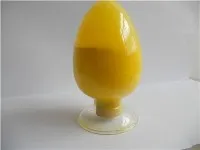


Processing barite powder for coating applications transforms raw barite ore into coating grade barite powder through a series of controlled industrial steps. The journey begins with selective mining of high-purity barite ore (BaSO₄), followed by crushing, precision grinding to achieve specific particle size distributions (typically 1-10 microns), air classification to separate fine fractions, and optional surface modification using coupling agents or dispersants. This refined powder delivers exceptional specific gravity (4.2-4.5 g/cm³), brightness, and chemical inertness-properties that make it invaluable as an extender pigment, enhancing opacity and texture while reducing formulation costs in industrial paints and protective coatings.

Understanding Coating Grade Barite Powder
Mineral additives include barite powder made for coatings, which is a specific type of mineral additive because of its carefully controlled chemical makeup, particle features, and surface qualities. Barium sulfate is the main mineral in raw barite ore, but it needs to be refined a lot before it can be used as coating grade barite powder. This is done to get rid of any impurities and improve its performance.
Chemical Composition and Purity Standards
Coating grade barite powder usually has a molecular purity of more than 95% BaSO₄, and luxury grades have it at 98% or higher. This high level of purity makes sure that performance is the same across batches, which is very important when colour stability and formulation reproducibility are at stake. Small amounts of impurities like silica, iron oxides, and biological matter should be avoided because they can change the colour, make the whiteness less stable, or cause problems with how well binders and dyes work together. Several stages of washing and beneficiation remove these impurities during processing, leaving behind a powder that will behave predictably in complex coating systems.
Particle Size Distribution and Morphology
The particle size distribution may be the most important specification for coating uses. Paint makers usually need particles with a median size (D50) of between 1 and 10 microns, along with narrow distribution curves that make sure the particles are spread out evenly and have the best spacing effect. If the powder is too coarse, it can change the appearance. If it is too fine, it could make the liquid thicker or less opaque per unit weight. Advanced technologies for grinding and sorting particles allow suppliers to precisely control particle size profiles, which means they can make products that fit the needs of each application, whether they're making high-gloss automotive finishes that need particles that are less than a micron in size or textured architectural coatings that do better with slightly coarser grades.
Surface Treatment Technologies
Modern coating grade barite powder often has its surface changed to make it work better with organic binder systems. Coupling agents, like silanes or titanates, build chemical bridges between the inorganic barite surface and polymer matrices. This makes the pigments disperse more evenly and stops them from sticking together. Some grades get fatty acid coats that make them hydrophobic. This is especially helpful in liquid coating systems where problems with moisture can make the shelf stable. When buying teams compare what suppliers have to offer, they should look at these surface processes that make the difference between good performance and great dispersion, wetting, and long-term stability.
Step-by-Step Processing of Barite Powder for Coatings
A carefully planned series of processing steps is needed to turn raw barite rock into high-performance coating additives. Each step is meant to improve a different property of the powder. Knowing how the product goes from mine to finished product helps procurement professionals understand the technical challenges of maintaining quality and make smart decisions about which suppliers to choose.
Mining and Initial Beneficiation
The process of processing starts in barite mines, where geological studies help choose which high-grade ore bodies to extract. For coating-grade uses, barite mines with few impurities are needed. These are usually found in vein formations instead of residual or sedimentary sources, which might have more gangue minerals. After the ore is extracted, it is first crushed into workable chunks, usually 50–100 mm in size. This is followed by washing steps that get rid of clay, dirt, and soluble salts. In the first step of benefication, the purity is set, which is then built upon by all the other steps.
Precision Grinding Operations
For coating applications, you need very advanced grinding technology to get the narrow particle size distributions you need for coating grade barite powder. Most crushers use jet mills, ball mills, or vertical roller mills that can make pieces as small as a micron and with controlled sizes. Jet milling, which uses fast air streams to make particles collide with each other, makes very fine powders with almost no chance of contamination. It is the best way for making top grades. Ball milling is a cost-effective way to make medium-fine grades, and it can be used continuously and with a high output. During grinding, process factors like feed rate, mill speed, and classifier settings are constantly changed to keep target particle specs. This makes sure that stability from batch to batch is maintained, which is important for coating formulators.
Air Classification and Separation
After the powder has been ground, air classification systems separate it into exact size groups. Different air speeds are used by cyclonic separators and dynamic classifiers to sort particles by mass and aerodynamic width. Fine particles are sent to collection systems, while larger particles are sent back for more grinding. This closed-loop classification makes sure that only particles that meet the requirements make it to the finished product stream. This gets rid of the coarse tail that could cause problems with the coating.
Ultra-narrow distributions can be made with multiple classification steps, which is especially useful for high-performance coating uses where consistency is key. How well and accurately classification equipment works has a direct effect on the quality and yield of the product, which in turn affects prices and the reliability of the supply chain.
Surface Modification and Coating
Surface modification is becoming more and more common in modern coating grade barite powder as a way to add value to the processing step. Once the particle size is just right, the powder can go through high-intensity mixers that apply coupling agents, dispersants, or hydrophobic coatings while keeping the temperature and shear conditions under tight control. These processes attach chemically to the surface of the barite, changing the interface in a way that makes it better for using organic resins and colours.
To get even coverage without using too many agents, the change process needs precise chemical doses and reaction control. Barite that has been treated on the surface performs better in terms of how easily it disperses, how well it accepts colour, and how stable it is over time. These are all qualities that make the higher price worth it for demanding applications.
Quality Control and Testing Protocols
During processing, strict quality control methods make sure that the result is always the same. Laser diffraction particle size analysers tell you how well grinding and sorting are working in real time. Spectrophotometry measurements of whiteness and brightness show that the washing and beneficiation steps have successfully removed impurities that change the colour. Chem tests prove the amount of BaSO₄ present and measure the amount of remaining impurities. Moisture content, oil absorption values, and specific gravity readings are some of the other tests that reliable providers do as part of their thorough testing procedures. These quality checkpoints give procurement teams the consistency and traceability they need to evaluate suppliers and form long-term partnerships.
Comparison: Coating Grade Barite Powder vs Regular Barite Powder
Knowing the differences between coating grade barite powder and commodity-grade barite helps procurement professionals make the case for spending more on high-quality products and make smart sourcing choices that are in line with their quality goals and budgets.
Performance Differentials in Coating Systems
For measured performance benefits over regular barite, coating grade barite powder has better particle characteristics and higher purity. The biggest difference can be seen right away in how opaque and hidden something is. Coating grade barite powder's optimised particle size distribution creates the perfect space between titanium dioxide particles, which makes the opacity contribution of expensive TiO₂ even greater while lowering overall pigment costs by 15 to 25 percent. Regular barite can't do this spacing effect well because it has a wider range of sizes and a rougher median diameter. It needs bigger TiO₂ loadings to have the same level of hiding power.
In addition to being opaque, coating grade barite powder helps control the gloss and surface roughness. Its small particle size makes sure that the film builds up evenly and that surface irregularities that cause gloss changes or orange peel effects are kept to a minimum. The higher chemical purity stops colour changes, yellowing, and reactions that can happen with common types that have iron oxide or organic impurities in them. Modern resin systems work better with surface-treated coating grades. This is especially true for water-based formulations where controlling the viscosity and stability of the dispersion is a constant challenge.
Cost Considerations and Value Proposition
At first glance, the price difference between coating grade barite powder and common grades-usually 30–50% higher-seems big. Total cost study, on the other hand, shows a strong value argument. The better visibility efficiency cuts down on the amount of titanium dioxide needed, which more than makes up for the higher cost of barite. When paint is made, better spreading properties cut down on mixing time and energy use. Consistency and purity cut down on batch fails, repairs, and customer complaints, all of which have hidden costs that are much higher than the difference in the prices of raw materials.
Supply Chain Reliability and Supplier Qualifications
To make coating grade barite powder, you need stable access to high-quality ore reserves, advanced processing infrastructure, and technical know-how. Compared to commodity barite, this makes it harder to find qualified suppliers. This can lead to risks in the supply chain, especially when procurement teams only use a few or one source. But qualified coating-grade providers usually have more stable operations, better technical support, and a stronger commitment to quality systems. These things lower the total risk in the supply chain, even though there are fewer of them. When hiring sources, procurement professionals should look at the ore reserves, processing capacity, quality certifications, and track record of each seller. They should also balance affordable prices with supply continuity and expert support.
How to Evaluate and Select High-Quality Coating Grade Barite Powder?
To get coating grade barite powder that works, you need to use evaluation systems that carefully consider technical requirements, supplier abilities, and cost factors. With 20 years of experience providing mineral additives to coating makers around the world, I've put together useful tips to help buying teams confidently choose suppliers.
Critical Technical Specifications
Before hiring providers, people who work in procurement should make sure they have clear specifications. The main requirement is the particle size distribution; ask for laser diffraction data with D10, D50, and D90 values along with full distribution graphs. For coating purposes, D50 should be between 1.5 and 8 microns, and the spans should be narrow (D90/D10 ratio should be less than 5), to make sure uniformity.
Chemical purity should be checked using a BaSO₄ content analysis (at least 95%, preferably 98%+) and impurity profiles that measure the amount of iron oxides, silica, and organic matter. Standardised methods for measuring whiteness and brightness give information about visual performance. The amount of oil absorbed shows the structure and surface area of the material, which changes how it spreads and behaves. To check if a supplier is consistent, ask for certificates of analysis that list these parameters for more than one production batch.
Supplier Qualification Framework
In addition to product specs, a supplier's operational skills and business dependability should also be taken into account. Check the safety of the rock reserves and the expected length of time that the mine will last. Suppliers with reserves that are more than ten years old show commitment and supply security. Depending on your volume needs and processing capacity, you can tell if you are a strategic customer or a marginal account. Certifications in quality management, like ISO 9001 or industry-specific standards, show that quality practices are being followed in a planned way. Ask for customer references from similar projects and do site checks when you can, especially before committing to a supplier for an important project or a large number.
Sampling and Trial Protocols
Tough sampling rules for coating grade barite powder lower the risk of approval and make sure the product works before making bigger investments. Ask for samples that are typical of several production runs instead of "sales samples" that were made just for you and might not be typical of production. Do dispersion trials in the lab to see how easy it is to mix, how the viscosity changes over time, and how stable it is overall. Make test runs of your real coating recipes and test important performance factors like how opaque, glossy, color-accepting, and easy to apply they are. Compare the trial results to the standard material you're using now and examples from other companies. This methodical technique finds possible problems before they stop production or lower the quality of the result.
Balancing Price and Performance
Competitive pricing is still important, but buying things based only on the lowest price is often a waste of time and money. Think about the total cost of ownership, which includes the price of the materials, the cost of shipping them, the cost of keeping an inventory, and the secret costs of problems with quality or supply. Premium coating-grade providers usually offer expert support, help with formulation, and quick customer service that go beyond the material itself and add value. Talk about pricing systems that reward promises to buy a lot of things while still allowing for changes in demand. When thinking about dual-sourcing methods for important applications, you should weigh the benefits of supply security against the benefits of volume concentration.

Conclusion
Barite powder is turned into a high-performance addition that is essential to modern paint and coating formulas through a complex process that requires a lot of technical know-how. Suppliers get coating grade barite powder that has the purity, particle characteristics, and surface properties that improve opacity, texture, and durability while lowering formulation costs. This is done through controlled mining, precision grinding, air classification, and optional surface modification.
When working in this market, procurement professionals have to make sure they get competitive prices while also making sure quality is consistent and supplies are reliable. The framework described in this guide-which focuses on technical specs, seller qualifications, systematic sampling, and total cost-helps you make smart decisions that balance short-term costs with long-term strategic goals. Understanding sustainability, regulatory compliance, and supply chain dynamics trends in the industry helps procurement teams predict changes in the market and form partnerships with forward-thinking suppliers that will be successful in the long run.
FAQ
Q1: What specific properties make coating grade barite powder superior to regular barite in paint formulations?
A: Coating grade barite powder has several important benefits, including a narrow particle size distribution (usually D50 1.5-8 microns) that makes the spacing between TiO₂ particles optimal for maximum opacity; higher chemical purity (95–98%+ BaSO₄), which stops colour shifts or reactivity problems; and often surface modification that makes dispersion more stable and resin compatibility better. Compared to commodity-grade barite, which has a wider range of sizes and is less pure, these qualities cut TiO₂ use by 15–25%, make the texture more regular, and make the coating last longer.
Q2: How do I verify quality consistency across different production batches?
A: Ask for analysis certificates from several production batches that show the particle size distribution, BaSO₄ content, whiteness, and impurity profiles. To find out how different these are, compare them to your requirements. Check the quality of new materials on a regular basis using chemistry tests and laser diffraction particle analysis. Keep some sample files from each lot for future use. Suppliers who are qualified show statistical process control with variation factors below 5% for key parameters. This shows that their quality management systems are strong.
Q3: Can suppliers customize barite powder specifications to meet unique coating requirements?
A: Suppliers you can trust will let you change the processing options to fit your needs, such as the target particle size, surface treatments, or purity levels. When you customise something, you usually have to place a minimum order quantity and there may be lead times for product development. Talk to the technical teams of potential suppliers early on in the qualification process about your technical needs to find out if they are possible, how much they will cost extra, and what the business terms are. Premium providers offer recipe help to help you choose the best powder for your coating system.
Partner with Henghao Technology for Premium Coating Grade Barite Powder
To get the best coating performance while keeping costs low, you need a mineral additive supplier that knows how hard it is to make formulations work and can guarantee consistent quality. For more than twenty years, Henghao Technology Development (Hangzhou) Co., Ltd. has been a leading provider of coating grade barite powder to paint and coating companies all over the world. Our dedication to quality starts with carefully picking the ore sources we use. It continues in our state-of-the-art processing plants, which are equipped with precise grinding and sorting systems that produce very pure particles.
Because we know that each coating application has specific needs, our technical team works directly with your formulation experts to suggest the best grades and help with the application. Our range of products has the performance features you need whether you're making architectural coatings, industrial protective systems, or speciality finishes. Before you place a bigger order, you can ask for free samples of our coating grade barite powder supplier to see how it works in your formulas. Our flexible bulk buying options strike a good balance between low prices and reliable delivery times. They are backed up by thorough quality paperwork and helpful customer service. You can email our team at info@henghaopigment.com or visit henghaocolor.com to talk about your specific needs and find out how our experience, technical skills, and dedication to working with you can help you compete in the tough coating markets.
References
1. Kogel, J.E., Trivedi, N.C., Barker, J.M., and Krukowski, S.T. (2006). Industrial Minerals & Rocks: Commodities, Markets, and Uses. Society for Mining, Metallurgy, and Exploration.
2. Lambourne, R. and Strivens, T.A. (1999). Paint and Surface Coatings: Theory and Practice. Woodhead Publishing Limited.
3. Wypych, G. (2016). Handbook of Fillers (Fourth Edition). ChemTec Publishing.
4. Winkler, J. (2003). Titanium Dioxide: Production, Properties and Effective Usage. Vincentz Network.
5. Brock, T., Groteklaes, M., and Mischke, P. (2010). European Coatings Handbook. Vincentz Network.
6. Patterson, S.H. and Murray, H.H. (1983). Industrial Minerals and Rocks in the Coatings Industries. American Institute of Mining, Metallurgical, and Petroleum Engineers.