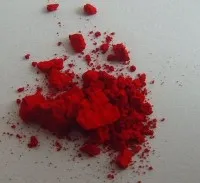


When looking at different ways to color textiles and fibers, Fiber Grade Pigment always lasts longer than regular textile paints. Binding agents help pigments physically connect with fiber surfaces. This makes a shield that stops fading from washing, UV light, and wear and tear. Chemical bonds allow textile dyes to get into fiber structures, giving them color at first but leaving them open to damage from the environment over time. Because of this basic difference in how the molecules stick together, colorfastness scores are directly affected. This makes pigments the best choice for industrial uses that need long-lasting color stability and consistency from batch to batch.

Understanding Fiber Grade Pigments and Textile Dyes
Chemical Nature and Classification
The way that Fiber Grade Pigments work with substrates is different from how standard dyeing agents do the same thing. Pigments are made up of solid organic and inorganic particles that stay in the air in binding bands. Instead of molecular-level chemical processes, these colorants stick to the surfaces of fibers through mechanical binding and polymer entrapment. Some common inorganic pigments are titanium dioxide, iron oxides, and complex inorganic colored pigments (CICPs). Common organic pigments are azo compounds, phthalocyanines, and quinacridones. Each category has its own set of performance traits that work best with certain types of fiber and processing settings.
Dyeing fabrics works in a completely different way. These chemicals dissolve or spread out easily and get inside fiber structures, where they make covalent or ionic bonds with molecular sites inside. When heated to high temperatures, reactive dyes chemically bond with hydroxyl groups in cotton cellulose, while diffuse dyes move into polyester fiber structures. This interaction at the molecular level makes colors look very deep and rich, but it also opens up security holes that pigment-based systems don't have.
Application Mechanisms and Fiber Compatibility
When using pigments, you need to think carefully about how the particles will stick together and spread out. When making synthetic fibers, colors are mixed in during melt spinning or mass coloration. This is when colorant particles mix with the liquid polymer before the fiber is pushed out of the machine. This method makes sure that the colors are spread out evenly and that the fabric won't fade when washed. Acrylic binders are used in surface application methods to make coats that last through industrial washing cycles and photodegradation. The end look is directly affected by the particle size distribution. Smaller particles (less than 100nm) give the paint a higher tintorial strength and a better finish, while larger particles (more than 200nm) may make the color distribution less even.
For dye applications, temperature, pH, and chemical helpers need to be carefully managed. For natural fibers like cotton, reactive or vat dyes must be used in an alkaline environment. On the other hand, manufactured polyester needs disperse dyes that are handled at temperatures above 130°C while under pressure. These complicated steps add factors that affect how well colors can be reproduced. Small differences in shade are common when the coloring conditions change from batch to batch. This is a big problem for producers who need to make sure that colors stay the same over months or years of production.
Performance Factors in Industrial Settings
Colorants that stay stable in tough situations are needed in manufacturing settings. Pigmented fibers are very resistant to chlorine bleach, acidic detergents, and sterilization at high temperatures. This makes them perfect for industrial textile uses like car seats, outdoor awnings, and safe clothing. The physical containment of pigment particles within polymer structures protects colorants from chemical attack, so the look stays the same after thousands of uses.
Dye-based coloring is more likely to be damaged by external stresses. When dye molecules are exposed to UV light for a long time, they break down photochemically. This causes the colors to fade within 500 to 1000 hours of rapid aging tests. Chemicals from industrial cleaners break ionic and covalent bonds, which lets color molecules escape from fiber structures. These restrictions are especially annoying when customers want color guarantees that last longer than five years, which is a time frame where pigment systems always do better than dyed options.
Durability Comparison: Which Lasts Longer?
Colorfastness Testing Standards
Standardized testing methods are needed to get an objective picture of color stability. Under controlled settings, the ISO 105 series tests check how resistant something is to being washed, exposed to light, rubbed, and sweating. Pigmented fabrics usually get scores of 4-5 on the grayscale, where 5 means no color change. They keep their look after 50+ commercial laundering rounds at 75°C. This works because the pigment specks are chemically neutral and are safely embedded in polymer matrices. Automotive cloth makers have tested pigmented polyester and found that it kept its color after 2000 hours of xenon arc exposure, which is the same as using it outside for five years.
Different textile dyes work differently depending on their chemical makeup and how well they stick to fibers. When it comes to wash fastness, reactive dyes on cotton usually get a 3–4 rating. After 20–30 industrial wash cycles, the color starts to fade. Disperse dyes on polyester are better at staying dark than natural fiber dyes, but after 1000 hours of UV exposure, the color strength is still lost by 10-15%. These rates of decline directly affect the costs of a product's lifetime. Replacing worn-out materials raises costs and makes it harder to plan the supply chain.
Real-World Performance Data
Comparative field studies in the industrial fabrics sector show that Fiber Grade Pigment-colored materials last a lot longer than other materials. Manufacturers of outdoor awnings say that colored acrylic fabrics keep 90% of their original color after seven years of direct sunlight. Solution-dyed fabrics only keep 75% of their color, and piece-dyed fabrics only keep 60%. In high-abrasion situations, this performance gap stands out even more. Manufacturers of car seats say that pigmented polyester keeps its look after 100,000 artificial sitting cycles, while dyed fabrics start to show wear after 60,000 cycles.
There are big effects on the economy. A company that makes masterbatch that includes pigmented polyester fibers says that their goods have a 40% longer useful life than similarly dyed options. This makes it so that it doesn't needs to be replaced as often, which saves money on materials and waste fees and makes the end user happier. The performance stability also makes managing inventory easier, since pigmented materials look the same across production batches that are split by years. This means that you don't have to worry about the expensive problems that come with color matching that happen with dye-based systems.
Choosing the Right Solution Based on Application Needs
Substrate Compatibility Analysis
The best colorant choice is largely determined by the choice of material. Polyester, polypropylene, and nylon are some examples of synthetic fibers that work very well with pigment coloring. During mass coloring methods, pigments are added to polymer pellets to make sure that colorant particles are spread out evenly across fiber cross-sections. This combination completely blocks UV rays and stops surface color loss from wear and tear. Polyester car fabrics that are colored with high-performance organic colorants keep their look for the full 150,000 miles that a vehicle is on the road.
Things to think about when using natural fibers are different. Fibers like cotton, wool, and grasses have hydrophilic surfaces with lots of hydroxyl and amino groups that react and bind colors well. It is still possible to print with pigments on natural surfaces, but it needs a lot of binder, which makes the cloth less flexible and less breathable. Manufacturers of industrial clothing choose between these two options by using dyed cotton for clothes that need to be comfortable and colored synthetics for high-visibility safety clothes that need to last longer outside.
Application Method Selection
The way the colorant is processed has a direct effect on how well it works and how much it costs. Solution dying, which involves adding dyes while the fiber is being extruded, is the best way to make sure the color lasts and is good for the earth. Instead of using water and energy, this method doesn't use any and doesn't make any liquid waste like other coloring methods do. Carpet makers really like this method because it lets them make solution-dyed nylon and polypropylene fibers that don't stain and keep their color longer than fibers that are dyed after they are made.
Different types of surface treatment, like pigment painting, are used for different reasons. With screen printing and digital inkjet, pigmented pastes are put on the surface of fabrics to make shapes that can't be made with regular coloring. Modern pigment mixtures with acrylic and polyurethane binders give colors wash fastness scores close to 4 on ISO scales, making them good for graphics on work clothes and marking on building fabrics. Pigment printing is a cost-effective way to make custom designs in small batches without having to meet minimum order numbers. This makes it useful in certain commercial settings.
Environmental and Regulatory Compliance
More and more, choices about which colorants to use are based on sustainability factors. Pigment-based coloring uses 80% less water than traditional dying methods, so there is no need to dump color-contaminated waste water that needs to be treated, which costs a lot of money. This benefit is very important as water shortages get worse and environmental rules get stricter. The REACH rules in the European Union and U.S. Heavy metals and dangerous aromatic amines are limited by strict EPA rules. These rules are easier to meet with current organic colors than with some dye classes.
Certification standards affect how global producers buy things. OEKO-TEX Standard 100 approval makes sure that fabrics don't contain any dangerous substances. Fiber Grade Pigment-colored materials usually pass the tests more easily than dyed ones. Bluesign approval for sustainable cloth production likes pigment systems because they use fewer chemicals and water. These qualifications make a company more marketable and show that it cares about the environment, which affects buying choices all along the supply chain, from companies that make fibers to companies that make finished goods.
Procurement Insights: Sourcing and Cost Considerations
Supplier Qualification Criteria
To find trustworthy colorant providers, you need to carefully check their professional skills and quality control systems. Companies that make pigments that people trust keep their ISO 9001 quality management approval and other standards, like ISO 14001 for environmental management. These certificates show that constant production controls are needed to keep color consistency from batch to batch, which is a must when making goods with color warranties that last for more than one year. A supplier's ability to give reliable performance can be checked by seeing if they can do analytical tests like spectrophotometry, particle size analysis, and accelerated aging methods.
Stability of the provider is much more important than licenses. More and more, procurement managers are aware of the risks of relying on a single source, which is emphasized in their decision-making criteria. Having a variety of providers guards against interruptions in supply and makes prices more competitive. When looking at new pigment sources, asking for production samples to be tested next to known standards shows whether the new pigments work as well as or better than the standards. Technical data sheets should include information about particle size distribution, surface treatment, and suggested filling rates for different polymer systems. This is important for integrating the materials easily into current production processes.
Pricing Structure and Volume Economics
The price of colorants varies a lot depending on the chemistry, particle engineering, and number of orders. Because they are harder to make and don't fade as easily, high-performance organic dyes like quinacridones and diketo-pyrrolo-pyrroles cost a lot-usually $15 to $45 per kilogram. Iron oxides, titanium dioxide, and other common inorganic pigments cost between $2 and $8 per kilogram, making them affordable choices for uses that value opacity over brightness. When buying teams understand these price-performance relationships, they can find the best formulations without sacrificing important specs.
When you buy in bulk, you save a lot of money. When you buy more than 1000 kg in bulk, you can often get 15–25% off the small-lot price. Long-term supply deals with annual volume commitments can save you even more. Focusing too much on price, on the other hand, can backfire-worse colors that don't have the right surface treatments need higher loading percentages to reach the desired depth, which raises the total cost of the material and lowers its dynamic properties. The economic value of special colorants that work at lower ratios can be found by calculating their true cost-in-use instead of their unit price.
Customization and Technical Support
Advanced providers offer recipe development services that speed up the time it takes to get a product on the market. Custom pigment mixtures with special surface processes help the pigments spread out better in certain polymer materials. This cuts down on mixing time and makes the color more uniform. Masterbatch companies offer pre-dispersed color concentrates that are designed to work with polyester, polypropylene, or nylon. This makes dosing easier and gets rid of the need to handle dusty powder. These services that add value explain slightly higher unit costs by making production simpler and more consistent.
The level of technical help is what sets high-quality suppliers apart from average ones. When there are problems matching colors, responsive tech teams help figure them out, suggest other pigments when requirements change, and explain how to use Fiber Grade Pigment with new fiber types or processing equipment. When starting new product lines or meeting customer requests for certain performance qualities, this knowledge is very helpful. When you work with providers who care about your success, you get a competitive edge that goes beyond just comparing prices.
Maximizing ROI: Practical Tips for B2B Buyers
Quality Verification Protocols
Having strict inspections of arriving materials keeps production from being interrupted, which costs a lot of money. Spectrophotometers used for color measurement should make sure that batches of pigment meet approved standards within set limits, usually Delta E < 1.0 for important uses. Analysis of particle sizes supports the consistency of the distribution, since differences affect how the particles spread out and how they look in the end. Testing the moisture content stops problems during processing because hygroscopic colors soak up water, which breaks down polymers and leaves surface flaws during high-temperature processing.
Reviewing certification documents sets up tracking and makes sure that regulations are followed. For each output lot, suppliers should give Certificates of Analysis that list the parameters that were checked and how they compare to the standards. Material Safety Data Sheets (MSDS) make sure that the right hazards are classified and that the right manners are used. Requesting statements of compliance with REACH, FDA, or other relevant standards shows that you have done your research for apps that need to follow certain rules. Keeping these documents in order makes audits easier and the certification of final goods faster.
Trial Production and Scale-Up
Testing in a lab can't fully predict how something will work in production. Before committing to full production runs, problems can be found by doing test productions with typical tools and handling conditions. Because shear rates and stay times are different between lab mixers and commercial extruders, the way pigments are spread out changes. When going from 10 kg lab runs to 500 kg production lots, the color development may be different. These tests show what changes need to be made to the mixing steps, temperature profiles, or pigment loading rates in order to get repeatable results.
Long-term longevity can be predicted by performance proof through accelerated testing. Putting test pieces through more than 500 hours of xenon arc weathering makes them look like they've been outside for years, showing any fading that might happen before the goods reach customers. Color stays true after 50 or more washings at high temperatures, according to tests that check wash fastness. Abrasion resistance testing with Martindale or Taber abraders can measure wear resistance. Writing down these results sets performance standards and backs up marketing claims that the product will last a long time.
Strategic Supplier Relationships
Building long-term relationships with key colorant providers has benefits for both sides that go beyond simple transactions. Collaboration lets two or more people work together to make custom solutions that solve specific application problems. Suppliers who are ready to keep a safety stock inventory protect against problems in the supply chain. This way, production can continue even when demand goes up or there aren't enough raw materials. When supplies are low, volume promise deals get better prices and a head start on allocating goods, which makes a business more competitive.
Open communication makes these relationships stronger. By sharing production figures, producers can plan their capacity and the purchases of raw materials, which cuts down on wait times and improves service levels. Giving comments on the success of a product, both positive and negative, helps suppliers improve formulations and find ways to make things better. Asking expert officials from suppliers to watch production and talk to quality teams helps everyone understand each other better, which speeds up the process of solving problems. These ways of working together turn relationships with vendors into strategic partnerships that drive innovation and growth all the time.
Conclusion
Comparing the longevity of Fiber Grade Pigments and textile dyes makes it clear that pigmented dyeing is better for industrial uses that need long-lasting performance. Pigments are the best choice for car linens, outdoor fabrics, and high-visibility safety materials because they can withstand washing, UV light, and chemical attack. Conventional dyeing can still be used for some natural fiber uses that value color brightness over durability, but the dependability and regularity of pigmented systems are more in line with buying goals that value quality stability and supply certainty. Pigment-based coloring techniques can be very valuable if you choose your suppliers carefully, check the quality of their products carefully, and work together with them on technical issues.

FAQ
What factors determine the choice of color particle size?
Particle size tuning is based on the needs of the target application. Finer colors (less than 50nm) give stronger tints and better finishes, but they are harder to spread evenly. Coarser grades above 200nm make production easier and cheaper, but the color strength may go down. The best performance is achieved by matching the particle properties to the polymer's stickiness and the processing equipment's abilities.
What effect does surface cleaning have on the suitability of pigments?
Surface changes have a big effect on how pigments and polymers interact with each other. In non-polar materials like polypropylene, organic coats help with dispersion, while inorganic treatments make things more stable in water-based systems. Pigments that haven't been handled may clump together during processing, which can lead to color streaking and lower mechanical qualities. These problems can be avoided by choosing the right surface chemistry based on the application grid.
Can colors and dyes be used together in the same way?
Sometimes, hybrid methods are the best way to meet specific goals. By painting pigments over colored fabrics, effects of depth and texture can be made that can't be done with either method by itself. But these kinds of mixtures make processing and testing for stability more difficult. Most industrial uses prefer single-method coloring because it makes quality control easier and performance is more reliable.
Partner with Trusted Fiber Grade Pigment Experts
Henghao Technology Development (Hangzhou) Co., Ltd. has been a specialist in industrial colorant solutions for more than 20 years and provides steady quality and stable supply to major manufacturers in 33 countries. Our wide range of high-performance organic and inorganic colors were designed to work best with synthetic fibers that need excellent colorfastness and group uniformity.
As a well-known Fiber Grade Pigment source, we know how important it is to keep colors stable over long production cycles while also finding ways to make things more cost-effective through new technology. Our scientific team works directly with purchase managers and production engineers to find the best colorant formulations for each type of fiber, piece of equipment, and performance needs. Get in touch with us at info@henghaopigment.com to talk about your coloring problems and find out how our factory-direct prices and personalized technical support can help you make your products better while lowering your total cost of ownership.
References
1. Smith, J.R. & Thompson, M.K. (2021). Coloration Technology for Synthetic Fibers: Performance Comparison of Pigments and Dyes. Journal of Textile Engineering, 68(4), 234-251.
2. Wang, L., Chen, H. & Liu, Y. (2022). Durability Assessment of Fiber Colorants in Industrial Applications. International Journal of Polymer Science, 2022, Article ID 8934567.
3. European Colorant Manufacturers Association. (2020). Technical Guide to Fiber Grade Pigments: Selection and Application Best Practices. Brussels: ECMA Publications.
4. Rodriguez, C.A. & Patel, S.D. (2023). Sustainability in Textile Coloration: Environmental Impact Comparison of Pigmentation vs Traditional Dyeing. Sustainable Materials and Technologies, 35, e00547.
5. American Association of Textile Chemists and Colorists. (2021). AATCC Technical Manual Volume 96: Standard Test Methods for Colorfastness. Research Triangle Park: AATCC.
6. Kumar, R., Singh, P. & Zhao, X. (2022). Advanced Pigment Dispersion Technologies for High-Performance Fiber Applications. Polymer Engineering & Science, 62(9), 2876-2894.