


When selecting pigments for industrial applications, gloss performance often determines the final product's market appeal and functional quality. Carbon Black Pigment typically delivers lower initial gloss compared to many organic pigments due to its light-absorbing structure, but its performance can be optimized through careful selection of particle size, structure, and surface modification.
Organic pigments, conversely, offer a wider range of gloss levels depending on their molecular architecture and surface chemistry. Understanding these differences empowers procurement managers and technical engineers to make informed decisions that align with specific application requirements, whether prioritizing deep matte finishes or high-gloss automotive coatings.
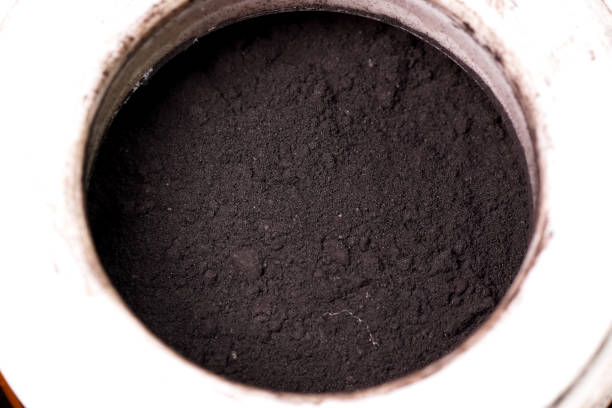
Understanding Gloss Performance in Pigments
The ability of a surface to reflect light in a specular rather than a diffuse way is called gloss. Gloss has a direct effect on how things look, how good they are thot to be, and how useful they are, like how easy they are to clean and how well they fight weather. Gloss meters are standard tools that measure how much light is reflected at certain angles (20°, 60°, or 85°), and the results are given in gloss units. When making purchasing decisions, consistent gloss evaluation is very important because even small differences from batch to batch can lead to visible mismatches in finished goods, which can lead to expensive rework or customer complaints.
Key Factors Influencing Gloss
How pigments affect final gloss performance is based on a number of factors that are all connected. The most important factor is the size of the particles. Smaller particles tend to scatter less light, which could lead to a higher gloss when they are spread out properly. Shape of the particles also matters-round particles tend to pack more evenly than uneven ones, making surfaces that are smoother.
Surface processes, like oxidation or polymer coating, change how well things stick together and mix, which has a direct effect on how colors react with binders. The visual result is also affected by the pigment-to-binder ratio, the smoothness of the base, and the curing conditions. This makes it difficult for buyers who are focused on quality.
Intrinsic Optical Properties
Pigments' basic visual properties come from the chemicals they are made of and how they are structured. Pigments with complex aggregate structures and high refractive indices absorb and scatter light in different ways than pigments with simpler molecular arrangements. Carbon Black Pigment is good at blocking UV rays and giving colors a deep black tone because it absorbs a lot of light across the visible spectrum.
This naturally lowers specular reflection. Organic pigments are made up of conjugated aromatic systems that selectively absorb light to make bright colors while also letting different amounts of light reflect off of them. People who work in procurement need to know about these inherent qualities of colors in order to guess how they will behave in different formulation and processing situations.
Comparing Organic Pigments and Carbon Black Pigments
Organic pigments are made from molecular structures based on carbon that contain chromophores, which are specific atomic arrangements that give things their color. The particles in these materials are usually between 50 and 200 nanometers long and come in bright colors like blues, greens, and yellows. Their gloss performance is very different.
For example, phthalocyanines and quinacridones can make high-gloss finishes if they are finely ground and evenly distributed, but some azo pigments naturally produce lower gloss because of the way they are crystallized. Using dispersing agents or resin coatings on the surface makes it more compatible with different binder systems, which improves the ability of the color to develop and the gloss to shine.
Carbon Black Structure and Gloss Behavior
Carbon Black Pigments are made up of elemental carbon grouped in basic particles that have been clumped together. The most common type used in industry is furnace black, which has particles that are 10 to 80 nanometers long and have complex, branched structures that can be measured by the oil absorption number (OAN). Channel black, which isn't used as much these days, makes particles that are smaller and have more surface area.
The aggregate structure has a big effect on gloss. High-structure blacks with lots of branches make more light-scattering sites, which usually means lower gloss. When properly processed, low-structure variants with more compact aggregates allow for tighter packing and smoother film formation, which results in finishes with a higher gloss level.
Real-World Application Outcomes
High-jetness Carbon Black Pigment with blue undertones give automotive basecoats the deep "piano black" look that premium markets want, but getting a high gloss requires careful dispersion and multi-layer coating systems. Organic pigments are used most often when color range and gloss freedom are important. For example, packaging inks use them because they are clear and come in a range of gloss levels, and building paints use them because they can be used outside and have different sheen levels.
Manufacturers of industrial coatings often have to choose between two options: Carbon Black Pigment offers the best opacity and UV stability, but it lowers the gloss at first. Organic alternatives offer a wider range of glosses, but they may need higher loading levels or extra durability enhancers. Understanding these real-world effects helps procurement teams choose materials that meet performance needs and stay within budget.
Manufacturing Processes and Their Impact on Gloss Quality
Creating organic pigments includes a number of complicated steps, such as coupling reactions, condensation, or precipitation, which affect the shape and size distribution of the crystals. To get certain particle properties, manufacturers control reaction factors such as temperature, pH, and stirring. After the synthesis process, steps like milling, surface change with resin derivatives, and liquid cleaning make the end product better.
Gloss changes can happen because of problems with the process: incomplete coupling reactions can make off-shade particles that scatter light in different ways, and not enough milling can leave behind large aggregates that make the surface rough. When purchasing managers look at organic pigment suppliers, they should look at their process control documentation and ask for data on how the particle sizes are distributed across multiple production batches.
Carbon Black Manufacturing Methods
Furnace black is made by burning hydrocarbon feedstocks in controlled environments with little oxygen. Process variables like residence time, temperature, and feedstock quality determine the particle size and structure. Carbon Black Pigment, which is made when natural gas is burned incompletely in short channels and produces smaller particles, has mostly been replaced because it is more expensive and bad for the environment.
Adding functional groups like carboxyl, phenol, and quinone to the surface after post-treatment oxidation changes it and makes it easier for polar systems to wet. These oxygen-containing groups have a big effect on how the pigments spread out and can change the end gloss by changing how the pigments and binders interact with each other. Advanced suppliers use systems that keep an eye on things all the time to make sure they stay within strict guidelines for things like tinting strength (ASTM D3265), OAN (ASTM D2414), and volatile content.
Supplier Quality Management
To figure out how reliable a supplier is, you have to look at more than just the product specifications. Certifications like ISO 9001 show that quality management is done in a planned way, and ISO 14001 shows that environmental responsibility is being taken care of. True production stability can be seen in the regularity from batch to batch, which can be checked by comparing certificates of analysis (COAs) over long periods of time.
We suggest asking for retention samples that cover a period of six months to check how consistent the coloring strength, sieve dust, and moisture content are over time. Supply breakdown risk is lower for suppliers who have strong ore source management (for mineral-based feedstocks) or controlled feedstock sourcing (for synthetic routes). This research is very important for buying teams that want to keep formulation changes to a minimum and keep gloss performance uniform across production runs.
Decision Criteria for Selecting Pigments Based on Gloss Performance
To match the right pigment properties to the right application needs a thorough look at how it will be used and what kind of performance is expected. To get mirror-like finishes that don't break down in the environment, high-gloss car clearcoats need pigments with a fine particle size distribution and good dispersion stability. For industrial maintenance coatings, durability and opacity may be more important than maximum gloss.
This means that strong Carbon Black Pigment with a moderate structure are the best choices. For bendable packages, flexographic printing inks need pigments that keep the gloss while drying quickly and moving around little. Technical teams should make performance matrices that are specific to each application and give gloss equal weight with properties that work well with it, such as opacity, color strength, weather resistance, and chemical stability.
Cost Considerations and Total Ownership
The price per kilogram is only one part of the economy of buying pigments. Higher-performing materials may cost more, but they lower the total cost of formulation because they need less loading, which makes them more tinting-stable. Inventory costs and cash flow are affected by minimum order quantities. This is especially true for specialty organic pigments that can only be made in small batches.
Shipping costs, lead times, and the difficulty of customs clearance are just a few of the logistics issues that are very different between domestic and international suppliers. Because Carbon Black Pigment is cheaper per kilogram, it can be a great value in situations where gloss isn't too important. On the other hand, investing in high-end organic pigments may pay off in situations where visual difference gets higher prices. Procurement workers should figure out the total cost of ownership, which should include things like reducing waste, making sure batches are consistent, and getting good technology help.
Regulatory and Sustainability Factors
Health and safety rules are having a bigger impact on the choices people make about which colors to use. For some uses, the amount of polycyclic aromatic hydrocarbon (PAH) in Carbon Black Pigment needs to be checked, and reliable providers can give you full test results. Organic colors need to follow rules like REACH (EU) and TSCA (USA), as well as other industry-specific rules for electronics or toy safety.
Sustainability issues are now more than just following the rules. Customers want to know about things like carbon impact, using green materials, and recycling at the end of life. Environmental Product Declarations (EPDs) or third-party verified carbon reduction programs are good ways for suppliers to show that they care about the environment. This makes them more appealing to procurement organizations that have to follow corporate responsibility rules.

Tips for Optimizing Gloss Performance with Carbon Black Pigments
The right dispersion methods are the first step to getting the best gloss from Carbon Black Pigment formulations. High-shear mixing tools, like bead mills, three-roll mills, or high-speed dispersers, break down aggregates to the primary particle level, which makes the surface as smooth as possible. When adding ingredients, the order in which they are added is important.
Adding Carbon Black Pigment to resin solutions under controlled shear before adding solvents or other ingredients usually produces better results than mixing everything at once. Dispersion time needs to be carefully managed because too little mixing can create large particles that damage the surface, and too much processing can create heat that breaks down bonds or starts chemical reactions that aren't wanted.
Modern treatments for surfaces offer a lot of ways to improve gloss. Adding grafted polymer chains to chemically modified Carbon Black Pigment makes them more compatible with certain binder systems, which lowers the energy needed for stable dispersion. Some suppliers now make composite pigments that are made of Carbon Black Pigment and small amounts of materials that work well together to smooth out the surface and make it reflect light better.
These new developments let formulators get gloss levels that were previously only possible with organic pigments. They also keep Carbon Black Pigment's excellent opacity and UV stability. Managers in charge of buying things should talk to suppliers about how to customize surface treatments so that they work best for their needs.
Poor original dispersion, pigment flocculation during storage, and contamination with chemicals that don't work well with gloss are all common reasons why gloss wears off. We saw cases where changing from oxidized to non-oxidized Carbon Black Pigment grades fixed gloss issues in solvent-based systems by getting rid of polar interactions that caused unwanted particles to stick together. Micro-roughness, which greatly lowers gloss, can be caused by moisture, salts left over from manufacturing, or dispersing agents that don't work well together.
Protocols for troubleshooting should regularly check the quality of the raw materials, the factors of the process, and the storage circumstances. Building strong technical partnerships with suppliers speeds up the process of fixing problems. For example, experienced suppliers can often figure out gloss problems by carefully reviewing the formulation and suggesting specific grade replacements or process changes.
Conclusion
Gloss performance is an important factor to consider when buying industrial pigments. Carbon Black Pigment and organic pigments each have their own benefits that make them better for different uses. Organic pigments offer a wide range of gloss levels and bright colors, while Carbon Black Pigment provides unmatched clarity, UV protection, and cost-effectiveness, with gloss levels that can be fine-tuned by selecting the right grade and processing methods.
To make good buying choices, you need to weigh technical performance requirements, such as particle size, structure, and surface chemistry, against economic factors, such as total cost of ownership, supply stability, and seller reliability. When procurement managers and technical engineers know about manufacturing processes, quality control protocols, and practical formulation strategies, they can choose materials that consistently meet gloss targets and take into account bigger operational priorities like regulatory compliance, sustainability, and long-term partnership value.
FAQ
What causes the gloss difference between carbon black and organic pigments?
The difference in gloss comes from fundamental differences in structure. Because Carbon Black Pigment has a complex aggregate structure and absorbs almost all visible light, it naturally limits specular reflection, which makes the gloss lower at first. When particles are spread out evenly and film formation is optimized, organic pigments often have higher gloss potential because their molecular structures have specific chromophores that selectively absorb certain wavelengths while reflecting others.
How can I request samples for gloss performance comparison?
Get in touch with potential suppliers and give them specific information about your application, such as the type of substrate, the binder system, the gloss range you want, and the performance needs. Ask for sample kits with two or three grades that cover a range of particle size and structure. Tell us if you need samples that have already been spread out or dry pigment for testing in-house. Suppliers with a good reputation will usually give samples away for free for qualified buying reviews and can give grades based on your technical requirements.
What certifications indicate quality carbon black suppliers?
Along with industry-specific badges like REACH registration for European markets, look for ISO 9001 approval that shows quality management systems. For each batch, suppliers should give full technical data sheets, safety data sheets (SDS), and certificates of analysis (COA). Environmental standards, such as ISO 14001, show that a company is making good products. Ask for proof that test results have been the same across multiple production batches to make sure that the manufacturing process is stable and that quality control is working well.
Partner with Henghao Technology for Superior Carbon Black Pigment Solutions
Henghao Technology Development (Hangzhou) Co., Ltd has been making Carbon Black Pigment for over 20 years and works with companies around the world in the paints, inks, and plastics industries. Our factory-direct supply plan gives you reasonable prices without lowering the high quality standards that technical leaders like you expect. We keep a large stock of many types of Carbon Black Pigment, ranging from expensive medium-structure options for industrial coatings to high-jetness fine particle types for use in cars.
This way, we can be sure that the performance of each batch will be the same and that the supply will not stop. Our technical team works closely with clients to get the best gloss results by helping them choose the right grade and formula. You can email us at info@henghaopigment.com to get free samples, talk about your specific gloss performance needs, or find out how our proven Carbon Black Pigment for sale can improve the quality of your products while maximizing your procurement value.
References
1. Herbst, W., & Hunger, K. (2004). Industrial Organic Pigments: Production, Properties, Applications. Wiley-VCH Verlag GmbH.
2. Donnet, J. B., Bansal, R. C., & Wang, M. J. (1993). Carbon Black: Science and Technology. Marcel Dekker Inc.
3. Völz, H. G. (2001). Industrial Color Testing: Fundamentals and Techniques. Wiley-VCH Verlag GmbH.
4. Patton, T. C. (1979). Paint Flow and Pigment Dispersion: A Rheological Approach to Coating and Ink Technology. John Wiley & Sons.
5. Buxbaum, G., & Pfaff, G. (2005). Industrial Inorganic Pigments. Wiley-VCH Verlag GmbH.
6. Koleske, J. V. (1995). Paint and Coating Testing Manual: Fourteenth Edition of the Gardner-Sward Handbook. ASTM International.


