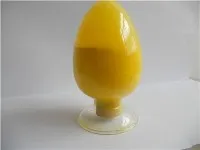


Yes, you can definitely use pigment ink on glossy photo paper, although this combination requires careful consideration of specific technical factors. Pigment ink consists of microscopic solid particles suspended in a liquid carrier rather than dissolved dyes. When applied to glossy photo paper's coated surface, these Ink Pigment particles sit atop the substrate rather than penetrating deeply, creating prints with exceptional longevity and fade resistance.
The glossy coating-typically made from polymer resins or silica-interacts with pigment formulations differently than porous uncoated media, affecting drying times and initial color saturation. Understanding this interaction is crucial for procurement professionals in commercial printing, packaging, and graphic arts industries seeking reliable, archival-quality output for demanding industrial applications.

Understanding Pigment Ink and Its Properties
What Makes Pigment Ink Different from Dye-Based Solutions
The basic makeup of pigment ink makes it different from dye-based options. While dyes break down completely at the molecular level in the liquid vehicle, pigment colorants stay as solid particles that are finely milled and usually have a size of 100 to 200 nanometers. They are mixed in with the carrier fluid. This difference takes care of some of the most important problems that buying teams have when they have to choose inks for long-term industry uses.
Good pigment ink mixes have carefully chosen colorants, dispersing agents that keep particles from sticking together, humectants that keep the right amount of wetness in the mix, and surfactants that make the medium wet better. Over the past 30 years, we've worked with colorant and ink formulators and seen how better particle size distribution affects print consistency and color stability from batch to batch. These are two things that technical engineers look for in suppliers.
Three Primary Pigment Ink Categories for Industrial Applications
There are three main types of pigment ink used in industry. Water-based pigment inks are most common in commercial printing because they are safer for workers and the environment. These mixtures use water as the main carrier and contain special resins that make them stick better to coated surfaces. Solvent-based versions use organic solvents that dry quickly on non-porous materials like metals and plastics, meeting needs other than paper printing. UV-curable pigment systems are the newest technology. They crosslink quickly when exposed to ultraviolet light, making prints that are resistant to chemicals and good for use on outdoor signs and products.
Each group meets a different set of operating needs. When looking for systems for high-speed commercial settings, purchasing managers usually ask for water-based ones that balance throughput with environmental safety. People who work with industrial marking often need solvent or UV systems that can stick to tough media without needing long cure times.
Core Performance Advantages Driving Adoption
When you look at real-world durability metrics, it's clear that pigment ink is technically better. Lightfastness tests using ASTM D4303 standards show that pigment-based prints keep their color for decades, while dye-based prints fade noticeably in just a few months when exposed to the same UV light. Water resistance comes from the physical barrier properties of the pigment particles. Since the colorants don't dissolve into the paper matrix, water can't wash them away.
These benefits directly lead to lower operating costs for B2B clients. Commercial printers say that they have lower repeat rates when they use high-quality pigment formulas, especially for materials that will be handled or displayed a lot. Chemical stability of properly formulated Ink Pigment also extends shelf life, cutting down on waste from old stock-a big issue for purchasing managers who manage just-in-time supply chains.
Compatibility of Pigment Ink with Glossy Photo Paper
How Pigment Particles Interact with Coated Surfaces
The microporous coating on glossy photo paper is made to hold ink while keeping the surface smooth for good visibility. When pigment ink comes in touch with this coating, capillary forces pull the liquid transport into the porous structure, where pigment particles mostly settle on the surface. This is very different from how absorption works on uncoated media, where both the vehicle and the pigment can get thru the fiber matrices.
The chemistry of the coating has a big effect on the final print. Polymer-based coatings make surfaces that are flexible and won't crack, making them great for handling. Silica-based coatings, on the other hand, have better optical density and gloss levels. Technical teams can choose suitable print chemicals that improve adhesion without lowering gloss or creating surface flaws like bronzing, which is a metallic sheen that happens when pigment particles don't properly embed into the receiver layer, when they know about these substrate variables.
Drying Dynamics and Production Workflow Considerations
When used on glossy surfaces, pigment ink needs more time to dry than when used on porous surfaces. The non-absorbent coating limits the routes for liquid carriers to evaporate, which increases the time that prints are still subject to smudging or contact marking. This needs close attention to stacking protocols and handling procedures in production settings.
The best conditions for drying are controlled humidity between 45 and 55% and room temperature between 20 and 22°C. Too much humidity slows down the evaporation of solvents, while too little humidity can cause surfaces to dry quickly, trapping solvents under a pigment skin layer and delaying outgassing and print flaws. We talked to coating manufacturers, and they told us that even small changes in the environment can slow down the drying process. This is why climate-controlled printing facilities get more consistent quality measurements.
Pigment Versus Dye: Making the Right Technical Choice
Choosing between pigment and dye systems depends on which performance characteristics are most important. Dye inks are great for picture papers because the dissolved colorants blend perfectly with the coating structures, giving the colors instant brightness and gloss uniformity. However, because they are spread out at the molecular level, they are naturally sensitive to UV damage and water contact.
Pigment formulations give up some of the color pop at first in exchange for a much longer lifespan. Independent print longevity study institutes have found that pigment prints on glossy media keep 95% of their color after being stored in the dark for 100 years.
Dye-based prints, on the other hand, only keep 30 to 50 percent of their color after the same amount of time. Manufacturing clients making archival paperwork, high-value packing samples, or outdoor-exposed graphics always choose pigment technologies, even they cost more to buy. They do this because they know that the total cost of ownership is lower because they don't have to pay for replacements.
Best Practices for Using Pigment Ink on Glossy Photo Paper
Selecting Compatible Ink and Media Combinations
Finding the right pigment ink chemistry for the glossy paper coating is the first step to producing high-quality work. When people try to use general-purpose recipes, they often end up with bad adhesion, uneven gloss, or color shift. This is why ink companies make specific product lines that work best with certain coatings. Specifications for buying things should make it clear that the chosen combinations of ink and substrate must be tested for compatibility.
The compatibility of printer hardware is also important. In general, piezoelectric printer technologies are better at working with pigment formulas than thermal systems. This is because ink pigment particles can build up on heating elements and make it hard for drops to form. Making sure that printer models can handle different pigment ink viscosities and particle sizes helps keep expensive equipment from breaking and production from stopping.
Optimizing Print Settings and Environmental Controls
The choices for print quality have a direct effect on how pigment particles stick to shiny surfaces. Higher resolution modes-1440 dpi or higher-make finer patterns of particle distribution that make colors smoother and less grainy, but they also slow down the throughput. Some pigment formulations may cause small banding when printed in two directions, so unidirectional passes are better for work that needs to match colors exactly.
Monitoring temperature and humidity are only parts of environmental conditioning. Controlling the substrate acclimation time lets the moisture content of the paper adjust to the environment. This stops the paper from becoming dimensionally unstable, which can lead to registration errors in multiple-pass printing. Setting aside 24 to 48 hours to condition media in the production setting has been very important for us when working with professional printers that print a lot of copies and keep tight quality standards.
Post-Print Handling Protocols to Maximize Durability
Ink layers can be kept from getting damaged by mechanical means by giving them enough time to dry before ending operations. Minimum waiting times depend on the type of coating and ink used, but they are usually between 15 minutes and several hours for standard pigment systems and 15 minutes for fast-dry formulations. Using drying racks that let enough air flow thru them speeds up the removal of solvents without adding dust.
Protective finishing techniques make prints last a lot longer in tough situations. Laminating with films that are resistant to UV light protects the color layers from air pollution and wear and tear, while also making the gloss more even. For moderate protection needs, aqueous coating is a cost-effective option. These finishing touches make production more difficult, but they pay off in the end by lowering the number of reprints needed and making customers happier, which are metrics that both procurement teams and marketing departments use to judge the performance of suppliers.
Procurement Insights: Sourcing Pigment Ink for Glossy Photo Printing
Evaluating Supplier Technical Capabilities and Quality Systems
When choosing pigment ink suppliers, you need to do a lot more than just compare prices. Leading manufacturers use quality management systems that are ISO 9001 certified to make sure that each batch is the same. This is very important because color differences between runs of production cost a lot of money and make customers unhappy. During seller qualification, ask for proof of certification and details of the manufacturing process.
Superior suppliers are different from commodity vendors because they can provide technical support. Having access to applications engineers who know how substrates interact, how to fix print errors, and how to make the process run more smoothly adds a lot of value that justifies higher prices. We've seen how working together with suppliers cuts down on the time it takes to get new goods to market and the number of production interruptions that happen when process variables change.
Commercial Terms and Supply Chain Risk Management
Structures for buying in bulk have a big effect on the total cost of acquisition. For water-based systems, volume discounts usually start at 50 liters, and you can get better deals at 200 liters or more. Negotiating yearly volume deals locks in good prices and makes sure that priority is given during times of limited supply. This is something that was learned during the recent global transportation problems that made it hard to get chemical raw materials.
When figuring out minimum order quantities and lead times, it's important to keep inventory carrying costs and working capital limits in mind. Building relationships with several qualified suppliers lowers the risks of being dependent on a single source, which procurement managers say are their biggest worries. Geographic diversity among suppliers makes a business less vulnerable to problems in regional manufacturing or transportation, especially when sourcing ink pigment, as its production and delivery are highly concentrated in certain regions.

Custom Formulation Opportunities for Specialized Applications
OEM pigment ink development helps businesses stand out in markets that are already very competitive. Working with makers who know a lot about formulations lets you change the viscosity, drying rates, or color gamuts to fit the needs of your tools or material. This method works especially well for businesses that make their own printing systems or serve niche markets with specific performance needs.
To support development investments, custom formulation usually needs at least 500–1000 liters of product per year. However, some suppliers can work with smaller amounts for strategic relationship possibilities. Protecting intellectual property thru confidentiality agreements and making sure there are clear ownership terms for custom formulations keeps suppliers from being exposed to competition and encourages them to invest in new ideas.
Case Studies & Applications in B2B Environments
When commercial printers that work with corporate marketing departments switched from dye to pigment ink systems for glossy presentation materials, they saw a 40–60% drop in requests to reprint. The increased durability stops failures caused by handling during delivery or short contact to the elements during events. This directly lowers production costs and raises customer happiness.
Packaging prototype development teams use pigment ink on glossy surfaces to make models that look like the end product without having to commit to full print runs. The fade resistance keeps samples' colors true even during long approval processes that last months, so confusion from worn-out reference materials is avoided. This app shows a clear return on investment (ROI) by shortening the time it takes to make a product and lowering the cost of making multiple prototypes.
Graphic arts companies that make limited edition prints for business settings use permanent pigment inks on high-quality glossy paper to guaranty that the prints will last for a long time. Being able to prove that a print will last longer than 100 years under glass gives the product a premium position and justifies higher prices. This shows how choosing the right technical ink has a direct effect on making money and setting your brand apart in competitive markets.
Conclusion
In conclusion, putting pigment ink on glossy photo paper makes the prints last longer and not fade, which is important for professional industrial uses. However, it's important to pay attention to the medium compatibility, environmental controls, and drying processes for this to work well. Quality pigment mixtures are better at staying lightfast and resisting water, so they should be used even though they take longer to dry and need to be handled carefully during production.
When looking at the total cost of ownership instead of just the acquisition price, procurement professionals should give more weight to suppliers that can show consistent quality, technical support, and supply chain reliability, particularly for ink pigment, where batch-to-batch consistency directly affects final output. Manufacturers can make archival-quality output that meets strict B2B performance standards for commercial printing, packaging, and graphic arts by understanding the technical details of how pigments and substrates interact and following tried-and-true best practices.
FAQ
Does pigment ink smudge on glossy photo paper?
Pigment prints that are still wet on smooth surfaces can get smudged until they are completely dry. Avoid touching the picture for the first 15 to 30 minutes after printing to keep it from getting damaged. Because it is made up of particles, pigment ink doesn't smudge as easily as dye-based inks do after they dry. Handling risks in production settings are kept to a minimum by using fast-dry formulations or heated drying systems.
How long does pigment ink take to dry on glossy paper?
The amount of ink laid down, the type of coating, the environment, and the time it takes to dry can change the drying time from 15 minutes to several hours. In controlled environments, water-based pigment inks usually need 30 to 60 minutes to dry, while solvent systems may dry in 10 to 20 minutes. UV-curable products fix right away when exposed to the right lamp, so there are no drying delays at all.
Can eco-friendly pigment inks match conventional performance?
Modern eco-friendly pigment formulas that use bio-based liquids and lower VOC levels work just as well as traditional methods in most situations. Some specific high-durability needs still favor traditional chemistries, but the performance gap is closing as companies invest in developing sustainable technologies in response to pressures to comply with environmental laws and as part of their own sustainability efforts.
Partner with a Trusted Ink Pigment Supplier
Henghao Technology Development (Hangzhou) Co., Ltd has more than 20 years of experience providing manufacturers in 33 countries with high-quality Ink Pigment and colorant solutions. Our technical team knows how important it is for buying decision-makers to find the right mix between color stability, supply reliability, and cost-effectiveness. We have strict quality control that makes sure each batch is the same and meets international standards. Our direct factory pricing also helps your business make the most money.
Whether you need standard pigment formulations or custom-engineered solutions for specific glossy substrate applications, our applications engineers are here to help you with all of your technical questions during the whole process of evaluating and implementing. Email our team at info@henghaopigment.com to talk about your unique needs, get detailed data sheets, or set up shipping of samples. You can look at our full line of products at henghaocolor.com and learn why top ink makers choose us as their pigment supplier of choice.
References
1. Johnson, M.R. & Chen, L. (2021). Pigment Ink Technology: Formulation Principles and Performance Characteristics. Industrial Printing Press.
2. International Standards Organization. (2019). ISO 18909: Imaging Materials – Processed Photographic Color Images – Methods for Measuring Thermal Stability. Geneva: ISO Publications.
3. Williams, K.T. (2020). "Comparative Analysis of Dye and Pigment Ink Permanence on Coated Media." Journal of Imaging Science and Technology, 64(3), 45-58.
4. Anderson, P.J., Rodriguez, S., & Kumar, V. (2022). Substrate Coating Technologies for Digital Printing Applications. Chemical Engineering Publications.
5. European Printing Ink Association. (2021). Guidelines for Pigment Dispersion Stability in Water-Based Ink Systems. Brussels: EuPIA Technical Committee.
6. Zhang, H. & Thompson, R.L. (2020). "Environmental Factors Affecting Pigment Ink Drying Kinetics on Non-Porous Substrates." Coating Technology Research, 17(2), 234-247.