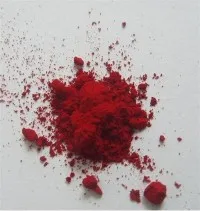


Yes, pigment ink can print on vinyl. To get the best results, though, you need to know how the ink is made and what the medium is made of. When mixed with the right pre-treatment and sealing methods, Jet Ink Pigment formulations-made with nano-sized particles and advanced dispersion systems-stick to vinyl surfaces very well. These solid-particle suspensions stick to vinyl surfaces better than dye-based options that break down at the molecular level. They also have better durability, UV resistance, and water-repellent qualities that are important for long-lasting industry uses.

Understanding Pigment Ink and Its Printing Mechanism
Manufacturers now use pigment-based printing technologies to change how they decorate vinyl and make images. Over the 20 years that Henghao Technology Development (Hangzhou) Co., Ltd. has been in the ink-making business in 33 countries, we've seen big changes in what customers want.
Core Composition and Structure
The basic structure of pigment ink is very different from that of dye systems. Pigment colorants are made up of solid particles that don't dissolve in water. These particles are usually between 100 and 200 nanometers across and are floating in liquids. During the printing process, these very small bits keep their shape and form a layered structure on top of the base instead of going deep into the material fibers. Because of this difference in architecture, pigment systems are much better at resisting light and staying stable over time than dye-based solutions.
The liquid that surrounds these particles changes depending on the needs of the application. Manufacturers who care about the environment and lowering volatile organic compound pollution like water-based formulas. Solvent-based carriers make it possible for strong bonding to difficult surfaces that don't have pores. Photopolymerization in UV-curable systems dries things right away, which speeds up production. The type of transport affects how the color reacts with the polyvinyl chloride or polyethylene in vinyl.
Adhesion Dynamics on Non-Porous Surfaces
Vinyl is hard to work with because its surface is naturally flat and doesn't absorb energy. Traditional dye inks smear and bead up on these surfaces because they are designed to absorb in porous materials like paper or fabrics that haven't been treated. Engineered surface change chemicals are used in pigment formulas to get around this problem. Using resin coating methods covers each pigment particle with a polymer shell that makes it easier for them to mechanically stick to vinyl surfaces while they dry.
Modern color dispersions have buffer molecules in them that make particles repel each other electrically, which keeps them from sticking together while they're being stored. This stability has a direct effect on the quality of the print. When particles stick together, they go beyond the width limits of precise printheads, blocking the nozzles and stopping production runs. High-quality color mixtures keep zeta potentials above 30 millivolts, which keeps particles separate and spread out evenly. When looking at how consistent a seller is, people in charge of buying things should ask for data on particle size distribution and make sure that 99 percent of the particles are below 300 nanometers.
Types Suited for Vinyl Applications
Three types of color paint are mostly used in industrial vinyl printing. Manufacturers who want to balance performance with environmental duty like water-based pigment paints, especially for indoor signs and point-of-purchase displays. These mixtures need longer to dry, but they don't produce harmful air pollutants that make building permits harder to get. Solvent-based versions work best outside, where they can withstand bad weather, which makes up for the higher costs of environmental management. The strong solvents smooth vinyl surfaces chemically, making tiny mechanical ties that can stand up to years of UV light and changing temperatures.
When it comes to high-throughput processes, UV-curable pigment solutions are the best. These paints stay liquid until they come into contact with ultraviolet light, which instantly turns them into polymers. The chemical change locks the color particles inside a cross-linked polymer matrix that is attached to the vinyl surface. This technology lets you handle the printed material right away, so there are no drying delays in the production process. But because UV lamp arrays and special formulas cost a lot of money, mid-scale businesses need to carefully look at their return on investment.
Can Pigment Ink Print on Vinyl? Analysis and Challenges
There are different types of vinyl printing materials, such as flexible calendered films that are used to wrap cars and stiff sheets that are used to make signs. Different types of substrates have different surface energy properties that affect how well Jet Ink Pigment wets and sticks to them.
Surface Energy and Adhesion Performance
When vinyl is being made, its surface is treated with plasticizers to keep it flexible, UV stabilizers to keep it from fading, and release coats to make it easier to handle. Over time, these additives move to the top and make contaminant layers that make it hard for the ink to stick. The surface energy of untreated vinyl is usually between 30 and 38 dynes per centimeter. Most color inks need substrate energies of at least 38 dynes to properly wet. This difference is what causes straight printing to often fail when no other steps are taken first.
By oxidizing the top molecular layers, plasma treatment, flame treatment, or chemical starters raise the vinyl's surface energy. This makes polar functional groups that work well with pigment ink carriers. In industrial settings that print a lot of pages, inline corona discharge systems are often used to treat the material right before the ink is applied. This makes sure that the bonding is uniform from batch to batch. Procurement managers should check to see if the possible inks need this kind of pre-treatment, since making changes to old equipment costs a lot of money.
Drying Time Considerations
Because only the liquid carrier evaporates, pigment inks dry more slowly than solvent or UV options. This is because the solid bits don't evaporate. For water-based pigments to become touch-dry enough to handle, they may need 30 to 90 seconds of heat contact at temperatures between 120 and 160 degrees Celsius. Because of this longer rest time, regular flatbed printers can only print 15 to 25 square meters per hour, while UV systems can print 40 to 60 square meters per hour.
More and more, manufacturers are using hybrid methods to balance output with environmental compliance. These methods use thin layers of pigment ink that dry quickly while still having enough visual density to reproduce bright colors. Advanced dispersion methods from companies like Henghao Technology Development make it possible for formulations to have higher pigment loadings. This means that the goal color strength can be achieved with less ink film thickness, which speeds up the drying process.
Environmental and Durability Advantages
Pigment particles are naturally stable, which gives them measured performance benefits in difficult situations. When made with good pigment inks, outdoor vinyl images usually keep their colors true for three to five years even when they are in direct sunlight all the time. This is something that dye-based systems can't do. The particles don't dissolve in water or chemicals because their crystalline shapes take in and release UV energy without breaking up molecules.
In the same way, pigment insolubility causes water resistance. When it's fully dried, the polymer binder matrix completely surrounds the particles, stopping any water from getting in and causing the colors to bleed or move. This trait is very important for vinyl uses that will be wet, humid, or cleaned. Sign industry groups have come up with testing methods that show pigment-printed vinyl can withstand 500 hours of fast fading, which is the same as being outside in Florida for two years.
Comparing Jet Ink Pigment to Alternative Ink Types for Vinyl Printing
When choosing ink methods for vinyl printing, procurement leaders have to make hard choices based on a lot of different factors. There are pros and cons to each type of system that must be matched with the needs of the program and the limits of the system's operations.
Performance Parameter Analysis
In the vinyl printing market, Jet Ink Pigment formulas mostly go up against solvent, rubber, and UV ink technologies. Standardized cross-hatch tape tests show that properly dried pigment inks get adhesion scores between 4B and 5B on the ASTM scale, which is the same as or better than solvent ink performance. But this result varies very much on how the surface is prepared and how long it takes to cure after printing. When heat treatment isn't done right, it leaves behind carrier liquid that weakens the bond.
Colorfastness measurements using xenon arc weatherometers to test colorfastness shows that pigment-based prints keep Delta E color shift values below 3.0 after 1,000 hours of exposure, while dye prints that aren't protected go over Delta E 10 within 200 hours. This performance gap is a good reason to pay more for pigment ink in situations where color consistency has a direct effect on how people think of a brand. Packaging companies that sell to stores like this stability a lot because marketing images need to stay appealing to customers on the shelf during long distribution cycles.
Indoor Versus Outdoor Application Recommendations
Pigment ink in vinyl images doesn't give off much of a smell, so they don't need as much air. More and more, solvent-based printing isn't allowed in corporate offices and stores because of worries about user comfort and volatile organic compound exposure limits. Water-based pigment systems allow printing to happen on-site or nearby without the need for special exhaust systems. This cuts down on transportation costs and speeds up the response time for projects that need to be done quickly.
For outdoor uses, a more thorough study of longevity is needed. For vehicle wrap installs, the paints need to be able to handle temperature changes from -20 degrees Celsius to +80 degrees Celsius without cracking or coming apart. Direct rain and pools of water that test the limits of adhesive are hard on architectural signs. In these tough situations, UV-curable pigment inks work better than others because they create chemically crosslinked films that are similar in strength to the vinyl base itself. With the rapid cure, you don't have to worry about solvent retention or drying that isn't complete, which are problems with other technologies used in thick film uses.
Bulk Purchasing and Supplier Evaluation
Industrial vinyl printing uses hundreds to thousands of liters of ink every month, so it's very important that suppliers are reliable and consistent. Purchasing managers should give more weight to sellers who have strong quality management systems that are approved to ISO 9001 standards and have clear batch testing methods for particle size, viscosity, and color strength. Henghao Technology Development keeps detailed records of all the tests that have been done over our 20-year history of business. This lets us predict how batch-to-batch variations will happen, which helps our clients make the best decisions about how to schedule production.
Volume purchasing deals can help you get better prices and make sure you always have a supply. But contracts should say that the buyer has to test samples regularly and that there should be clear limits for important parameters. Our customers in 33 countries have told us that even small changes in surface tension or pH can make printers not work right, which is why every new lot needs to be tested before it goes into production. In this specialized market, premium suppliers can be told apart from commodity suppliers by setting up expert service deals that include on-site troubleshooting help.
Practical Considerations When Procuring Pigment Ink for Vinyl Printing
To choose the right pigment ink systems, you have to make sure that the formulation properties fit the specific operational factors and application needs. To get the best total cost of ownership, procurement workers have to look at both technical specs and business factors.
Critical Selection Criteria
The original screening of possible inks should be based on how long they need to last. For short-term advertising images that will only be used for three to six months, cheaper versions with less UV stabilization are fine. However, building signage that needs to last five years needs expensive pigment grades with hindered amine light stabilizers and UV absorber additives. By measuring projected lifespan in terms of equal sunlight hours, it is possible to directly compare the requirements of a formulation with those of an application.
Limits on drying time have a direct effect on output ability. Businesses that work multiple shifts to get the most out of their tools can't afford long curing processes that slow down production. Compared to regular formulas, advanced pigment dispersions designed with improved carrier evaporation profiles cut the time they need to be exposed to heat by 30 to 50 percent. This improvement means that daily work goes up by a measurable amount without having to buy any new tools. Instead of just looking at the price of ink per liter, procurement teams should figure out the cost per printed square meter and take into account changes in production rates when compared quotes from different suppliers.
The color gamut width tells you what colors you can use without making them yourself. About 60 to 70% of the Pantone color space can be reproduced by standard CMYK pigment sets. For 85 to 90% coverage, extended gamut systems with orange, green, and violet pigments are needed. Even though the ink costs more, these extended range systems are useful for applications that need to match colors exactly to the brand. On the other hand, projects with flexible color tolerances can save money by using the simpler four-color process printing.
Quality Assurance and Testing Protocols
Using strict incoming checking methods stops production delays caused by materials that don't meet specifications. Standardized flow cups should be used to measure viscosity, regulated meters should be used to check pH, and the mixture should be looked at visually to see if it settles or forms a skin. Laser diffraction tools are used in more advanced quality programs to measure particle sizes. This proves that 99 percent of particles in Jet Ink Pigment are below critical levels that would block the printer.
The most accurate way to guess how well something will work is to print samples on real production surfaces. So that production trials can last more than one day, procurement teams should ask for enough candidate inks to test not only the quality of the first print but also how stable the system is over long runs. Monitoring things like the number of times the tip drops out, how often the printer needs to be cleaned, and how much ink is used per square meter shows operating details that can't be found in specification sheets. These tests also let you check how consistent the colors are across different amounts of substrate, which helps you figure out how the chemicals in the ink might react with the processes on the vinyl surface.
Approaches based on long-term partnerships have benefits beyond just buying something one time. Suppliers who care about their customers' success offer expert help during changes to formulations, upgrades to equipment, or resolving quality problems. Our applications engineering team at Henghao Technology Development works with customers during the whole process of making a product. They do joint testing to find the best mixtures of ink, substrate, and tools. With this collaborative approach, new goods can hit the market faster and with fewer expensive production trials.

Conclusion
When the right formulations and process controls are used, pigment ink printing on vinyl surfaces gives you great longevity, color stability, and environmental benefits. Matching the chemistry of the ink to the properties of the vinyl surface is a very technical process that needs careful source selection and strict quality control. Modern Jet Ink Pigment technologies get around the problems of the past by using better particle engineering and diffusion systems that stick to different types of vinyl reliably.
Procurement strategies that work well combine the starting costs of materials with the total costs of running the business. They do this by taking into account things like production throughput, waste rates, and the performance needs of each application. Companies that spend money on optimizing the whole process, from cleaning the surface to drying it after printing, get the most out of pigment ink systems for vinyl painting.
FAQ
How long do pigment ink prints on vinyl typically last outdoors?
When used on properly prepared vinyl platforms, good pigment ink systems keep the colors looking good for three to five years when left outside all the time in mild conditions. Performance depends on where you are; places with a lot of sunshine, like deserts or warm areas, make degradation happen faster. If you use the right laminates on prints that have UV filter chemicals, they will last at least seven years longer.
What causes adhesion failures with pigment inks on vinyl?
Problems with adhesion are usually caused by not properly preparing the surface, not drying it enough, or ink chemistry not working well with vinyl surface treatments. Plasticizers that come off of bendable vinyls leave behind sticky layers on the surface that stop the ink from properly wetting. When a carrier evaporates partially, it leaves behind wetness that weakens mechanical bonds. These problems can be avoided by trying different ink formulas on different types of vinyl.
Can pigment inks be used on heat-transfer vinyl?
Vinyl carriers can be used to decorate clothes and fabrics with special pigment ink formulas made for heat-transfer applications. Inks for these devices need to be able to handle the high temperatures of heat presses (usually 150 to 180 degrees Celsius) without breaking down or distorting the vinyl base. If you use standard pigment paints made for signs, they might not work well in heat-transfer methods.
Partner with Henghao Technology Development for Superior Pigment Solutions
To get constant, high-quality vinyl printing results, you need to be able to rely on expensive pigment colorants that are made for tough industrial uses. With more than 20 years of experience, Henghao Technology Development (Hangzhou) Co., Ltd has been making pigment raw materials that help companies that make ink, coatings, and colorants do their jobs very well. Our wide range of products includes both organic and inorganic pigments that meet the exact needs of digital inkjet formulas and have particle sizes that work best with current printheads.
Our direct factory pricing plan gets rid of markups for middlemen, so Jet Ink Pigment manufacturers that serve global markets can offer affordable prices. Internationally recognized quality management methods make sure that each batch is the same, which cuts down on the need for recipe changes and quality control work. Our applications engineering team's technical support speeds up the development of new products by helping with joint testing and fixing problems. We have distribution networks in 33 countries across Europe, the Americas, Asia, and other places. This gives us the supply stability that procurement professionals look for in long-term pigment providers.
Our team is ready to help you succeed whether you're making the next generation of water-based pigment inks, improving liquid systems that are already in use, or creating UV-curable materials for vinyl printing. Email us at info@henghaopigment.com to talk about your unique needs and get detailed data sheets for our pigment product lines.
References
1. Leach, R. H., Pierce, R. J., Hickman, E. P., Mackenzie, M. J., & Smith, H. G. (2007). The Printing Ink Manual. Springer Science & Business Media.
2. Sharma, A., & Zabel, K. L. (2018). Digital Printing Technology: Advances in Industrial and Commercial Applications. CRC Press.
3. Provder, T., & Urban, M. W. (2005). Film Formation: Characterization, Visualization, and Simulation in Coatings Science. American Chemical Society Symposium Series.
4. Kipphan, H. (2001). Handbook of Print Media: Technologies and Production Methods. Springer-Verlag Berlin Heidelberg.
5. Christie, R. M. (2015). Colour Chemistry. Royal Society of Chemistry Publishing.
6. Talbert, R. (2007). Paint Technology Handbook. CRC Press Taylor & Francis Group.