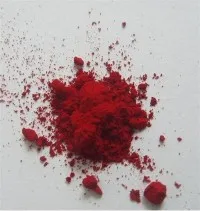


In industrial printing settings, it is not a good idea to mix pigment and dye inks. The chemical structures and physical qualities of these two types of ink are very different, so they can't be used together. Jet Ink Pigment is made up of solid bits that don't dissolve in a liquid, but dye inks break down totally at the molecular level. When you mix them, the chemicals become unstable, which damages equipment, clogs printheads, and makes colors look different. Procurement managers are in charge of making sure that operations run smoothly and that product quality standards are met. They need to understand these differences.

Understanding Pigment and Dye Ink: Composition and Characteristics
The main differences between these two types of ink decide how well they work in different manufacturing settings. Getting a clear picture of who they are helps buying teams make smart choices that have a direct effect on how well production goes.
What Makes Pigment Ink Unique?
Pigment-based colorants have particles that are ground down to sizes of 100 to 200 nanometers and stay mixed in with the transport fluid. Instead of going through the base, these particles form a layer on top of it. This structure offers great archive stability, high resistance to UV light, and excellent water resistance. Premium Jet Ink Pigment formulations solve important problems in industrial settings where regular colors don't work, especially when writing on surfaces that don't absorb ink, like metals, glass, and plastics. The particles' surfaces are changed by encasing them in resin to keep the Zeta potential high. This keeps the particles from flocculating for long periods of time.
How Dye Ink Differs in Behavior
Dye inks work by breaking down molecules, which lets the colorant get deep into porous materials. Because of this penetration, the colors are very bright and the changes and gradients are very clear. The chemical structure makes the colors bright, but it comes at the cost of durability and protection to the environment. When dye molecules are exposed to water or sunshine, they break down faster than pigment particles. Because of this, dyes aren't as good for outdoor signs, industrial labels, and other uses that need to last a long time. It dries faster, but it's less resistant to water, chemicals, and wear and tear because it dissolves completely.
Key Performance Differences That Matter
There are a few important differences between these types of ink when buying for businesses. Pigment inks keep their color even when the temperature changes by up to 200°C. This means they can be used with heat-curing processes that are popular in industrial manufacturing. Their visual density stays high, so they keep their sharp blacks and rich colors even after a long time. Dye inks work best when colors need to be bright and blend smoothly right away, but they need to be protected when they're going to be used outside. Different recipes have different effects on the environment, but both groups have eco-friendly versions that follow strict rules about VOC pollution and chemical disposal.
Can Pigment and Dye Ink Be Mixed? – Technical and Practical Insights
The short answer is still clear: mixing these types of ink creates big problems that are worse than any benefits that might be seen. Figuring out the technical reasons for this incompatibility will protect your tools and keep your business going.
Chemical Compatibility Challenges
When bits of pigment come into contact with molecules of dissolved dye, molecular processes happen that make both mixtures less stable. The dispersing agents that are used to keep the pigment particles in suspension don't work well with dye solvents; they make the pigment particles settle and stick together. This chemical battle makes groups that are bigger than the printhead nozzles, which clogs them right away. When colorants get into the pigment, they drastically lower the Zeta potential that keeps it stable. Jet Ink Pigment is particularly vulnerable to this effect because its formulation relies on finely dispersed particles. This causes the pigment to settle in a way that can't be undone by stirring it. Surface tension and stickiness change without warning, which means that droplet creation can't be kept steady during the printing process.
Equipment Damage and Maintenance Cost Implications
Mixing these colors speeds up the wear and tear on important printer parts. When you use ink mixes that aren't suitable, the printhead nozzles that are meant to handle certain particle sizes get clogged. When pigment particles are mixed with dye solvents, which change the way fluids move, they make uneven flow patterns that hurt piezoelectric motors. Maintenance windows get much shorter, which causes more downtime and higher labor costs. Filtration systems get clogged up with particles, which means expensive filter kits need to be replaced often. During recovery processes, printheads are often replaced completely instead of just being cleaned, which raises the total cost of ownership.
Real-World Case Study Evidence
Companies that do industrial printing and tried mixing ink consistently reported bad results. A textile printing company tried mixing pigment and dye paints to get certain color effects, but within three months, the number of printer failures went up by 40%. The mixed formulas led to color output that wasn't uniform and didn't meet quality control standards. This meant that production had to stop and customer orders had to be delayed. Another company that makes packaging had a full system failure when leftover dye ink messed up a supply line for pigment ink. The system had to be flushed and re-calibrated, which took a lot of time and cost a lot of money in materials and downtime. The facts of these cases show that strict separation rules must be followed in work settings.
Choosing the Right Ink for Your Application: Pigment vs Dye Ink
If you want to choose the right ink technology, you need to carefully weigh your production needs against the performance features each type offers. This choice has effects on more than just the print quality right now. It also has long-term effects on business costs and customer happiness.
Application-Specific Performance Requirements
When digital textile printing companies make clothes that need to be crock-fast and last a long time after being washed, color formulas help them a lot. Cotton and polyester mixes that are printed with good pigment dispersions keep their color after 50 or more rounds of washing without needing a lot of steaming afterward. Label and industrial container makers use UV-curable and solvent-based pigment methods to print on PET films and polypropylene, which don't have pores. For these uses, materials need to be able to withstand wear and tear, chemicals, and water in long supply lines. For outdoor signs and building images, pigment particles are the only ones that can provide the best lightfastness. They can stay in full sunlight for three to five years without fading much.
Environmental and Regulatory Considerations
Environmental rules have just as much of an effect on the choice of ink as performance needs. There are now recipes for both types of ink that meet strict standards for heavy metal levels and VOC emissions. Pigment inks made for industrial use usually have lower movement values, which means they can be used in indirect food contact situations as long as they are properly approved. Water-based color dispersions are better for the environment than solvent-based solutions because they last longer, which is what procurement managers want. If you know about the specific rules that apply in the places you want to reach, you can make sure that the ink you buy meets both current requirements and expected future rules.
Substrate Compatibility and Storage Protocols
For ink to be applied correctly, the formulations must be matched to the properties of the medium, and the right working methods must be set up. When used on porous surfaces, Jet Ink Pigment often needs to be pre-treated with fluids to stop too much entry, which lowers color intensity. Pigment layers stick to non-porous objects better, giving the surface adhesion needed for resilience. The way ink is stored has a big effect on how well it works. Keeping the temperature stable can increase the shelf life from 12 to 24 months. Poor pigment dispersions leave lasting hard cake layers, but good ones use steric stabilization to let the pigments re-disperse after they settle. Purchasing managers should check with suppliers about how to store items and set up inventory movement systems to keep ink in good shape all along the supply chain.
Procurement Guide: How to Source and Evaluate Jet Ink Pigments and Dye Inks?
Having good buying strategies will keep your business safe from inconsistent quality and supply problems that can delay production plans. Building ties with dependable suppliers gives you a competitive edge through reliable performance and quick expert help.
Identifying Reputable Manufacturers and Certification Standards
Work with providers who have a track record of being good at making and formulating ink. Companies like Henghao Technology Development (Hangzhou) Co., Ltd., which has been focusing in color powders and chemicals for more than 20 years, have the technical know-how to make sure quality is always the same. Look for companies that serve big world markets in a lot of different industries. This shows that they have strong quality control systems and a reliable supply chain. Certification that meets foreign standards like ASTM and ISO specifications gives you a way to measure how consistent a product is. Ask for proof that the company is following the safety and environmental rules that apply to your area of business.
Quality Verification Protocols and Sample Testing
Before you agree to buying in bulk, make sure you test everything thoroughly. Using Dynamic Light Scattering to measure particle size shows that the distribution of pigments is within safe limits, with D50 values below 150 nanometers and D99 values below 300 nanometers. Filtration performance testing finds the Filtration Pressure Value through sub-micron membranes. This tells you how long the printer filter will last and shows you any possible clumping risks. Monitoring viscosity and surface tension over time shows how stable something is when it ages quickly at 60°C. Spectrophotometry is used to test color standards and make sure that lot-to-lot uniformity is within Delta E limits of 1.0 or better. These steps of verification guard against production mistakes that cost a lot of money and set quality standards with your provider.
Understanding Bulk Pricing and Global Logistics
To negotiate good price models, you need to know what factors affect the cost of making pigments. Because stable mixtures need complicated nano-milling processes and pricey dispersant chemicals, they are priced higher than dye substitutes. When you make a volume promise, you can access price tiers that lower the cost per unit by a large amount and ensure supply during times of high demand. Coordinating logistics makes sure that deliveries happen on time across all global operations, with dependable sellers keeping extra stock on hand and giving customers a choice of shipping options. Optimizing the load of containers lowers the cost of shipping, and secure packing stops temperature changes during transport that could damage the stability of ink.
Best Practices and Recommendations for Using Jet Ink Pigment and Dye Ink
Tips and suggestions for using Jet Ink Pigment and Dye Ink in the best way possible. Maximizing the performance of ink goes beyond choosing the right ink at the start. It also includes handling, storing, and upkeep methods that keep the formulation's integrity throughout the product's lifecycle.
Proper Storage and Handling Techniques
Controlling the temperature is the most important thing you can do to make ink last longer. Keep color dispersions between 15°C and 25°C in climate-controlled areas out of direct sunshine. Stay away from freezing conditions that hurt dispersion stability permanently by making ice crystals. Use first-in, first-out product movement to keep damage from aging to a minimum. When you're done using a container, seal it right away so that the solvent doesn't evaporate and change the viscosity and particle concentration. Before use, gentle stirring makes sure that the particles are spread out evenly without adding air bubbles that can ruin prints. These procedures make sure that the performance characteristics that quality control teams need are always met.
Preventing Cross-Contamination Between Ink Types
Setting up strict separation rules stops the alignment problems we talked about earlier. Set aside separate tools and supply lines for each type of ink, and make sure all of the parts are clearly marked so they don't get mixed up by accident. When switching between types of ink, clean the printer thoroughly using the manufacturer's suggested washing solutions that get rid of any leftover material. After cleaning, pressure test the systems to make sure that all the dirt is gone before adding new ink formulas. By teaching production staff about the risks of exposure and the right way to handle things, you can create a culture of quality awareness that makes people less likely to make mistakes. When quality problems happen, documentation systems that keep track of ink lot numbers and equipment orders make it possible to find the source.
When to Engage Supplier Technical Support
Know when you need an expert to help instead of trying to fix the problem yourself. If you notice changes in print quality, color stability, or the way your equipment works that you can't explain, you should contact your providers right away. Unusual settling patterns, changes in viscosity, or problems with filters could be signs of formulation issues that need to be analyzed in the lab. When a seller knows how to best match ink and substrate, it helps when a new substrate comes out. Problems with production scaling often show odd cases that standard suggestions don't cover. This is why it's important for suppliers to work together. Setting up these lines of contact before problems happen guarantees quick action when keeping operations running depends on it.

Conclusion
When asked if pigment and dye inks can be mixed, the clear answer comes from science and real-world experience: they can't be mixed at all. Jet Ink Pigment has the durability, lightfastness, and substrate flexibility that industry uses need. Dye inks, on the other hand, are used when controlled settings need bright colors. To protect equipment investments and production quality, procurement managers must follow strict separation rules and choose the right ink technology for each job. For consistent performance and operational success, it's important to know the technical differences, buy from reliable makers, and follow best practices for handling and storing.
FAQ
Will mixing pigment and dye ink damage my printer?
Yes, mixing these kinds of ink can damage your printer right away and possibly permanently. The chemical mismatch causes particles to stick together, which jams printhead nozzles that are made for specific types of fluids. Because of this, blockages hurt piezoelectric motors and need pricey printhead repair instead of just cleaning. Cross-contamination, even small amounts, can change surface tension and stickiness beyond what the equipment is supposed to do. This makes it hard for droplets to form, which lowers the quality of the print and speeds up the wear on the parts.
How do waterproofing and longevity compare between these ink types?
Pigment inks are better at resisting water because the insoluble bits stay on top of the material instead of mixing with it. This physical layer stops water from getting through, which would otherwise cause dye to bleed and color to fade. When it comes to outdoor durability, pigment prints stay true to color for three to five years in strong sunlight, while dye prints fade in just a few months. Because of these differences in performance, pigment mixtures are necessary for industrial labels, outdoor signs, and other uses that need long-lasting results.
What methods verify ink compatibility before bulk purchase?
Ask for samples so that they can be thoroughly tested using your own production tools and materials. Do a particle size study to make sure that the distributions meet the printhead's requirements. Check the settings of your tools against the viscosity and surface tension. Print test designs that check the color depth, drying time, and ability to stick. Do tests that speed up the aging process by imitating storage conditions and exposure to the environment. Using spectrophotometry, check that the colors are the same across several sample lots. These steps of checking find any possible problems before placing big orders.
Partner with Henghao Technology Development for Your Jet Ink Pigment Supply Needs
For more than 20 years, Henghao Technology Development (Hangzhou) Co., Ltd. has been making high-quality color powders and useful additives for customers in 33 countries, working in fields like inks, coatings, plastics, and textile printing. As a top Jet Ink Pigment seller, we know how important it is for commercial printing operations to be able to control particle size, keep dispersion stable, and make sure that each batch is the same.
Our factory-direct method gives you access to high-quality formulas at prices that are meant to help you make as much money as possible. If procurement managers want solid performance, they can email our technical team at info@henghaopigment.com to get samples, talk about custom formulas, and talk about bulk prices. You can look at our full line of products at henghaocolor.com and learn how our knowledge can help you make great products.
References
1. Smith, J.R. and Thompson, K.L. (2021). "Inkjet Technology: Principles and Applications in Industrial Printing." Advanced Materials Publishing, Third Edition.
2. Chen, W. and Martinez, A. (2020). "Pigment Dispersion Chemistry for Digital Printing Applications." Journal of Coating Technology and Research, Volume 17, Issue 4, pp. 891-908.
3. International Standards Organization (2022). "ISO 13655:2022 - Graphic Technology - Spectral Measurement and Colorimetric Computation for Graphic Arts Images." ISO Publications.
4. Anderson, P.D. (2019). "Industrial Inkjet Printing: The Complete Guide to Technologies and Applications." Smithers Pira Publishing.
5. Wang, L., Kumar, S., and O'Brien, M. (2023). "Comparative Study of Pigment and Dye Ink Performance in High-Speed Digital Printing." Textile Research Journal, Volume 93, Issue 2, pp. 234-251.
6. European Printing Ink Association (2021). "Guidelines for Ink Storage, Handling and Quality Control in Industrial Environments." EUPIA Technical Report Series, Document TR-2021-08.