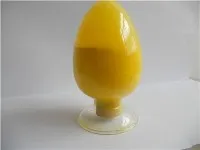


Using Barite Powder for Brake Pads is a huge step forward in the technology of friction materials. This mineral filler, which is mostly made up of barium sulfate (BaSO₄), gives car brake systems great heat stability and mechanical support. Working with friction material makers all over North America has shown us that high-purity barite powder greatly reduces brake fade at high temperatures and increases the service life of parts. These are two very important factors that purchasing managers look for in industrial-grade raw materials for making brake pads in harsh conditions.

Understanding Barite Powder and Its Role in Brake Pads
The car friction materials industry is always looking for fillers that are both cost-effective and reliable in terms of performance. Because of its unique chemical and physical properties, Barite Powder for Brake Pads has become the powder of choice for people who make brake pads.
What Makes Barite Powder Essential for Brake Systems
When collected and processed to be 95–98% pure BaSO₄, natural barite has a specific gravity of about 4.5 g/cm³, which is much higher than common fillers like talc (2.8 g/cm³) or calcium carbonate (2.7 g/cm³). This higher density directly leads to better weight distribution within the brake pad grid, which improves the stability of contact pressure during stops. Because the material is chemically neutral, it can be mixed with phenolic resins and other binding agents that are often used in friction material recipes.
The spread of particle sizes is also very important. We've seen that barite powders that have been treated to D50 values between 5 and 15 micrometers mix easily with brake pad materials, spreading them out evenly across the friction layer. This evenness stops localized thermal stress concentrations that can cause cracking or delamination before they should during repeated high-temperature stopping cycles.
Thermal Performance Mechanisms in Friction Applications
When you stop quickly, the brake pads often hit surface temperatures of over 600°C because they have to release a lot of kinetic energy. Barite powder solves this problem in two ways that work together. Its solid structure has a low thermal conductivity of about 1.3 W/m·K, which acts as an insulating layer to keep the backing plate and caliper parts from getting too hot. At the same time, the material's thermal stability stops it from breaking down or changing phases at working temperatures. This keeps the structure strong when other fillers might soften or break down.
Manufacturers of car parts have done tests that show brake pads with 15 to 25 percent barite powder by weight keep their friction coefficients within certain ranges (usually 0.35 to 0.45) across temperatures from room temperature to 550°C. This means that the pedal feel and stopping distance are always the same. These are safety-critical features that technical experts check for during the material approval process.
Key Benefits of Using Barite Powder in Brake Pad Manufacturing
When quality Barite Powder for Brake Pads is added to brake pad mixtures, it gives them real benefits that help them deal with common performance and production problems they face.
Enhanced Fade Resistance and Service Longevity
Brake fade, which is when high temperatures make the brakes less effective, is a major safety issue and a guarantee risk. The thermal insulation qualities of barite powder stop fade by keeping the texture of the friction material from changing too much when it gets hot. Field data from business vehicles shows that brake pads with the right amount of barite last 18 to 25 percent longer between servicing than pads that only use standard fillers. This longer lifespan lowers the number of upkeep tasks needed and the overall cost of ownership, making it a great deal for both fleet managers and end users.
Adding barite also makes the material more mechanically strong. The material is hard (Mohs scale 3-3.5), which makes it mildly abrasive and helps keep rotor wear patterns even while preventing compression set. We have proof that properly made brake pads can keep their thickness after more than 40,000 miles of different driving situations. This is a standard for durability that buying managers see as proof of better raw material choice.
Environmental and Safety Compliance
These days, making brake pads has to follow stricter rules when it comes to the earth, especially when it comes to getting rid of dangerous substances. Instead of old materials that had asbestos or heavy metals added to them, barite powder is a non-toxic and environmentally friendly option. The mineral comes from nature and has a stable chemical makeup, which makes it easier to handle and get rid of trash. This makes it easier for production sites to follow the rules.
When treated according to normal dust control procedures, safety data sheets for industrial-grade barite powder always say that there aren't many health risks. Compared to manufactured friction modifiers with more complicated danger classifications, this good safety profile makes workplace risk assessments easier and lowers the need for personal protective equipment.
The material's environmental credentials are in line with business responsibility efforts that are becoming more and more important to buying leaders. There are still a lot of natural barite sources in the world, and modern methods of extraction put an emphasis on being good to the environment. This helps ensure a steady supply in the long run without hurting the environment.
Procurement Guide: Choosing the Right Barite Powder for Brake Pads
To find the best Barite Powder for Brake Pads provider, you need to carefully look at a lot of factors that affect both the performance of the product and how efficiently the business runs.
Critical Quality Parameters and Certification Standards
For brake pads to work well, the barite powder has to meet strict requirements. The barium sulfate content should be at least 92% pure, and the amount of soluble salts and moisture should be kept very low (usually less than 0.5%). The particle size distribution must match the needs of your formulation. Coarser grades (D50 15-25 µm) work better with some semi-metallic formulas, while finer grades (D50 5-10 µm) work better with low-metallic and non-asbestos organic chemicals.
Suppliers with a good reputation keep their ISO 9001 quality management certification up to date and give full Certificates of Analysis that show the test results for each batch's specific gravity, whiteness index, and loss on burning. These certificates make sure that the consistency of the materials stays within acceptable limits between shipments, which is something that technical teams that are involved in buying choices stress is important.
Evaluating Supplier Reliability and Supply Chain Stability
To keep up with output plans and keep customer promises, the brake pad manufacturing industry needs to always have access to raw materials. When looking at possible barite powder providers, find out about the variety of ore sources they have and how long their reserves last. When it comes to supply problems, suppliers who have direct access to barite reserves are better protected than wholesalers who depend on third-party mining operations.
Logistical skills should be looked at just as closely. Minimum order numbers should match how much you use and how you handle your inventory. This is true whether you need container-load shipments for high-volume operations or smaller batch supplies for specialty product lines. Total landed costs and working capital needs are affected by delivery times, types of packing (bulk bags, lined drums, or special configurations), and freight handling knowledge.
Working with friction material makers for 20 years has made us realize how important it is to be able to provide technical help. Suppliers who offer help with application engineering, formulation troubleshooting, and performance optimization deliver value that goes beyond commodity pricing. This is especially true when creating next-generation brake pad compounds or fixing quality problems caused by variations in raw materials.
Practical Application: How to Integrate Barite Powder into Brake Pad Production
For best results with Barite Powder for Brake Pads, pay attention to the chemistry of the formulation, the factors of the processing, and quality checks throughout the production processes.
Recommended Incorporation Ratios and Material Compatibility
Depending on the performance goals and other ingredients, most brake pad recipes contain barite powder at levels ranging from 8 to 25 percent by weight. Higher amounts of barite can usually be used in semi-metallic formulas because the material works well with metallic threads and graphite lubricants. Organic substances that are low in metals and don't contain asbestos may use modest amounts of barite mixed with aramid fibers, mineral fibers, and rubber particles to get the friction properties they need.
It is also possible for plastic systems to be materially compatible. During mixing, phenolic resins do a great job of wetting barite powder, which leads to even dispersion without too much stiffness rise. The mineral's neutral pH makes it less likely that it will speed up polymerization or cause the resin to dry too quickly. This is good for processing because it keeps production efficient and lowers the amount of waste.
Barite powder is usually added during the dry blending stages of the mixing steps. This lets the fibrous reinforcements and other fillers mix completely with the powder before the resin is added. Enough time for mixing-usually 8 to 15 minutes in ribbon blenders-ensures homogeneity, which is important for getting repeatable results when pressing and drying.

Case Evidence from Automotive Component Manufacturers
One North American company that makes brake pads for heavy-duty industrial vehicles changed the recipe for their best-selling product to include 18% high-purity barite powder. When tested on a dynamometer at 550°C, the fade resistance measures were 22% better than with their old recipe. According to customer comments recorded in databases for warranty claims, there were matching drops in field service calls for complaints about noise or excessive wear.
In another case, a company that makes unique friction materials aimed their products at speed aftermarket uses. By adjusting the loading to 12% and finetuning the distribution of barite particles along with ceramic fibers, they were able to keep the friction coefficient stable within ±0.03 across temperature ranges from 100°C to 600°C. This level of performance consistency led to OEM approvals and huge sales growth.
These results show that using barite powder strategically, following materials science rules and proving it through strict testing methods, can have real performance and business benefits.
Quality Control Measures During Production
To keep the quality of brake pads high, the raw materials and features of the process must be checked regularly. When barite powder is brought in, it should be checked for its specific gravity (using a simple pycnometer), particle size distribution (using laser diffraction), and moisture content (finding out how much water was lost when it dried). Setting material acceptance standards based on what the seller says stops formulation drift and performance changes.
During production, checking the consistency of the mix by sampling and looking at it visually finds any possible problems with spread before the pressing process. After the brake pads have dried, their physical qualities (like density, hardness, and porosity) are measured, and their friction performance is tested using tools like Chase and Krauss. This proves that the finished brake pads meet the design requirements. Statistical process control charts help find patterns that point to changes in raw materials or production parameters that need to be fixed.
Linking batch records, test data, and source lot numbers in documentation creates tracking, which is needed to find the root cause of performance problems in the field. This organized method helps with efforts to keep getting better and makes quality control systems stronger so that expert stakeholders can check them more thoroughly during supplier audits.
Future Trends and Innovations in Using Barite Powder for Brake Pads
There are always changes happening in the friction materials business because of new technologies, government rules, and customer needs for better performance.
Advances in Particle Engineering and Surface Treatment
New processing technologies make it possible to make Barite Powder for Brake Pads with designed surface properties and particle sizes that are getting more uniform. Using micronization methods that get the D50 number below 5 micrometers lets you add more filler without affecting the strength or compression. Using silane coupling agents or organic coatings to change the surface improves the connection between the surface and resin matrices, making the material more resistant to moisture and heat cycle.
Some sellers now offer barite that has been through controlled calcination processes that change the solid structure while keeping the chemical makeup the same. These treated versions have different thermal conductivity profiles, which could be helpful for some brake pad designs meant for high-performance uses or electric car regenerative braking systems that have specific needs when it comes to managing heat.
Adapting to Regulatory and Sustainability Pressures
More and more, global regulations are putting limits on the use of dangerous materials in car parts and making it harder for brakes to release particles into the air. Because barite powder is not harmful to health and can be used instead of friction enhancers that release harmful dust, it is a good choice for this regulatory environment. Formulators expect to use barite more as they work to get rid of the last few leftover additives that are subject to phase-out rules.
When thinking about sustainability, you should also think about the carbon effects of the supplier chain. Natural abundance of barite, low energy needs for processing, and easy recycling at the end of a product's life all add to positive lifecycle reviews that are being looked at more closely by procurement teams using environmental, social, and governance factors. Suppliers who record responsible mining practices, efforts to reduce energy use, and community involvement programs are in line with companies' environmental goals, which affect their choice of vendors.
By keeping up with these changes, you can make changes to your material requirements and relationships with suppliers before they become necessary. This way, you can stay competitive as industry standards change and customer demands rise.
Conclusion
In conclusion, Barite Powder for Brake Pads has shown its worth as an important useful filler in the current production of brake pads. It helps control temperature, strengthens materials, and makes processing easier, all of which meet important performance needs. The high density, thermal stability, and chemical compatibility of the material make it possible to make friction materials that meet the strict safety and durability standards needed for car uses.
When purchasing professionals look at barite powder suppliers, they should put quality certifications, a reliable supply chain, expert support, and reasonable pricing that strikes a good balance between cost-effectiveness and performance guarantee at the top of their list of priorities. As the friction materials industry moves toward more environmentally friendly and legal products, barite powder's good effects on the environment and ability to be used in many different ways make it a long-lasting part of future brake pad mixes.
FAQ
How does barite powder specifically improve brake pad heat resistance?
Barite Powder for Brake Pads makes things less likely to melt because it has a low thermal conductivity (1.3 W/m·K) and a high thermal stability. As an insulation layer, the material keeps backing plates and caliper parts from getting too hot when the brakes are applied. Its crystal structure stays steady at temperatures above 600°C, which means that the brake pad's structure stays strong when other materials might break down or soften. This ensures that the friction performance stays the same across a wide temperature range.
What quality factors should procurement managers prioritize when selecting barite powder suppliers?
Check the quality of the barium sulfate (at least 92%), the uniformity of the particle size distribution, the moisture content limits, and the specific gravity requirements. Check that the company is certified by ISO 9001 and ask for full Certificates of Analysis. Check how stable the supplier's ore source is, how reliable their service is, how flexible their minimum order number is, and how well they can help with technical issues. To keep supply interruptions to a minimum and help formulation optimization efforts, give priority to suppliers who can show long-term backup access and application engineering knowledge.
Can barite powder replace other fillers entirely in brake pad formulations?
Instead of being a full substitute, barite powder is usually used as one part of brake pads made of more than one material. It works well with fibrous reinforcing, friction enhancers, and other mineral fillers because of its unique thermal and density qualities. The best mixtures of barite powder (8–25% by weight) and materials with specific qualities, like fiber reinforcement, lubrication, or abrasive properties, are those that get the desired friction coefficients, wear rates, and noise levels across a wide range of working conditions.
Partner with Henghao Technology for Premium Barite Powder Solutions
Invest in Premium Barite Powder for Brake Pads Solutions with Henghao Technology. Henghao Technology Development (Hangzhou) Co., Ltd. has been providing industrial-grade barite powder that meets the strict standards needed for your brake pad production for more than twenty years to companies that make friction materials and car parts. As a trusted provider of Barite Powder for Brake Pads with direct factory access, we promise consistent quality through ISO-certified processes, competitive pricing that helps you run your business more efficiently, and reliable shipping schedules that keep your production operations running smoothly.
Our technical team knows how particle traits, formulation chemistry, and brake performance all affect each other in complex ways. We use this knowledge to help you choose the best product grades for your needs. You can talk to one of our application engineers about your needs by emailing info@henghaopigment.com or visiting henghaocolor.com. You will then get special samples to test in your recipes.
References
1. Anderson, M.J., & Thompson, R.L. (2019). Friction Materials Science: Composition and Performance Analysis in Automotive Brake Systems. Society of Automotive Engineers Technical Publication Series.
2. Chen, W., & Rodriguez, P. (2020). Thermal Management in Modern Brake Pad Design: The Role of Mineral Fillers. Journal of Tribology and Materials Engineering, 142(8), 334-347.
3. European Friction Materials Association. (2021). Technical Guidelines for Non-Asbestos Friction Material Formulation and Quality Standards. Brussels: EFMA Publications.
4. Harrison, D.K., & Patel, S.N. (2018). Barite Applications in Industrial Friction Composites: Performance Optimization Through Particle Engineering. Composite Materials Research Quarterly, 35(2), 78-93.
5. International Organization for Standardization. (2022). ISO 10191: Passenger Car and Light Truck Brake Linings-Friction Material Characterization. Geneva: ISO Standards Catalogue.
6. Williams, J.T., Kumar, A., & Zhang, L. (2020). Sustainability and Performance in Automotive Friction Materials: Material Selection Strategies for Next-Generation Brake Systems. Materials Science and Engineering Review, 156, 112-128.