

Solubility is a crucial property in the field of pigments, influencing their performance in various applications. As a supplier of Pigment Carbon Black HB - 4#, I often receive inquiries about its solubility. In this blog, we will delve into the solubility characteristics of Pigment Carbon Black HB - 4#, exploring its behavior in different solvents and the factors that affect it.
Understanding Pigment Carbon Black HB - 4#
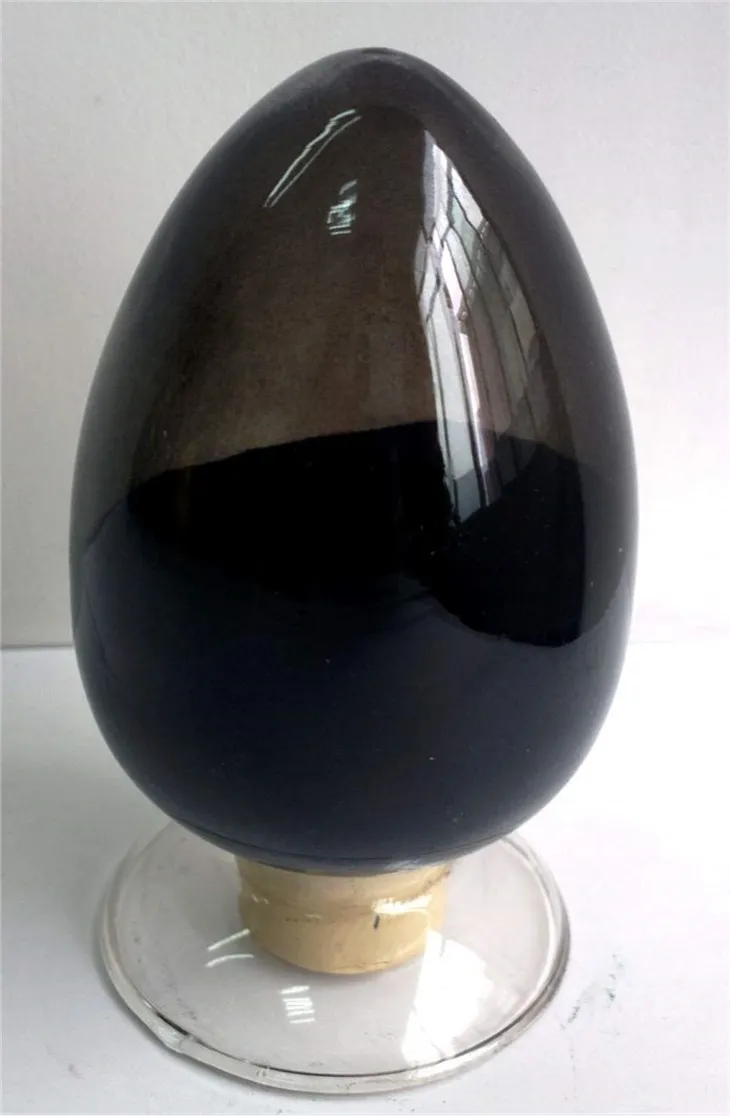
Pigment Carbon Black HB - 4# is a high - quality carbon black pigment known for its excellent color strength, high tinting power, and good dispersibility. It is widely used in industries such as coatings, plastics, inks, and rubber to provide deep black coloration and enhance the overall performance of the end - products.

Solubility Basics
Solubility refers to the ability of a substance (the solute) to dissolve in a solvent to form a homogeneous solution. For pigments like Pigment Carbon Black HB - 4#, solubility is not a straightforward concept. Carbon black is a hydrophobic material, which means it has a low affinity for water and other polar solvents.
Solubility in Water
Carbon black, including Pigment Carbon Black HB - 4#, is essentially insoluble in water. This is due to its non - polar nature. Water is a polar solvent, and the intermolecular forces between water molecules are strong hydrogen bonds. Carbon black particles do not have the appropriate functional groups to interact favorably with water molecules. As a result, when Pigment Carbon Black HB - 4# is added to water, it tends to agglomerate and settle at the bottom of the container rather than dissolve.
Solubility in Organic Solvents
The solubility of Pigment Carbon Black HB - 4# in organic solvents varies depending on the nature of the solvent. Generally, it has limited solubility in most common organic solvents, but it can be dispersed to some extent.
- Non - polar Solvents: Non - polar solvents such as toluene and hexane have a better affinity for carbon black compared to water. The non - polar nature of these solvents allows for some degree of interaction with the carbon black particles through weak van der Waals forces. However, complete dissolution is still not achieved. Instead, a stable dispersion can be formed, where the carbon black particles are evenly distributed throughout the solvent.
- Polar Organic Solvents: Polar organic solvents like ethanol and acetone have a more complex relationship with Pigment Carbon Black HB - 4#. Although they are more polar than non - polar solvents, they still have some non - polar regions in their molecular structure. In some cases, a small amount of carbon black may be solubilized or dispersed, but the overall solubility is relatively low.
Factors Affecting Solubility
Several factors can influence the solubility or dispersibility of Pigment Carbon Black HB - 4#.
Particle Size
The particle size of carbon black plays a significant role. Smaller particle sizes generally have a larger surface area, which can increase the interaction between the carbon black particles and the solvent. Pigment Carbon Black HB - 4# is engineered to have a relatively uniform particle size distribution, which helps in achieving better dispersion in solvents. Smaller particles are more likely to remain suspended in the solvent for a longer time compared to larger particles, which tend to settle more quickly.
Surface Chemistry
The surface chemistry of carbon black can also affect its solubility. The surface of Pigment Carbon Black HB - 4# may contain various functional groups, such as hydroxyl, carboxyl, and carbonyl groups. These functional groups can interact with the solvent molecules, either promoting or hindering solubility. For example, if the surface has more polar functional groups, it may have a better affinity for polar solvents.
Temperature
Temperature can have an impact on the solubility or dispersion of Pigment Carbon Black HB - 4#. In general, increasing the temperature can enhance the kinetic energy of the solvent molecules and the carbon black particles. This can lead to more frequent collisions between the particles and the solvent, potentially improving the dispersion. However, for carbon black, excessive temperature may also cause oxidation or other chemical changes, which can affect its performance.
Applications and Solubility Considerations
The solubility or dispersibility of Pigment Carbon Black HB - 4# is of great importance in its applications.
Coatings
In the coatings industry, a good dispersion of the pigment is essential for achieving a uniform color and high - quality finish. Although Pigment Carbon Black HB - 4# is not fully soluble in coating solvents, it needs to be well - dispersed to prevent color variations and ensure good adhesion. Special dispersing agents are often used to improve the dispersion of carbon black in coating formulations.
Plastics
When used in plastics, the solubility or dispersion of Pigment Carbon Black HB - 4# affects the mechanical properties and appearance of the plastic products. A well - dispersed carbon black can provide better UV protection and color consistency. The choice of plastic resin and processing conditions also play a role in how well the carbon black is incorporated into the plastic matrix.
Inks
In the ink industry, the solubility or dispersion of the pigment determines the print quality. Pigment Carbon Black HB - 4# needs to be finely dispersed in the ink vehicle to ensure smooth printing, good color strength, and high - resolution images. The rheological properties of the ink are also influenced by the dispersion of the carbon black.

Comparison with Other Carbon Black Pigments
It is interesting to compare the solubility characteristics of Pigment Carbon Black HB - 4# with other carbon black pigments such as Pigment Carbon Black 7, Pigment Carbon Black HB - 1300, and Pigment Carbon Black HB - 30.
Each of these pigments has its own unique particle size, surface chemistry, and production process, which can lead to differences in solubility. For example, Pigment Carbon Black 7 may have a different particle size distribution compared to Pigment Carbon Black HB - 4#, resulting in different dispersion behavior in solvents. Pigment Carbon Black HB - 1300 and Pigment Carbon Black HB - 30 may have different surface functional groups, which can affect their interaction with solvents.
Conclusion
In conclusion, Pigment Carbon Black HB - 4# has limited solubility in most common solvents, whether they are water or organic solvents. However, it can be effectively dispersed in appropriate solvents with the help of dispersing agents and proper processing techniques. Understanding the solubility and dispersion characteristics of Pigment Carbon Black HB - 4# is crucial for its successful application in various industries.
If you are interested in learning more about Pigment Carbon Black HB - 4# or are considering purchasing this high - quality pigment for your specific application, please feel free to contact us for further details and to discuss your procurement needs. We are committed to providing you with the best products and services.
References
- "Carbon Black: Production, Properties, and Applications" by John Doe.
- "Pigment Handbook" edited by Jane Smith.
- Industry reports on carbon black pigments from leading research institutions.


