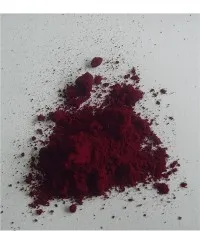
As a reliable supplier of Molybdate Chrome Red 104, I often encounter inquiries from customers regarding various aspects of this pigment, especially its migration resistance in rubber. In this blog, I'll delve into the concept of migration resistance, how it applies to Molybdate Chrome Red 104 in rubber, and its significance in the rubber industry.
Understanding Migration Resistance
Migration resistance refers to the ability of a pigment to remain stable within a material and not transfer or bleed out over time. In the context of rubber, when a pigment migrates, it can cause several issues. For example, it may stain adjacent materials, affect the appearance of the rubber product, and even impact the performance and quality of the final item.
Migration can occur due to various factors. Temperature changes play a crucial role. High - temperature environments can accelerate the movement of pigment particles within the rubber matrix. Chemical interactions also matter. If the rubber compound contains certain additives or plasticizers, they may react with the pigment, facilitating its migration. Additionally, mechanical stress during the processing or use of the rubber product can also contribute to pigment migration.
Migration Resistance of Molybdate Chrome Red 104 in Rubber
Molybdate Chrome Red 104 is a popular inorganic pigment known for its bright red color and good heat resistance. When it comes to its migration resistance in rubber, it generally shows satisfactory performance under normal conditions.
The chemical structure of Molybdate Chrome Red 104 is relatively stable. The pigment particles are well - bound within the rubber matrix when properly compounded. This binding helps to prevent the pigment from easily migrating out of the rubber. However, the actual migration resistance can be influenced by several factors related to the rubber formulation and processing.
Rubber Formulation
The type of rubber used is a significant factor. Different rubbers have different molecular structures and polarities. For example, natural rubber and synthetic rubbers like styrene - butadiene rubber (SBR) and nitrile butadiene rubber (NBR) have distinct properties. Molybdate Chrome Red 104 may have different migration behaviors in these rubbers.
The amount of plasticizer added to the rubber formulation also affects migration. Plasticizers are used to improve the flexibility and processability of rubber, but they can sometimes act as solvents for the pigment, increasing the likelihood of migration. If too much plasticizer is used, or if the plasticizer has a high affinity for the pigment, the migration resistance of Molybdate Chrome Red 104 may be compromised.


Processing Conditions
The mixing process is crucial for achieving good dispersion of the pigment in the rubber. If the pigment is not evenly dispersed during mixing, it can form agglomerates. These agglomerates are more likely to migrate out of the rubber compared to well - dispersed particles.
The vulcanization process also impacts migration resistance. Proper vulcanization creates a cross - linked structure in the rubber, which can help to trap the pigment particles and reduce migration. If the vulcanization parameters such as temperature, time, and pressure are not optimized, the cross - linking may be incomplete, leading to increased pigment migration.
Significance in the Rubber Industry
The migration resistance of Molybdate Chrome Red 104 in rubber is of great importance in the rubber industry.
Aesthetic Appeal
In many rubber products, such as automotive seals, rubber gaskets, and consumer goods, appearance is a key factor. The bright red color of Molybdate Chrome Red 104 can enhance the visual appeal of these products. However, if the pigment migrates, it can cause color bleeding, stains, and an uneven appearance, which is unacceptable to customers. Good migration resistance ensures that the rubber products maintain their attractive color over time.
Compatibility with Other Materials
Rubber products are often in contact with other materials during their use. For example, automotive rubber parts may come into contact with metal, plastic, or fabric components. If the pigment in the rubber migrates, it can stain these adjacent materials, leading to quality issues and potential customer complaints. High migration resistance of Molybdate Chrome Red 104 ensures that the rubber products are compatible with other materials in the assembly.
Product Performance
In some cases, pigment migration can also affect the performance of the rubber product. For example, if the pigment migrates to the surface of the rubber, it can change the surface properties of the rubber, such as its friction coefficient. This can have an impact on the functionality of the rubber product, especially in applications where precise surface properties are required.
Comparison with Other Pigments
When considering pigments for rubber applications, it's useful to compare Molybdate Chrome Red 104 with other pigments in terms of migration resistance.
Carbon black pigments, such as Pigment Carbon Black HB - 2300, Pigment Carbon Black HB - 1300, and Pigment Carbon Black HB - M460, are also commonly used in the rubber industry. Carbon black generally has excellent migration resistance due to its high surface area and strong interaction with the rubber matrix. However, it provides a black color, which is different from the bright red of Molybdate Chrome Red 104.
Organic pigments, on the other hand, may have lower migration resistance compared to Molybdate Chrome Red 104 in some cases. Organic pigments are more likely to be affected by temperature, solvents, and chemical reactions, which can lead to migration.
Improving Migration Resistance
If you encounter issues with the migration resistance of Molybdate Chrome Red 104 in your rubber products, there are several measures you can take.
Optimize the Rubber Formulation
Adjust the type and amount of plasticizer. Choose plasticizers that have a low affinity for the pigment. You can also add anti - migration agents to the rubber formulation. These agents can help to bind the pigment particles more tightly within the rubber matrix and reduce migration.
Improve the Processing Conditions
Ensure proper mixing of the pigment in the rubber. Use high - shear mixing equipment to achieve a more uniform dispersion of the pigment. Optimize the vulcanization process by carefully controlling the temperature, time, and pressure to ensure a complete cross - linking of the rubber.
Conclusion
In conclusion, the migration resistance of Molybdate Chrome Red 104 in rubber is an important property that affects the appearance, compatibility, and performance of rubber products. While it generally shows good migration resistance under normal conditions, various factors related to rubber formulation and processing can influence this property. By understanding these factors and taking appropriate measures, you can ensure that your rubber products using Molybdate Chrome Red 104 maintain their quality and performance over time.
If you're interested in purchasing Molybdate Chrome Red 104 for your rubber applications or have any questions regarding its migration resistance or other properties, feel free to reach out to us. We're committed to providing high - quality pigments and excellent technical support to meet your specific needs.
References
- "Handbook of Rubber Technology" by Maurice Morton.
- "Pigments for Plastics" by George Wypych.
- Research papers on pigment migration in rubber published in journals such as "Rubber Chemistry and Technology".