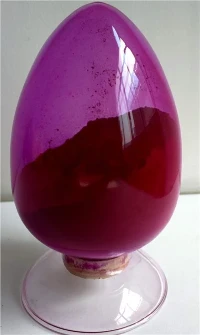

Hey there! As a supplier of Molybdate Chrome Red 104, I often get asked about the color change of this pigment during the high-temperature firing of ceramic glazes. Today, I'm gonna dive deep into this topic and share everything I've learned over the years.
First off, let's talk a bit about Molybdate Chrome Red 104. It's a vibrant and popular inorganic pigment that's widely used in the ceramic industry. Its rich red color can really make ceramic pieces stand out. But when it comes to high-temperature firing, things can get a bit tricky.
During the high-temperature firing process of ceramic glazes, several factors can influence the color change of Molybdate Chrome Red 104. One of the main factors is the temperature itself. As the temperature rises, the chemical structure of the pigment starts to change. You see, Molybdate Chrome Red 104 is a complex compound, and high heat can cause some of its bonds to break or rearrange.
At relatively low temperatures, say around 800 - 900°C, the pigment might start to show some minor shifts in color. The red might become a bit duller or start to take on a slightly different hue. It's like the pigment is starting to wake up and adjust to the heat.


As the temperature climbs higher, reaching around 1000 - 1100°C, more significant color changes can occur. The red might become more orange - red or even start to lose some of its intensity. This is because the high - temperature environment is causing chemical reactions within the pigment. For example, some of the metal ions in the Molybdate Chrome Red 104 might start to react with other components in the ceramic glaze.
Another important factor is the composition of the ceramic glaze. Different glazes have different chemical compositions, and these can interact with Molybdate Chrome Red 104 in various ways. If a glaze contains a lot of alkaline components, it might react with the pigment and accelerate the color change. On the other hand, a glaze with a more neutral or acidic composition could have a different effect on the pigment's color stability.
The firing atmosphere also plays a role. There are two main types of firing atmospheres: oxidizing and reducing. In an oxidizing atmosphere, there's an excess of oxygen. This can cause the pigment to oxidize, which might result in a lighter or more vivid color change. In a reducing atmosphere, where there's a lack of oxygen, the pigment might undergo reduction reactions, leading to a darker or more muted color.
Let's compare Molybdate Chrome Red 104 with some other pigments. For instance, Lead Chrome Yellow 34 has a very different behavior during high - temperature firing. It's a yellow pigment, and its color change is more towards a shift in the yellow spectrum. Some yellows might turn slightly greenish or darker depending on the firing conditions.
If you're into creating black - colored ceramics, Pigment Carbon Black HB - 900 and Pigment Carbon Black HB - 1300 are great options. However, these carbon - based pigments can also change during high - temperature firing. They might lose some of their blackness or change in texture due to the burning or oxidation of the carbon particles.
Now, you might be wondering how to control the color change of Molybdate Chrome Red 104 during high - temperature firing. Well, it all comes down to experimentation and careful monitoring. You can start by testing the pigment in small batches with different glazes and firing conditions. Keep detailed records of the temperature, firing time, glaze composition, and the resulting color. This way, you can gradually figure out the optimal conditions for achieving the desired color.
It's also important to note that different ceramic kilns can have slightly different heating profiles. Some kilns might heat up more evenly than others, which can affect the color change of the pigment. So, it's a good idea to get to know your kiln well and make any necessary adjustments.
As a supplier of Molybdate Chrome Red 104, I'm always here to help you with any questions you might have. Whether you're a small - scale ceramic artist or a large - scale manufacturer, we can work together to ensure that you get the best results from our pigment. If you're interested in purchasing Molybdate Chrome Red 104 or want to learn more about how it can be used in your specific ceramic projects, don't hesitate to reach out. We can discuss your requirements and provide samples for you to test.
In conclusion, the color change of Molybdate Chrome Red 104 during high - temperature firing of ceramic glazes is a complex but fascinating topic. By understanding the factors that influence the color change, such as temperature, glaze composition, and firing atmosphere, you can have more control over the final color of your ceramic pieces. And if you need the best quality Molybdate Chrome Red 104 for your projects, we're here to support you every step of the way.
References:
- Ceramic Pigment Handbook
- Journal of Ceramic Science and Technology articles on pigment behavior during firing