

Hey there! As a supplier of Natural Barium Sulfate, I've had my fair share of questions about its reaction conditions. So, I thought I'd sit down and write this blog to share what I've learned over the years.
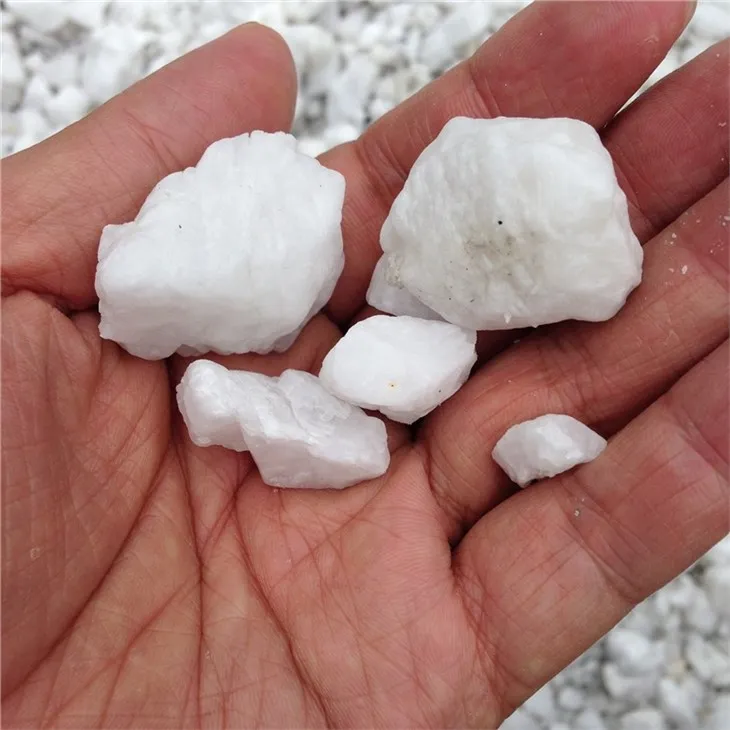
First off, let's talk a bit about Natural Barium Sulfate itself. Natural Barium Sulfate, also known as barite, is a mineral composed of barium sulfate (BaSO₄). It's a pretty common mineral and has a wide range of applications, from being used in the oil and gas industry as API Drilling Grade Barium Sulfate to being used in the production of paints, plastics, and rubber. You can find more about it on our Natural Barium Sulfate page.
Now, let's get into the reaction conditions. The reaction conditions for natural barium sulfate can vary depending on the specific reaction you're looking at. One of the most common reactions involving barium sulfate is its precipitation reaction.

Precipitation Reaction
When it comes to the precipitation of barium sulfate, there are a few key reaction conditions to keep in mind.
1. Reactants
The most common way to precipitate barium sulfate is by mixing a solution containing barium ions (Ba²⁺) with a solution containing sulfate ions (SO₄²⁻). For example, you can mix a barium chloride (BaCl₂) solution with a sodium sulfate (Na₂SO₄) solution. The chemical equation for this reaction is:
BaCl₂(aq) + Na₂SO₄(aq) → BaSO₄(s) + 2NaCl(aq)
Here, the (aq) indicates that the substance is in an aqueous solution, and (s) means it's a solid precipitate.
2. Concentration
The concentration of the reactant solutions plays a crucial role. Generally, higher concentrations of barium and sulfate ions will lead to a faster precipitation rate. However, if the concentrations are too high, it might lead to the formation of larger crystals, which could affect the purity and particle size distribution of the resulting barium sulfate.
3. Temperature
Temperature also affects the precipitation reaction. In most cases, the precipitation of barium sulfate is an exothermic reaction, meaning it releases heat. Lower temperatures are usually more favorable for the precipitation process because the solubility of barium sulfate decreases with decreasing temperature. This means that more barium sulfate will precipitate out of the solution at lower temperatures.
4. pH
The pH of the solution can also influence the precipitation. Barium sulfate is insoluble in water and most common acids and bases. However, extreme pH values can sometimes have an impact on the stability of the precipitate. In general, a neutral pH (around 7) is ideal for the precipitation of barium sulfate.
Solubility and Reaction Conditions
The solubility of barium sulfate is extremely low in water. At 25°C, the solubility of barium sulfate is only about 2.4 x 10⁻⁴ g/100 mL of water. This low solubility is one of the reasons why barium sulfate is so useful in various applications.
The solubility of barium sulfate can be affected by the presence of other ions in the solution. For example, the common ion effect can come into play. If there are already sulfate ions present in the solution from another source, the solubility of barium sulfate will decrease even further. This is because the equilibrium of the dissolution reaction of barium sulfate:
BaSO₄(s) ⇌ Ba²⁺(aq) + SO₄²⁻(aq)
will shift to the left according to Le Chatelier's principle when more sulfate ions are added to the solution.
Other Reactions
Apart from the precipitation reaction, there are other reactions involving natural barium sulfate. For example, barium sulfate can react with carbon at high temperatures to form barium sulfide (BaS). The reaction equation is:
BaSO₄(s) + 4C(s) → BaS(s) + 4CO(g)
The reaction conditions for this reaction are quite different from the precipitation reaction.
1. Temperature
This reaction requires a very high temperature, usually around 1000 - 1200°C. At these high temperatures, the carbon reacts with the barium sulfate to break the chemical bonds and form barium sulfide and carbon monoxide gas.
2. Atmosphere
The reaction is usually carried out in a reducing atmosphere, such as an inert gas or a low - oxygen environment. This is to prevent the oxidation of the reactants and products.
Industrial Applications and Reaction Conditions
In industrial applications, the reaction conditions for natural barium sulfate are carefully controlled to meet the specific requirements of the product.
For example, in the production of Barite Barium Sulfate for the oil and gas industry as a weighting agent, the particle size and purity of the barium sulfate are very important. The reaction conditions during the purification and processing steps are adjusted to ensure that the final product meets the API (American Petroleum Institute) standards.
In the paint and coating industry, the reaction conditions are optimized to produce barium sulfate with the right particle size and surface properties. This ensures that the barium sulfate can be well - dispersed in the paint matrix and provides the desired optical and physical properties.
Conclusion
In conclusion, the reaction conditions for natural barium sulfate can vary widely depending on the specific reaction and application. Whether it's the precipitation reaction, high - temperature reduction reaction, or other reactions, factors such as reactants, concentration, temperature, pH, and atmosphere all play important roles.
If you're interested in purchasing natural barium sulfate for your specific application, we'd love to have a chat with you. We can discuss the best product options based on your reaction conditions and requirements. Just reach out to us, and we'll be happy to assist you in finding the perfect natural barium sulfate solution for your needs.
References
- Atkins, P. W., & de Paula, J. (2006). Physical Chemistry. Oxford University Press.
- Chang, R. (2010). Chemistry. McGraw - Hill.
- Housecroft, C. E., & Sharpe, A. G. (2012). Inorganic Chemistry. Pearson.


