
What are the chemical properties of common coating pigments?
As a coating pigment supplier, I am often asked about the chemical properties of common coating pigments. Understanding these properties is crucial for both manufacturers and end - users, as they directly impact the performance, durability, and appearance of the coatings. In this blog, I will introduce some of the most common coating pigments and their chemical characteristics.
1. Titanium Dioxide (TiO₂)
Titanium dioxide is one of the most widely used white pigments in the coating industry. It exists in two main crystal forms: rutile and anatase. Rutile titanium dioxide is more stable and has better weather resistance, while anatase titanium dioxide has higher whiteness and tinting strength.
Chemically, titanium dioxide is an oxide of titanium. It is a very stable compound, insoluble in water, dilute acids, and most organic solvents. It has a high refractive index, which gives coatings excellent hiding power. This means that a small amount of titanium dioxide can effectively cover the substrate, providing a uniform and opaque finish.
Titanium dioxide also has good chemical inertness, which makes it resistant to chemical attack from acids, alkalis, and other corrosive substances. This property is essential for coatings used in harsh environments, such as marine coatings and industrial protective coatings.
2. Iron Oxide Pigments
Iron oxide pigments are available in a range of colors, including red, yellow, brown, and black. They are made from iron oxides, which are formed through various chemical processes.
Red iron oxide (Fe₂O₃) is a common pigment used in coatings. It is stable under normal conditions and has good heat resistance. It can withstand high temperatures without significant color change, making it suitable for applications such as automotive coatings and high - temperature industrial coatings.
Yellow iron oxide (FeO(OH)) is another widely used pigment. It is relatively stable but can be affected by strong acids and alkalis. It has good lightfastness, which means it can maintain its color over a long period of time when exposed to sunlight.
Black iron oxide (Fe₃O₄) is used for its deep black color. It is also chemically stable and has good hiding power. It is often used in coatings for decorative and protective purposes.
3. Organic Pigments
Organic pigments are synthesized from organic compounds and offer a wide range of bright and vivid colors. They are known for their high color strength and good transparency.
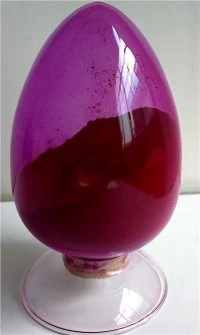
One example is Pigment Red 63:1 for Coating. This pigment has excellent lightfastness and heat resistance. It is often used in coatings for automotive and industrial applications where high - quality color and durability are required. Chemically, it belongs to the azo pigment class. Azo pigments contain azo groups (-N=N -) in their molecular structure, which are responsible for their color.
Pigment Yellow 14 2GS for Textile Printing Ink is also a popular organic pigment. It has good solubility in some organic solvents and is used in textile printing inks as well as coatings. It is a disazo pigment, which means it has two azo groups in its structure. This gives it a bright yellow color and good color stability.
Pigment Red 146 FBB for Textile Printing Ink is another important organic pigment. It has high color strength and good resistance to solvents and chemicals. It is commonly used in textile printing inks and coatings to provide a deep red color.


4. Carbon Black
Carbon black is a black pigment made from the incomplete combustion of hydrocarbons. It is composed of fine particles of carbon.
Chemically, carbon black is very stable. It is insoluble in water and most organic solvents. It has a high surface area, which gives it good adsorption properties. This makes it useful in coatings for its ability to absorb light and provide a deep black color.
Carbon black also has good electrical conductivity, which can be utilized in coatings for anti - static applications. In addition, it has good weather resistance and can protect the coating from UV radiation.
5. Zinc Oxide (ZnO)
Zinc oxide is a white pigment with some unique chemical properties. It is amphoteric, which means it can react with both acids and alkalis.
In coatings, zinc oxide has several functions. It can act as a pigment, providing whiteness and hiding power. It also has antibacterial and anti - fungal properties, which make it suitable for coatings used in environments where hygiene is important, such as hospitals and food processing facilities.
Zinc oxide can also react with certain polymers in the coating to form a protective layer, enhancing the corrosion resistance of the coating.
Impact of Chemical Properties on Coating Performance
The chemical properties of pigments have a significant impact on the performance of coatings. For example, the stability of a pigment determines its resistance to environmental factors such as heat, light, and chemicals. Pigments with high stability will maintain their color and performance over a long period of time, which is essential for coatings used in outdoor applications.
The solubility of pigments in solvents affects the dispersion of pigments in the coating formulation. Good dispersion is necessary to ensure a uniform color and appearance of the coating. Pigments that are insoluble in the coating system may cause agglomeration, leading to a poor - quality finish.
The refractive index of pigments determines the hiding power of the coating. Pigments with a high refractive index, such as titanium dioxide, can provide better coverage with less pigment, reducing the cost of the coating.
Conclusion
In conclusion, the chemical properties of common coating pigments play a vital role in determining the performance, durability, and appearance of coatings. As a coating pigment supplier, we understand the importance of these properties and strive to provide high - quality pigments that meet the specific needs of our customers.
If you are interested in purchasing coating pigments or have any questions about their chemical properties and applications, please feel free to contact us for further discussion. We are committed to providing you with the best solutions for your coating projects.
References
- "The Chemistry of Pigments and Fillers" by R. J. Hugot - Le Goff
- "Pigment Handbook" edited by Pigment Handbook Editorial Board