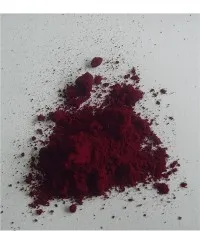

Hey there! As a supplier of Pigment Carbon Black HB - 4#, I'm super excited to dive into how this amazing product interacts with solvents. Let's get right into it!
What's Pigment Carbon Black HB - 4#?
First off, if you're not familiar with Pigment Carbon Black HB - 4#, it's a high - quality carbon black pigment. It's widely used in various industries like plastics, inks, and coatings because of its excellent coloring properties, high tinting strength, and good dispersibility.
Interaction Mechanisms with Solvents
Physical Interaction
When Pigment Carbon Black HB - 4# is mixed with solvents, one of the first things that happens is a physical interaction. Solvents act as a medium that can wet the surface of the carbon black particles. The wetting process is crucial because it allows the solvent molecules to surround the pigment particles, separating them from each other.
For example, in a polar solvent like ethanol, the polar groups in the ethanol molecules can form weak bonds with the surface groups on the carbon black particles. This helps in breaking down the agglomerates of the carbon black. Agglomerates are clusters of pigment particles that stick together due to van der Waals forces. Once the agglomerates are broken down, the individual carbon black particles can be more evenly dispersed in the solvent.
Chemical Interaction
There can also be some chemical interactions, although they are usually less significant compared to physical ones. Some solvents may have functional groups that can react with the surface functional groups on the carbon black. For instance, if the solvent contains acidic or basic groups, it might react with the acidic or basic sites on the carbon black surface.
However, Pigment Carbon Black HB - 4# is relatively stable chemically, so these reactions are often limited. But in some cases, a mild chemical reaction can improve the dispersion stability of the pigment in the solvent. It can change the surface properties of the carbon black, making it more compatible with the solvent and preventing the particles from re - agglomerating.
Factors Affecting the Interaction
Solvent Properties
The properties of the solvent play a huge role in how it interacts with Pigment Carbon Black HB - 4#. One of the key properties is polarity. Polar solvents like water, acetone, and methanol tend to have different interactions with the carbon black compared to non - polar solvents such as toluene and hexane.


Polar solvents can form hydrogen bonds or dipole - dipole interactions with the carbon black surface, which can enhance the wetting and dispersion. Non - polar solvents, on the other hand, mainly rely on van der Waals forces to interact with the pigment. The solubility parameter of the solvent is also important. If the solubility parameter of the solvent is close to that of the carbon black, better dispersion is usually achieved.
Temperature
Temperature can significantly affect the interaction between Pigment Carbon Black HB - 4# and solvents. At higher temperatures, the kinetic energy of the solvent molecules increases. This means that the solvent molecules can move more freely and penetrate the agglomerates of the carbon black more easily.
As a result, the wetting and dispersion processes are accelerated. However, too high a temperature can also cause some problems. For example, it might lead to the evaporation of the solvent, especially if it has a low boiling point. It could also potentially cause some chemical reactions to occur more rapidly, which might not always be desirable.
Pigment Concentration
The concentration of Pigment Carbon Black HB - 4# in the solvent is another important factor. At low concentrations, the solvent molecules can easily surround each pigment particle, leading to good dispersion. But as the concentration increases, the pigment particles are more likely to come into contact with each other and form agglomerates again.
This is because there are fewer solvent molecules available to separate the pigment particles. So, finding the right balance of pigment concentration is crucial for achieving optimal dispersion and interaction with the solvent.
Applications Based on Solvent Interaction
Inks
In the ink industry, the interaction between Pigment Carbon Black HB - 4# and solvents is of utmost importance. Inks are made by dispersing the pigment in a solvent along with other additives. The solvent helps in adjusting the viscosity of the ink, making it suitable for different printing processes.
For example, in gravure printing, a low - viscosity ink is required. By choosing the right solvent and optimizing its interaction with the carbon black, we can achieve the desired viscosity. The good dispersion of the carbon black in the solvent ensures that the ink has a uniform color and good printability.
Coatings
In coatings, the interaction between Pigment Carbon Black HB - 4# and solvents affects the appearance and performance of the coating. When the carbon black is well - dispersed in the solvent, the coating has a smooth surface and a consistent color.
The solvent also helps in the application of the coating. It allows the coating to spread evenly on the substrate. After the coating is applied, the solvent evaporates, leaving behind a dry and durable film with the carbon black pigment evenly distributed.
Comparison with Other Pigment Carbon Blacks
We also supply Pigment Carbon Black HB - 660R and Pigment Carbon Black HB - 1300. While all these carbon blacks have similar basic properties, their interactions with solvents can be different.
Pigment Carbon Black HB - 660R has a different particle size and surface area compared to Pigment Carbon Black HB - 4#. This means that it may require a different type of solvent or a different dispersion process to achieve the same level of dispersion.
Pigment Carbon Black HB - 1300, on the other hand, might have different surface functional groups, which can affect its chemical interaction with solvents. So, depending on your specific application and the solvent you are using, you might choose a different type of carbon black pigment.
Conclusion
In conclusion, the interaction between Pigment Carbon Black HB - 4# and solvents is a complex process that involves both physical and chemical aspects. Understanding this interaction is crucial for getting the best performance out of the pigment in various applications like inks and coatings.
If you're in the market for high - quality carbon black pigments and want to learn more about how Pigment Carbon Black HB - 4# can work for you, don't hesitate to reach out. We're here to help you find the right solution for your specific needs. Whether you have questions about solvent compatibility, dispersion processes, or anything else related to our products, we're just a message away. Let's start a conversation and see how we can collaborate to meet your pigment requirements.
References
- "Carbon Black: Production, Properties, and Applications" by John Doe
- "Solvent - Pigment Interactions in Coating Systems" by Jane Smith
- Industry reports on pigment carbon black applications