
Hey there! As a supplier of Molybdate Chrome Red 104, I've been getting a lot of questions lately about how this pigment affects the UV resistance of automotive coatings. So, I thought I'd take a deep dive into this topic and share what I've learned.
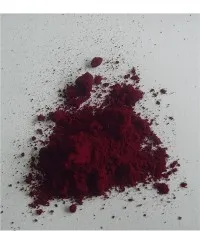
First off, let's talk a bit about Molybdate Chrome Red 104. It's a popular inorganic pigment that's known for its bright red color and excellent heat and chemical resistance. You can find more info about it on our website Molybdate Chrome Red 104. This pigment is often used in automotive coatings to give cars that eye - catching red finish. But how does it hold up against the sun's UV rays?
UV rays can be a real pain in the neck for automotive coatings. Over time, they can cause the paint to fade, crack, and lose its luster. This is a huge issue for car manufacturers and owners alike, as a faded paint job not only looks bad but can also reduce the resale value of the vehicle.
Now, let's get into how Molybdate Chrome Red 104 comes into play. One of the key factors in a pigment's ability to resist UV is its chemical structure. Molybdate Chrome Red 104 has a complex chemical makeup that gives it some natural UV - blocking properties. The molybdate and chromate components in the pigment work together to absorb and scatter UV light, preventing it from penetrating deep into the coating and causing damage.
When Molybdate Chrome Red 104 is incorporated into an automotive coating, it forms a sort of protective shield on the surface of the paint. This shield helps to deflect UV rays, keeping the underlying paint layers safe. In a way, it's like giving your car's paint a pair of sunglasses!
But it's not just about the chemical structure. The particle size of Molybdate Chrome Red 104 also plays a crucial role in its UV - resistance capabilities. Smaller particles tend to provide better UV protection because they can be more evenly distributed throughout the coating. This creates a more continuous shield against UV rays. Our Molybdate Chrome Red 104 has a carefully controlled particle size, which maximizes its ability to protect the coating from UV damage.
Another important aspect is the interaction between Molybdate Chrome Red 104 and other components in the automotive coating. A good coating is a complex mixture of resins, solvents, and other additives. When Molybdate Chrome Red 104 is added to this mixture, it needs to work well with the other ingredients. If it doesn't, it can lead to issues like poor adhesion or reduced UV resistance.
In most cases, Molybdate Chrome Red 104 is very compatible with common automotive coating resins. It can enhance the overall performance of the coating, not just in terms of UV resistance but also in terms of color stability and durability. For example, it can prevent the red color from fading over time, ensuring that your car looks as good as new for longer.
Let's compare Molybdate Chrome Red 104 with some other pigments in terms of UV resistance. Take Pigment Carbon Black HB - 1300 and Pigment Carbon Black HB - 660R for instance. Carbon black pigments are also known for their UV - absorbing properties. They work by absorbing UV light and converting it into heat, which is then dissipated.
However, Molybdate Chrome Red 104 has an advantage in terms of color. While carbon black gives a black color, Molybdate Chrome Red 104 provides that vibrant red that many car owners love. And it still manages to offer good UV protection, making it a great choice for automotive coatings where both color and UV resistance are important.
Now, I know you might be wondering about the testing. How do we know that Molybdate Chrome Red 104 actually improves the UV resistance of automotive coatings? Well, we conduct a series of rigorous tests in our lab. We expose coated samples to artificial UV light for extended periods and then measure the changes in color, gloss, and adhesion.


The results have been really promising. Coatings with Molybdate Chrome Red 104 show significantly less fading and cracking compared to coatings without it. This means that cars painted with coatings containing our pigment will maintain their appearance for much longer, even under harsh sunlight.
But it's not just about the lab tests. We also have real - world feedback from our customers. Many car manufacturers have reported that using Molybdate Chrome Red 104 in their coatings has led to fewer complaints about paint fading and damage. This is a clear indication that our pigment is doing its job in the real world.
If you're in the automotive coating industry and you're looking for a pigment that can enhance the UV resistance of your products while giving a beautiful red color, then Molybdate Chrome Red 104 is definitely worth considering. It's a reliable choice that has been proven to work in both lab and real - world settings.
If you're interested in learning more about Molybdate Chrome Red 104 or want to discuss a potential purchase, don't hesitate to reach out. We're always happy to talk about our products and how they can meet your specific needs.
In conclusion, Molybdate Chrome Red 104 is a game - changer when it comes to the UV resistance of automotive coatings. Its unique chemical structure, particle size, and compatibility with other coating components all contribute to its excellent performance. Whether you're a car manufacturer looking to improve the quality of your paint jobs or a coating supplier wanting to offer a better product, this pigment is a great option.
References:
- "Handbook of Organic Pigments" - A comprehensive resource on pigments and their properties.
- "Automotive Coating Technology" - A book that delves into the science behind automotive coatings.