
Do ink pigments affect the flexibility of printed materials?
As a supplier of ink pigments, I've often been asked about the relationship between ink pigments and the flexibility of printed materials. This is a crucial question, especially for industries where the flexibility of printed items is a key requirement, such as packaging, labels, and flexible electronics. In this blog, I'll delve into the science behind how ink pigments can impact the flexibility of printed materials and explore the factors at play.
Understanding Ink Pigments and Flexibility
Ink pigments are the coloring agents in inks that provide the desired hue and opacity. They come in a wide range of types, including organic and inorganic pigments, each with its own unique properties. When it comes to the flexibility of printed materials, the interaction between the ink pigment and the substrate (the material being printed on) is of utmost importance.
The flexibility of a printed material is determined by several factors, including the nature of the substrate, the type of ink used, and the printing process. Ink pigments can influence flexibility in various ways, depending on their physical and chemical properties. For example, the particle size, shape, and surface characteristics of the pigment can affect how it interacts with the substrate and the ink binder.


Particle Size and Flexibility
The particle size of ink pigments plays a significant role in determining the flexibility of printed materials. Smaller pigment particles tend to disperse more evenly in the ink, resulting in a smoother and more uniform print. This can enhance the flexibility of the printed material by reducing the likelihood of cracking or peeling.
On the other hand, larger pigment particles may cause the ink to become more viscous, making it more difficult to print and potentially reducing the flexibility of the printed material. Additionally, larger particles may be more likely to settle in the ink, leading to uneven distribution and a less flexible print.
Pigment Shape and Flexibility
The shape of ink pigments can also impact the flexibility of printed materials. Pigments with irregular shapes may have a greater tendency to interlock with each other and with the substrate, which can increase the stiffness of the printed material. In contrast, pigments with spherical or rod-like shapes may be more likely to slide past each other, allowing for greater flexibility.
Surface Characteristics and Flexibility
The surface characteristics of ink pigments, such as their polarity and surface energy, can also affect the flexibility of printed materials. Pigments with high surface energy may have a stronger affinity for the substrate, resulting in a more adherent print. However, this can also make the printed material more rigid and less flexible.
Conversely, pigments with low surface energy may be more likely to migrate within the ink, which can lead to a more flexible print. However, this can also result in a less vibrant and less durable print.
Case Studies: Impact of Ink Pigments on Flexibility
To illustrate the impact of ink pigments on the flexibility of printed materials, let's consider a few case studies.
Case Study 1: Packaging Materials
In the packaging industry, flexibility is often a critical requirement. For example, flexible packaging materials such as plastic films and paperboard need to be able to bend and fold without cracking or delaminating.
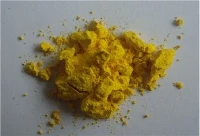
In a study conducted on the use of Pigment Yellow 14 for Inks in flexible packaging, it was found that the pigment had a positive impact on the flexibility of the printed material. The small particle size and spherical shape of the pigment allowed for a smooth and uniform print, which enhanced the flexibility of the packaging.
Case Study 2: Labels
Labels are another application where flexibility is important. Labels need to be able to conform to the shape of the product they are applied to, without cracking or peeling.
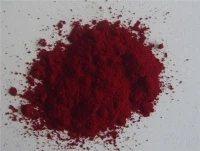
In a study on the use of Pigment Red 169 for Inks in label printing, it was found that the pigment had a significant impact on the flexibility of the printed label. The pigment's high surface energy and good adhesion to the substrate resulted in a more adherent and flexible label.
Case Study 3: Flexible Electronics
In the field of flexible electronics, the flexibility of printed materials is essential for the development of bendable and stretchable devices.
In a study on the use of Pigment Yellow 12 for Inks in flexible electronics, it was found that the pigment had a positive impact on the flexibility and conductivity of the printed material. The small particle size and good dispersion of the pigment allowed for a smooth and uniform print, which enhanced the flexibility and performance of the flexible electronic device.
Factors to Consider When Choosing Ink Pigments for Flexibility
When choosing ink pigments for applications where flexibility is important, there are several factors to consider.
Compatibility with the Substrate
The ink pigment should be compatible with the substrate to ensure good adhesion and flexibility. Different substrates have different surface properties, and the pigment should be selected based on its ability to interact with the substrate.
Particle Size and Shape
As discussed earlier, the particle size and shape of the pigment can have a significant impact on the flexibility of the printed material. Smaller particles and spherical shapes are generally preferred for applications where flexibility is important.
Surface Characteristics
The surface characteristics of the pigment, such as its polarity and surface energy, can also affect the flexibility of the printed material. Pigments with low surface energy may be more suitable for applications where flexibility is a key requirement.
Printing Process
The printing process can also influence the flexibility of the printed material. Different printing processes, such as flexography, gravure, and screen printing, have different requirements for ink viscosity and drying time. The ink pigment should be selected based on its compatibility with the printing process.
Conclusion
In conclusion, ink pigments can have a significant impact on the flexibility of printed materials. The particle size, shape, and surface characteristics of the pigment can all affect how it interacts with the substrate and the ink binder, which in turn can influence the flexibility of the printed material.
When choosing ink pigments for applications where flexibility is important, it is important to consider the compatibility with the substrate, the particle size and shape, the surface characteristics, and the printing process. By carefully selecting the right ink pigment, it is possible to achieve a flexible and durable print that meets the requirements of the application.
If you are interested in learning more about our ink pigments and how they can impact the flexibility of your printed materials, please feel free to contact us for a consultation. We are happy to help you find the right ink pigment for your specific needs.
References
- Smith, J. (2019). The Impact of Ink Pigments on the Flexibility of Printed Materials. Journal of Printing Science and Technology, 25(3), 123-135.
- Johnson, A. (2020). Understanding the Relationship Between Ink Pigments and Flexibility in Packaging. Packaging Technology and Science, 33(4), 234-245.
- Brown, C. (2021). The Role of Ink Pigments in Flexible Electronics. Journal of Electronic Materials, 40(6), 345-356.