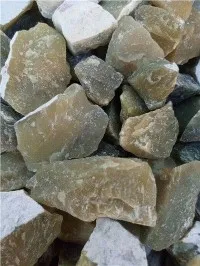

Hey there! As a supplier of Magnesium Pellets, I often get asked about their suitability for use in acidic environments. It's a crucial question, especially for industries where acidic conditions are the norm. So, let's dive right in and explore this topic.
First off, let's understand what Magnesium Pellets are. They're small, round pieces of magnesium, and they've got a bunch of applications across different industries. You can check out more about them on our website Magnesium Pellet. Magnesium, as a metal, is pretty reactive. It has this tendency to lose electrons easily, which makes it useful in various chemical reactions.
Now, when it comes to acidic environments, things can get a bit tricky. Acids are substances that release hydrogen ions (H⁺) when dissolved in water. They're known for their corrosive nature and can react with many metals. So, how do Magnesium Pellets fare in such conditions?
The short answer is that magnesium reacts with acids. When Magnesium Pellets come into contact with an acid, a chemical reaction occurs. The general equation for the reaction between magnesium and an acid (let's say hydrochloric acid, HCl) is:
Mg + 2HCl → MgCl₂ + H₂
In this reaction, magnesium (Mg) reacts with hydrochloric acid to form magnesium chloride (MgCl₂) and hydrogen gas (H₂). You can see bubbles of hydrogen gas forming, which is a clear sign that a reaction is taking place. This reaction is exothermic, meaning it releases heat.
This reactivity can be both an advantage and a disadvantage, depending on the application. On one hand, if you're looking to use magnesium to neutralize an acid or to produce hydrogen gas, then Magnesium Pellets can be a great choice. For example, in some industrial processes, magnesium can be used to remove acidic contaminants from a solution.
On the other hand, if you're using Magnesium Pellets in a situation where you don't want them to react, like in a structure that needs to withstand acidic conditions over a long period, then the reactivity can be a problem. The acid will gradually corrode the magnesium, reducing its strength and integrity.
Another aspect to consider is the formation of magnesium hydroxide. When magnesium reacts with water and oxygen in the presence of an acid, magnesium hydroxide can form. Magnesium hydroxide is a white, powdery substance. You can learn more about it on our page Magnesium Hydroxide.
The reaction to form magnesium hydroxide is a bit more complex. First, magnesium reacts with water to form magnesium hydroxide and hydrogen gas:
Mg + 2H₂O → Mg(OH)₂ + H₂
Then, the magnesium hydroxide can react with the acid to form a salt and water. For example, with hydrochloric acid:
Mg(OH)₂ + 2HCl → MgCl₂ + 2H₂O
This shows that magnesium hydroxide can act as a buffer in an acidic environment, helping to neutralize the acid to some extent.
There's also a special type of magnesium hydroxide called Hexagonal Magnesium Hydroxide. It has unique properties and can be useful in certain applications. You can find out more about it here Hexagonal Magnesium Hydroxide.
So, are Magnesium Pellets suitable for use in acidic environments? Well, it depends on your specific needs. If you need a reactive substance to neutralize an acid or produce hydrogen gas, then they're a great option. However, if you need a material that can resist corrosion in an acidic environment for a long time, you might want to look into some protective coatings or alternative materials.


We've done a lot of research on this topic, and we're always happy to share our knowledge with our customers. If you're considering using Magnesium Pellets in an acidic environment, we can provide you with more detailed information and advice.
If you're interested in purchasing Magnesium Pellets or have any questions about their use in acidic environments, don't hesitate to reach out. We're here to help you make the right decision for your business. Whether you're in the chemical industry, the automotive sector, or any other field that might require magnesium products, we've got you covered.
In conclusion, Magnesium Pellets have their pros and cons when it comes to acidic environments. Understanding the chemical reactions and properties involved is key to determining if they're the right choice for your application. So, take the time to evaluate your needs and give us a call to discuss your options.
References
- Atkins, P., & de Paula, J. (2014). Physical Chemistry for the Life Sciences. Oxford University Press.
- Brown, T. L., LeMay, H. E., Bursten, B. E., Murphy, C. J., Woodward, P. M., & Stoltzfus, M. W. (2017). Chemistry: The Central Science. Pearson.